In a move that redefines corporate governance for the aerospace sector, SpaceX has reportedly finalized a dual-class share structure for its highly anticipated initial public offering (IPO), slated for mid-2026. The decision, confirmed by sources close to the deal on February 14, ensures Elon Musk retains super-voting power—likely exceeding 25%—to insulate the company’s long-term Mars colonization goals from short-term quarterly market pressures. With valuations soaring past $1 trillion following the recent integration of xAI, this listing is poised to be the largest in history, testing Wall Street’s willingness to accept founder control in exchange for exponential growth.
The "Mars-First" Governance Model
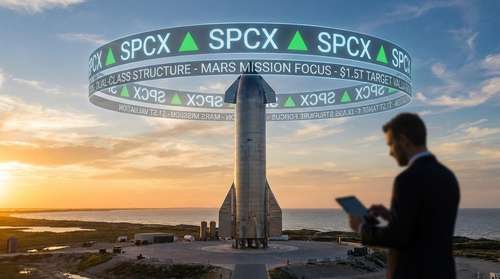
The newly unveiled structure mirrors the governance architecture of tech giants like Meta and Alphabet but with a distinct interplanetary twist. Under the finalized terms, Musk and a select group of early insiders will hold Class B shares carrying significantly more voting weight—potentially 10 to 20 votes per share—compared to the Class A shares offered to the public. This mechanism is designed to prevent hostile takeovers and activist investor interference that could derail capital-intensive projects like the Starship program.
For Musk, this is not just about corporate dominance; it is a strategic necessity. Sources indicate that the "Mars-First" clause was a non-negotiable condition for the SpaceX IPO 2026 filing. "Elon has learned from his experience at Tesla," noted a senior analyst at Morgan Stanley, one of the lead underwriters. "He refused to take SpaceX public without a guarantee that the mission to make humanity multi-planetary would not be sacrificed for dividend payouts or short-term profitability metrics."
Valuation Surges Amid xAI Merger and Starlink Profits
The financial backdrop for this offering is nothing short of astronomical. Following the strategic merger with Musk’s artificial intelligence venture, xAI, earlier this year, SpaceX public listing news now suggests a valuation target ranging between $1.2 trillion and $1.5 trillion. This figure is underpinned by the explosive financial performance of Starlink, the company's satellite internet arm.
Starlink's Revenue Juggernaut
By the end of 2025, Starlink had reportedly surpassed $15 billion in annual revenue, achieving standalone profitability that has silenced early critics. With over 10 million active subscribers globally as of February 2026, the service has become the financial engine funding the company’s deep-space ambitions. Analysts predict that Starlink valuation 2026 metrics alone could justify a massive portion of the IPO price, providing a safety net for investors worried about the risks associated with deep-space exploration.
Wall Street's Dilemma: Growth vs. Governance
The announcement has sparked a fierce debate among institutional investors. Governance advocates warn that dual-class structures reduce accountability, citing historical friction at other founder-led tech firms. However, the sheer scale of SpaceX’s monopoly on launch services—bolstered by the fully reusable Starship’s recent success—makes the stock virtually impossible for major funds to ignore.
Aerospace investment trends have shifted dramatically in the last two years, with capital flooding into defense and orbital infrastructure. SpaceX sits at the center of this ecosystem. "You aren't just buying a rocket company; you're buying the railroad to the 21st-century space economy," said a portfolio manager at Fidelity. "If the price of admission is Musk having absolute control, the market seems ready to pay it."
What’s Next for the SpaceX NYSE Debut?
With the dual-class structure locked in, the company is expected to file its S-1 prospectus with the SEC within weeks, targeting a June 2026 listing. The syndicate of banks, led by Goldman Sachs and Morgan Stanley, is currently roadshowing the debt restructuring plan related to the xAI merger. As the SpaceX NYSE debut approaches, the market is bracing for a liquidity event that could reshape indices and set a new benchmark for tech stock market news.
For retail investors and Musk loyalists, the dual-class setup is a feature, not a bug—a guarantee that the company will remain focused on the red planet rather than the red tape of Wall Street.