CARACAS — In a historic geopolitical pivot that promises to reshape global energy flows, the United States government has officially waived long-standing sanctions on Venezuelan oil, effectively reopening the nation’s vast reserves to Western markets. The Treasury Department’s Office of Foreign Assets Control (OFAC) issued a series of General Licenses late Friday, authorizing major international energy corporations to resume direct crude purchases and operations. This landmark Venezuela oil sanctions waiver comes just six weeks after the dramatic capture of former President Nicolás Maduro, signaling a rapid normalization of ties between Washington and the transitional government in Caracas.
Trump Administration Unveils "America First" Energy Policy in Venezuela
The policy shift, formalized under General Licenses 46, 47, and 48, marks the most significant change in U.S. energy policy 2026. President Donald Trump, who confirmed plans on Friday to visit Venezuela, described the move as a dual victory for American energy security and the Venezuelan people. Under the new framework, five major Western oil giants—Chevron, BP, Eni, Repsol, and Shell—have been granted immediate authorization to expand operations and export crude directly to the United States and Europe.
"These licenses invite American and aligned companies to play a constructive role in supporting economic recovery," the State Department noted in a briefing. However, the administration has maintained a strict "America First" exclusivity: the waiver explicitly bars participation by state-owned entities from China, Russia, and Iran, effectively locking U.S. adversaries out of the hemisphere’s largest proven oil reserves.
Key Provisions of the New Licenses
- General License 46: Authorizes "established U.S. entities" to engage in lifting, refining, and exporting Venezuelan crude.
- Revenue Control: All royalty and tax payments must be deposited into a U.S.-controlled "Foreign Government Deposit Fund" to ensure transparency.
- Hydrocarbons Law Reform: The move follows interim President Delcy Rodríguez's approval of reforms granting private firms greater autonomy and asset protection.
Global Crude Oil Supply and Market Reaction
Global markets reacted swiftly to the news, with energy sector stock trends showing gains for U.S. refiners tailored to process heavy sour crude. PBF Energy and Valero, major buyers of Venezuelan-grade oil, saw stock upticks in after-hours trading. Analysts predict the influx of Venezuelan heavy crude will alleviate supply tightness in the U.S. Gulf Coast, which has faced feedstock constraints throughout 2025.
"The impact on the U.S. refining system is instantaneous," noted Matthew Lucey, CEO of PBF Energy, in a statement to investors. While Venezuela's production currently sits at approximately 1.2 million barrels per day (bpd)—a recovery from the 2020 lows of 360,000 bpd—Energy Secretary Chris Wright expressed confidence that Western investment could drive output toward 2 million bpd within 18 months. This potential surge is expected to dampen oil price volatility, offering relief to consumers weary of fluctuating fuel costs.
A New Era of International Trade Relations
The diplomatic thaw represents a 180-degree turn in international trade relations. Following the U.S. military operation on January 3, 2026, that led to the extradition of Maduro to face narco-terrorism charges in New York, the interim administration under Delcy Rodríguez has moved aggressively to align with Washington. Secretary Wright’s visit to Caracas earlier this week paved the way for the waivers, with Rodríguez conceding to major legal reforms demanded by foreign investors.
"We are witnessing the end of the 'uninvestible' era for Venezuela," said an analyst at Argus Media. "By coupling sanctions relief with legal autonomy for private producers, the U.S. is not just buying oil; it is structurally integrating Venezuela back into the Western economic sphere."
Strategic Implications for Global Energy Majors
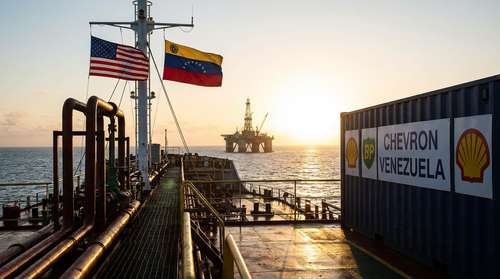
For the authorized "Supermajors," the crude oil market impact is tangible. Chevron, the only U.S. major to maintain a footprint in the country during the sanctions era, is poised to lead the charge. The company announced plans to increase production at its Petropiar and Petroboscán projects immediately. Meanwhile, European giants Eni and Repsol are expected to monetize outstanding debts by ramping up exports to Europe, further diversifying the continent's energy supply away from Russian dominance.
However, challenges remain. Decades of underinvestment have left PDVSA’s infrastructure in disrepair. While the political will exists, the physical reality of upgrading pipelines and refineries will require billions in capital—money that the new U.S.-controlled deposit fund aims to secure and oversee. As the first tankers prepare to load under the new regime, the world watches to see if Venezuela can truly reclaim its title as a global energy powerhouse.