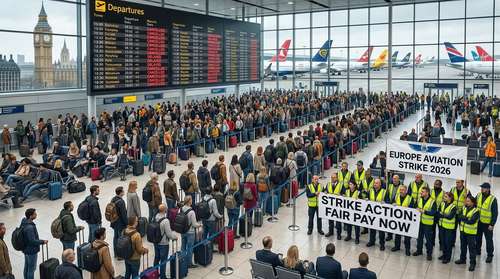
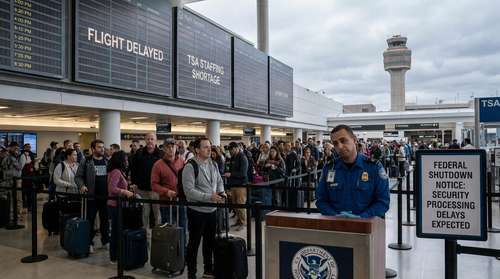
Major U.S. travel industry leaders have issued a stark warning as the federal government enters its fourth day of a partial shutdown. With the US government shutdown 2026 travel impact already rippling through the aviation sector, the U.S. Travel Association, Airlines for America (A4A), and the American Hotel & Lodging Association (AHLA) released a joint statement urging Congress to resolve the funding impasse immediately. The coalition warns that a prolonged stalemate could mirror the devastation of late 2025, threatening to drain another $6 billion from the American economy and plunge airports into operational chaos.
Travel Industry Warns of $6 Billion Economic Hit
The stakes for the national economy are incredibly high. Industry experts are pointing to the catastrophic 43-day shutdown that concluded just ten weeks ago, which cost the travel sector an estimated $6.1 billion—roughly $140 million per day. With the current funding lapse beginning on January 31, 2026, economists fear a repeat scenario could shatter the fragile recovery of the tourism market.
"We saw firsthand how government shutdowns significantly disrupt travel and hurt our economy last year," the joint statement read. The organizations emphasized that uncertainty is already suppressing travel demand, with businesses canceling trips and families rethinking spring break plans. The U.S. Travel Association alert highlights that the damage isn't just theoretical; it translates into lost wages, reduced visitor spending, and long-term instability for millions of American jobs dependent on a functioning aviation system.
TSA and FAA Personnel Working Without Pay
The immediate anxiety at airports centers on the workforce. As of today, Tuesday, February 3, thousands of air traffic controllers and Transportation Security Administration (TSA) officers are due to receive their last full paychecks. While these essential workers remain on the job, the FAA air traffic control funding freeze means they are now working indefinitely without pay. The Federal Aviation Administration has already been forced to furlough approximately 10,000 non-essential employees, halting training and modernization projects.
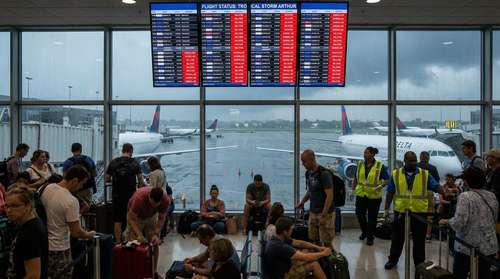
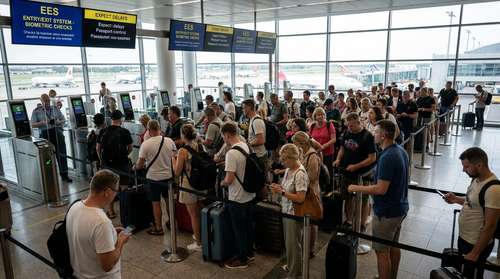
Travelers are bracing for potential TSA security delays shutdown effects. During previous funding gaps, financial stress led to widespread "sick-outs" and absenteeism among screeners and controllers. If staff shortages materialize again, major hubs could see security lanes close and capacity reduced, leading to cascading flight status during government shutdown disruptions. "It would be incredibly unfair to the hardworking, patriotic American air traffic controllers," stated the National Air Traffic Controllers Association (NATCA), warning that the safety of the National Aviation System should not be used as political leverage.
Legislative Push for Stable Aviation Funding
In response to the crisis, the Airlines for America joint statement specifically called on Congress to pass the Aviation Funding Solvency Act (H.R. 6086) and the Aviation Funding Stability Act (S. 1045). These bipartisan bills would ensure that air traffic controllers and other critical safety personnel continue to be paid during shutdowns, utilizing funds already collected from passengers. The industry argues that insulating the aviation workforce from political battles is essential to preventing airport staffing shortages 2026 from becoming a recurring nightmare for travelers.
Political Standoff Continues in Washington
The current shutdown was triggered after negotiations stalled over Department of Homeland Security funding, specifically regarding border enforcement and recent incidents in Minneapolis. While the Senate passed a bipartisan stopgap measure on Friday, the House has yet to finalize a vote. With the House expected to reconvene today, pressure is mounting to pass a continuing resolution that would reopen agencies and ensure frontline workers are paid. Until a deal is reached, travelers are advised to arrive at airports earlier than usual and stay in close contact with their airlines regarding potential delays.