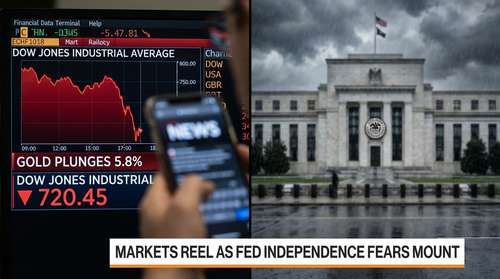
Monday, February 2, 2026 – U.S. markets opened the week in a state of chaotic disarray as the Dow Jones Industrial Average and Nasdaq plunged, driven by a violent sell-off in precious metals. Gold price crash today became the top story on trading floors, with the yellow metal plummeting 5.8% and Silver diving over 12% in a single session. The catalyst for this sudden volatility is the growing realization that the Federal Reserve independence may be facing its most severe test in history following President Trump’s nomination of Kevin Warsh as the next Fed Chair.
The "Warsh Shock": Why Gold and Silver Are Crashing
The severity of the gold price crash today has baffled retail investors who typically view precious metals as a safe haven during political instability. However, institutional analysts point to a specific fear: a massive, deflationary liquidity shock. While President Trump has publicly demanded lower interest rates, his nominee, Kevin Warsh, has a long history of criticizing the Fed’s "easy money" policies and expanded balance sheet.
Markets are reacting to the possibility that a Warsh-led Fed could aggressively shrink the central bank’s asset holdings—a move aligned with Project 2025 proposals to limit "unconventional" monetary tools. "This isn't just a rate cut story anymore," said Elena Rodriguez, Chief Strategist at Meridian Capital. "The market is pricing in a complete regime change where the Fed drains liquidity to 'restore credibility,' which is massively deflationary for commodities." This fear of a dollar liquidity crunch sent investors scrambling for cash, triggering the massive liquidation in gold and silver.
Federal Reserve Independence Under Siege
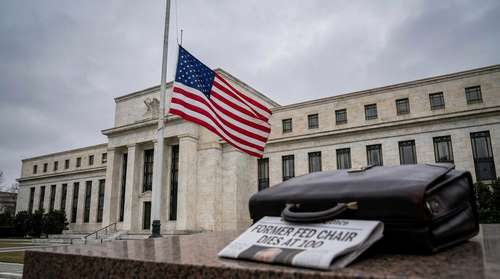
The stock market news 2026 cycle is currently dominated by the unprecedented friction between the White House and the central bank. President Trump’s nomination of Warsh on Friday came amidst an ongoing Department of Justice investigation into current Chair Jerome Powell—a move widely seen by Democrats and some moderate Republicans as a pressure tactic to force Powell’s early resignation.
Powell, whose term ends in May 2026, has steadfastly refused to step down, citing the need to protect the institution's autonomy. "The threat of criminal charges is a consequence of the Federal Reserve setting interest rates based on our best assessment of what will serve the public," Powell stated last week. This open warfare has shattered investor confidence in the stability of U.S. monetary policy, leading to the heightened market volatility seen this morning.
The Capitol Hill Standoff
The path to confirmation for Kevin Warsh Fed Chair is fraught with obstacles that are further unsettling the markets. In a surprising twist, Republican Senator Thom Tillis of North Carolina has threatened to block the nomination until the DOJ ends its probe into Powell, signaling a fracture within the GOP regarding executive overreach. Meanwhile, Senator Elizabeth Warren has condemned the nomination as an attempt to "seize control" of the money supply.
Dow Jones and Dollar Outlook
As the Dow Jones Industrial Average shed over 800 points by midday, the U.S. dollar outlook became increasingly complex. While stocks and commodities crashed, the dollar spiked—a classic sign of a liquidity crisis. Investors are fleeing risky assets for the immediate safety of holding cash, fearing that the transition from Powell to Warsh could lead to policy errors or a constitutional crisis over monetary control.
For the remainder of the week, all eyes will be on the Senate Banking Committee and any further statements from the White House. If the administration doubles down on its attacks against the current Fed leadership, today’s sell-off could be just the beginning of a prolonged period of market volatility. For now, the message from Wall Street is clear: the era of a predictable, independent Federal Reserve may be coming to a turbulent end.