WASHINGTON, D.C. — The Trump administration’s aggressive immigration enforcement agenda has hit a critical breaking point this week, as the Department of Homeland Security (DHS) faces a firestorm of criticism over logistical failures and fatal errors in its nationwide removal operations. The controversy centers on the hastily assembled “Operation Metro Surge” in Minnesota, which Border Czar Tom Homan was forced to scale back on Thursday following the tragic deaths of two U.S. citizens during botched raids, an incident that has ignited immigration enforcement backlash across the country.
As the administration pushes to meet its ambitious 2026 removal targets, reports of disarray within the DHS are mounting. From the frantic “third-country” deportation schemes costing millions to the tactical retreat in the Twin Cities, the Trump mass deportation 2026 initiative is facing its most significant challenge yet. With legal challenges piling up and public outcry deepening, the promise of a streamlined “Trump 2.0” border policy is colliding with the harsh realities of implementation.
Operation Metro Surge: The Minnesota Debacle
The focal point of the current crisis is the unraveling of “Operation Metro Surge,” a high-intensity enforcement campaign launched in December 2025 that deployed over 3,000 federal agents to Minneapolis and St. Paul. Intended as a show of force for the Trump 2.0 immigration policy, the operation instead became a symbol of systemic failure when agents fatally shot two U.S. citizens, Renee Good and Alex Pretti, in separate incidents in January.
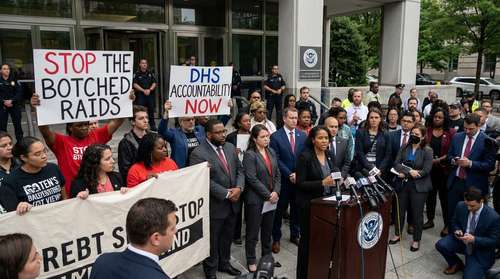
The killings, which occurred during what DHS officials described as “chaotic” arrest attempts, have triggered a federal civil rights investigation and weeks of sustained protests. On Thursday, Tom Homan border czar news broke that the administration would initiate a “significant drawdown” of agents from the state. While Homan characterized the move as a strategic shift rather than a retreat, acknowledging that “we don’t want to see any more bloodshed,” the abrupt de-escalation is widely seen as a tacit admission that the operation had spiraled out of control.
Fatal Errors and ‘Fog of War’
Legal experts argue that the tragedy in Minnesota was a foreseeable consequence of removing guardrails to speed up deportations. “When you strip away due process checks and flood cities with paramilitary units under intense pressure to meet quotas, you create a fog of war where fatal mistakes become inevitable,” said a senior attorney with the ACLU, which has filed an emergency injunction against the DHS. The DHS botched deportations in the Midwest have not only alienated local law enforcement partners but have also raised terrifying questions about the safety of bystanders and citizens during these raids.
‘Logistical Nightmare’: The Third-Country Scandal
Beyond the violence in Minnesota, a new congressional report released this week has exposed a financial and logistical scandal at the heart of the administration’s removal engine. Senate investigators revealed that the U.S. government has paid over $32 million to foreign nations—including Equatorial Guinea and Rwanda—to accept deportees who have no connection to those countries. In one egregious example cited in the report, the administration spent nearly $7.5 million to fly just seven individuals to Rwanda, equating to more than $1 million per person.
This “third-country” strategy, designed to bypass uncooperative home nations, has been slammed by fiscal conservatives and human rights advocates alike. “It is a frantic, wasteful attempt to inflate deportation numbers at any cost,” stated Senator Chris Murphy in a press briefing. The revelations have fueled deportation legal challenges, with opponents arguing that shipping migrants to countries where they lack citizenship or ties violates international law and basic human rights standards.
Economic Backlash and Business Resistance
The chaos is not limited to the streets or the courts; it is beginning to ripple through the American economy. In response to the intensifying raids, business districts in cities like Minneapolis have seen “economic blackouts,” where small business owners voluntarily close their doors to protest the disruption of their communities. “Customers don’t feel safe coming in. ICE is grabbing people off the street, and it’s killing our local economy,” said Jamie Schwesnedl, a business owner in Minneapolis.
Corporate leaders are also voicing concern. A coalition of agricultural and construction trade groups warned the White House this week that the erratic nature of the US border security updates and interior enforcement is creating a labor crisis. “We need a secure border, but we also need a stable workforce. Indiscriminate raids that sweep up legal workers and citizens create an environment of fear that halts productivity,” the coalition wrote in an open letter to President Trump.
What’s Next for the Trump Border Agenda?
Despite the setbacks, the White House shows no signs of abandoning its central campaign promise. In a defiant statement on Sunday, Tom Homan insisted that the “mass deportation machinery” is still ramping up, with new operations planned for the Sun Belt states in the coming months. “We are not stopping. We are adjusting fire,” Homan told reporters, dismissing the outcry as “political noise.”
However, the events of the last week suggest that the path forward will be anything but smooth. As immigration enforcement backlash grows from a partisan issue into a broader debate about civil liberties and government competence, the administration faces a critical choice: double down on a strategy that is producing chaos, or recalibrate to avoid further loss of life and political capital. For now, the nation remains on edge, watching as the machinery of deportation grinds against the complexities of American law and society.