
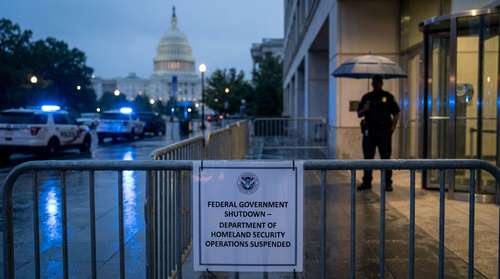
WASHINGTON — The Department of Homeland Security (DHS) entered a partial shutdown early Saturday morning after the Senate failed to pass a stopgap funding measure before the midnight deadline. The lapse in appropriations marks the latest escalation in a bitter standoff between Senate Democrats and the White House over Operation Metro Surge, the controversial immigration enforcement initiative that has roiled the Twin Cities and sparked national protests.
Senate Immigration Standoff Triggers Funding Lapse
As the clock struck midnight on Friday, funding authority for DHS expired, triggering immediate contingency plans across the agency. While essential personnel like TSA agents and Border Patrol officers remain on the job without pay, administrative functions have ceased. The legislative impasse centers on Democratic demands for strict oversight of Immigration and Customs Enforcement (ICE) following the deaths of two U.S. citizens, Renee Good and Alex Pretti, during federal operations in Minnesota earlier this year.
Senate Minority Leader Chuck Schumer (D-NY) declared late Friday that his caucus would not support any funding bill that lacked "ironclad" statutory requirements for ICE body camera mandates and judicial warrants for enforcement actions. "We cannot write a blank check for the kind of unaccountable, paramilitary tactics we saw in Minneapolis," Schumer told reporters, referring to the heavy-handed execution of Operation Metro Surge.
The Fallout from Operation Metro Surge
At the heart of the budget battle is Operation Metro Surge, which DHS officials have described as the largest immigration enforcement operation in the agency’s history. Launched in December 2025, the operation deployed thousands of federal agents to the Minneapolis-St. Paul area. While the Trump administration touts the operation's 4,000 arrests as a victory for public safety, local officials and civil rights groups allege widespread civil liberties violations.
The political cost of the operation skyrocketed in January after agents shot and killed Good and Pretti in separate incidents. These tragedies galvanized Democratic opposition, transforming a routine appropriations vote into a referendum on the administration's Trump administration border policy. Senate Democrats are now demanding that the "administrative warrants" traditionally used by ICE be replaced with judicial warrants signed by a judge for any entry into private property—a condition the White House has rejected as a "poison pill."
White House Digs In
The Trump administration has shown little willingness to concede. Speaking from a drug seizure showcase at the San Diego border on Thursday, DHS Secretary Kristi Noem blasted the looming shutdown as a dereliction of duty by Democrats. "They are putting politics over the safety of the American people," Noem said, flanked by seized narcotics. "They want to handcuff our agents with red tape while criminals run free."
While Secretary Noem recently announced a departmental directive to expand body camera usage, Democrats argue that without legislative force, the policy can be revoked at any time. The White House has also signaled that despite the funding lapse, immigration enforcement operations will continue, reportedly utilizing funds from the previous year's reconciliation bill to keep ICE agents in the field.
What a DHS Shutdown Means for You
With the government shutdown deadline now passed, the effects will be felt immediately, though unevenly. Travelers should expect potential delays at airports as unpaid TSA agents face morale challenges reminiscent of previous shutdowns. FEMA’s disaster relief reimbursement processing will likely pause, impacting states recovering from winter storms. However, the administration has confirmed that "Operation Metro Surge" and other border security initiatives will proceed deemed as "essential" law enforcement activities.
Negotiations are expected to resume on Monday, but the path forward remains unclear. With the White House digging in on its authority to conduct mass deportations and Democrats united by the outrage over the Minnesota incidents, the DHS shutdown 2026 could drag on for weeks, testing the resolve of both parties and the patience of the American public.