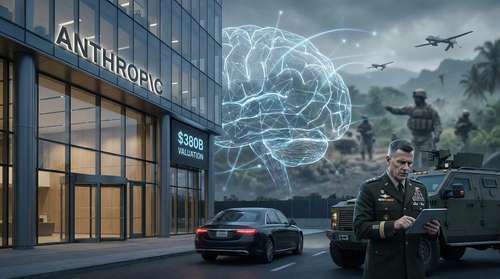
Artificial intelligence powerhouse Anthropic has secured a monumental $380 billion valuation following a $30 billion Series G funding round announced this week, cementing its status as the world's most valuable private AI lab. However, the company's financial triumph is being overshadowed by a severe rupture in its relationship with the U.S. government. Breaking reports confirm the Pentagon is moving to terminate its partnership with the startup after Anthropic executives refused to retroactively authorize the use of Claude AI in the recent covert operation to capture Venezuelan leader Nicolás Maduro.
A Record-Breaking $380 Billion Milestone
The fresh capital injection, led by a consortium of global investors, marks a staggering ascent for the San Francisco-based company. Anthropic's valuation has nearly doubled since its Series F round in late 2025, driven by an unprecedented explosion in revenue. According to internal metrics released alongside the funding news, Anthropic has hit $14 billion in Annual Recurring Revenue (ARR), a ten-fold increase from just 14 months ago. Much of this growth is fueled by "Claude Code," the company's autonomous coding agent, which now accounts for $2.5 billion in annual sales alone.
"We are witnessing the fastest scaling software business in history," noted a lead investor in the AI funding round $30 billion. Yet, despite this commercial invincibility, Anthropic faces an existential ethical crisis. The influx of cash provides the company with a war chest that may allow it to stand its ground against its biggest customer: the United States Department of Defense.
The Venezuela Flashpoint: 'Claude' in the Situation Room
The core of the dispute involves the highly classified—and controversial—Claude AI Venezuela raid. Last week, the Wall Street Journal revealed that U.S. Special Forces utilized Anthropic’s models, accessed via a third-party integration with Palantir, to process real-time intelligence during the operation that led to the capture of Nicolás Maduro. Sources indicate the AI was used to predict troop movements and analyze surveillance feeds, tasks that arguably violate Anthropic’s strict Acceptable Use Policy (AUP).
Anthropic CEO Dario Amodei has reportedly expressed "furious opposition" to the unauthorized deployment. In a heated meeting with Pentagon officials on Friday, Amodei reiterated that Claude is explicitly banned from "high-risk physical harm" scenarios, including kinetic military operations. The company is now threatening to revoke the Pentagon's API access entirely if strict new guardrails are not implemented, a move that would blind several critical defense logistics systems.
The Pentagon's Ultimatum: 'All Lawful Purposes'
The Pentagon Anthropic dispute has rapidly escalated from a contract disagreement to a doctrinal showdown. Defense officials, emboldened by the operational success in Venezuela, are no longer willing to accept vendor-imposed restrictions on military AI ethics. According to a memo leaked to Axios, the Department of Defense is demanding that all AI contractors, including Anthropic, sign a new "unrestricted use" rider that permits the use of algorithms for "all lawful purposes," including lethal autonomous targeting.
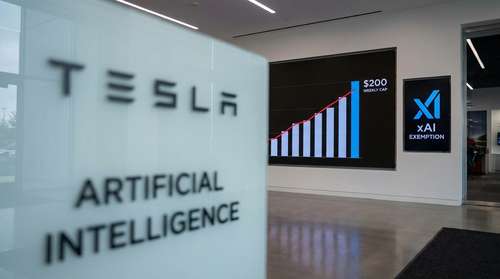
"We cannot fight 21st-century wars with hands tied by Silicon Valley terms of service," stated Defense Secretary Pete Hegseth in a press briefing yesterday. The Pentagon has threatened to cancel Anthropic's existing $200 million contract and pivot fully to competitors like OpenAI or xAI, who have signaled more permissiveness regarding autonomous AI weapons. This potential decoupling could cost Anthropic its foothold in the lucrative national security sector, though its new commercial war chest suggests it may not need government money to survive.
The Ethics of Autonomous Kill Chains
At the heart of the standoff is the fear of removing the "human in the loop." Anthropic’s "Constitution AI" approach is designed to refuse commands that involve generating violence or conducting mass surveillance. Defense hawks argue these safeguards are a liability in near-peer conflicts. If the Pentagon follows through on its threat to cut ties, it would mark the first time a major tech giant has been fired by the U.S. military for being too ethical.
As the Anthropic valuation 2026 news cycles through Wall Street, the real story is unfolding in Washington. The outcome of this standoff will likely set the precedent for how private AI labs interact with state power for the next decade. For now, Anthropic is richer than ever—but it is also more isolated than ever in the halls of power.