President Donald Trump’s long-simmering feud with the Federal Reserve exploded into a potential constitutional crisis this weekend, sending shockwaves through global financial markets on Monday. In an unprecedented move, the Department of Justice (DOJ) has served grand jury subpoenas to Federal Reserve Chair Jerome Powell, threatening a criminal indictment over alleged discrepancies in his testimony regarding building renovation costs. The aggressive legal maneuver, confirmed by Powell in a video statement on Sunday, has rattled investors and reignited fears about the central bank's independence.
The Renovation Controversy: A "Pretext" for Political Pressure?
The subpoenas, served on Friday, officially focus on Powell’s June 2025 testimony before the Senate Banking Committee regarding a $2.5 billion renovation of the Federal Reserve’s historic Washington, D.C. headquarters. Administration officials, including Office of Management and Budget Director Russell Vought, have previously characterized the project as "ostentatious," citing expenditures on Italian marble and custom elevators as evidence of fiscal irresponsibility.
However, Powell fired back Sunday in a rare and combative video address, dismissing the investigation as a thinly veiled attempt to strong-arm the Fed into lowering interest rates. "The threat of criminal charges is a consequence of the Federal Reserve setting interest rates based on our best assessment of what will serve the public, rather than following the preferences of the President," Powell stated. He explicitly labeled the renovation inquiry a "pretext" for political intimidation, asserting that the central bank would not bend to executive pressure.
Market Reaction to Fed News: Uncertainty Rules
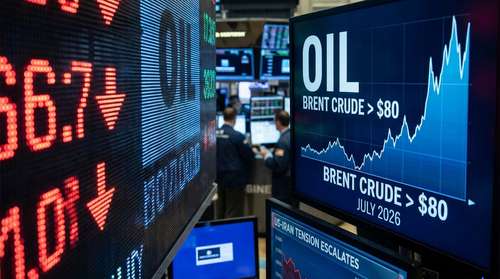
The escalation of the Trump Federal Reserve feud had an immediate impact on US economy news January 12. As markets opened on Monday, uncertainty gripped investors who view the Fed's independence as a bedrock of financial stability.
- US Stock Futures: S&P 500 futures dipped 0.6%, while the tech-heavy Nasdaq composite slipped 0.9%, reflecting nervousness about potential institutional instability.
- Safe Havens: Gold prices surged as much as 1.5% to record highs as traders sought safety, while the U.S. dollar weakened against major currencies.
- Crypto & Bonds: Bond markets showed signs of strain, with yields fluctuating as traders tried to price in the risk of a politicized central bank.
The Push to Replace Powell Early
While the Federal Reserve subpoenas 2026 grab headlines, the political maneuvering regarding Powell's successor is equally critical. Powell's second term as Chair does not officially expire until May 2026. However, sources close to the administration indicate that President Trump intends to signal a replacement as early as this month, effectively rendering Powell a lame duck.
Frontrunners for the position include Kevin Warsh, a former Fed governor known for his hawkish stance on inflation but who has recently aligned more closely with Trump's economic vision, and Kevin Hassett. The administration's strategy appears to be twofold: delegitimize Powell through legal threats while simultaneously elevating a successor who might be more amenable to the President's desire for aggressive interest rate policy 2026. In an NBC interview aired Sunday, Trump denied direct involvement in the DOJ probe but reiterated his disdain for Powell, stating he was "not very good at the Fed."
A Constitutional Showdown?
The Jerome Powell legal threat raises profound legal and constitutional questions. The Federal Reserve Act was designed to insulate the central bank from short-term political interference to prevent runaway inflation. Legal experts argue that a criminal indictment of a sitting Fed Chair over administrative testimony would be uncharted territory.
Political fallout has already begun, with some Republicans expressing unease. Senator Thom Tillis (R-NC) warned that the move calls into question the credibility of the DOJ and stated he would oppose any future Fed nominee until the matter is resolved. As the standoff intensifies, the line between fiscal oversight and political retribution has never been blurrier, leaving the global economy to watch and wait.