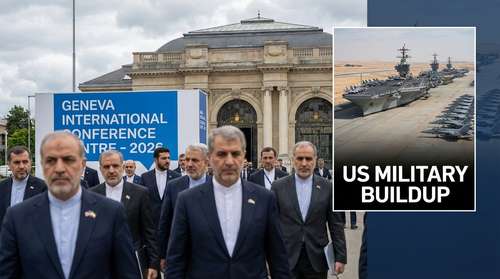
GENEVA — The United States and Iran resumed a critical third round of indirect nuclear negotiations in Geneva on Thursday, a high-stakes diplomatic gamble taking place under the shadow of the largest American military deployment to the Middle East in decades. With the USS Abraham Lincoln and USS Gerald R. Ford carrier strike groups positioning themselves within striking distance, the talks are widely viewed as a final off-ramp to avoid a potentially devastating regional war.
Diplomacy on the Brink of War
Delegations from Washington and Tehran arrived at the InterContinental Geneva hotel under heavy security, mediated by Omani Foreign Minister Badr Albusaidi. Leading the U.S. team are Special Envoy Steve Witkoff and senior presidential adviser Jared Kushner, underscoring the direct interest of the White House in these proceedings. Opposite them sits Iranian Foreign Minister Abbas Araqchi, who told reporters upon arrival that a deal is "within reach" but contingent on the U.S. abandoning what he termed "threats of aggression."
The resumption of the US Iran nuclear talks Geneva follows days of escalating rhetoric. In his State of the Union address on Tuesday, President Donald Trump delivered a stark ultimatum, warning that while he prefers a diplomatic solution, he "will not allow" Iran to obtain a nuclear weapon. "It’s proven to be, over the years, not easy to make a meaningful deal with Iran," Trump told Congress. "But we have to make a meaningful deal. Otherwise, bad things happen."
Kushner and Witkoff's High-Stakes Mission
The presence of Kushner and Witkoff signals a shift from traditional State Department diplomacy to a more direct, White House-led approach. Sources close to the negotiations suggest the U.S. is pushing for a "longer and stronger" agreement that not only curbs Iran nuclear program 2026 activities but also addresses ballistic missile development—a sticking point Tehran has previously refused to discuss. "The window is closing," warned IAEA Director General Rafael Grossi, who is also in Geneva to provide technical assessments. "We don't have much time."
Military Muscle and Public Opinion
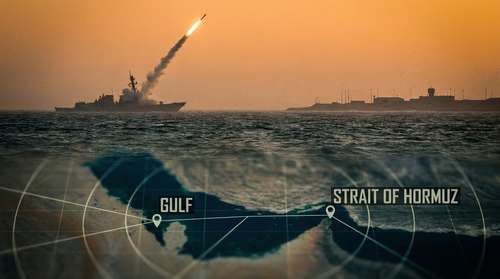
While diplomats talk in Switzerland, the reality on the ground in the Middle East is one of imminent conflict. The Pentagon has confirmed the deployment of over 150 additional aircraft to bases in the region, joining the two aircraft carrier strike groups. This Trump Iran military buildup is being described by defense analysts as a "force posture consistent with major combat operations," designed to provide the President with immediate strike options should the Geneva talks collapse.
However, domestic support for a new war is tepid at best. A recent US military force Iran poll conducted by YouGov found that 49% of Americans oppose a preemptive strike on Iran, while only 27% support it. despite this, a majority of respondents believe military conflict is likely in the next month. "The American people are wary of another Middle East entanglement," noted political analyst Sarah Isgur, "but the administration is betting that the threat of overwhelming force is the only language Tehran understands."
The Nuclear Threshold: 60% and Rising
Central to the crisis is the alarming status of Iran's atomic work. International inspectors have confirmed that Iran possesses a stockpile of approximately 400 kilograms of uranium enriched to 60% purity—a short technical step from weapons-grade material. U.S. intelligence assessments released earlier this month indicate that while Iran has not yet made the political decision to weaponize, it has "undertaken activities" that would allow it to assemble a device in weeks, not months.
Reports emerging from the talks suggest Iran may be offering a freeze on enrichment above 3.67%—the limit set by the defunct 2015 deal—in exchange for immediate sanctions relief. However, U.S. officials, including Steve Witkoff Iran envoy, have reportedly demanded the surrender of existing highly enriched stockpiles, a concession Tehran views as a surrender of its sovereign leverage.
Regional Fallout and Middle East Conflict Risks
The potential failure of these talks carries profound Middle East conflict risks. Israel, which conducted strikes on Iranian facilities in June 2025, has signaled it will not wait for U.S. permission to act again if it detects an imminent breakout. Vice President JD Vance reinforced the administration's hardline stance on Wednesday, stating that preventing a nuclear-armed Iran is the "ultimate military objective."
As Jared Kushner Geneva negotiations continue behind closed doors, the region remains on a razor's edge. Omani mediators are shuttling between the delegations, attempting to bridge a chasm of mistrust that has widened significantly over the last year. For now, the world watches Geneva, waiting to see if diplomacy can prevail over the drums of war.