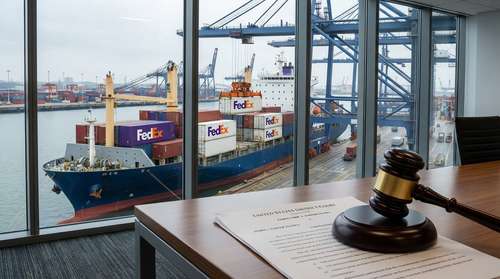
In a landmark move that could reshape the corporate legal landscape of the US trade war 2026, FedEx Corporation has officially filed a lawsuit against the federal government, seeking the recovery of millions in duties paid under President Trump's emergency tariff policies. Filed on Monday in the U.S. Court of International Trade, the FedEx lawsuit represents the first major corporate action following a stunning Supreme Court ruling that declared the administration's use of emergency powers to impose broad trade levies unconstitutional.
FedEx Leads the Charge for Tariff Refunds
The logistics giant's complaint names U.S. Customs and Border Protection (CBP), its commissioner Rodney Scott, and the United States of America as defendants. At the core of the litigation is a demand for a "full refund" of payments made under the International Emergency Economic Powers Act (IEEPA), which the Trump administration utilized to levy sweeping tariffs on imports. While FedEx has not publicly specified the exact dollar amount in the filing, financial disclosures from late 2025 indicated the company anticipated a hit exceeding $1 billion due to escalating trade barriers and regulatory shifts.
Legal experts view this FedEx tariff refund claim as the opening salvo in what is expected to be a deluge of corporate trade policy litigation. With the Supreme Court's 6-3 decision last Friday striking down the IEEPA-based tariffs as an overreach of executive authority, major importers—including retailers like Costco and Revlon, who are represented by the same legal counsel, Crowell & Moring—are poised to follow suit. The filing asserts that because the tariffs were collected under a now-invalidated legal framework, the government has no right to retain the funds.
The Supreme Court Ruling: A Constitutional Check
The catalyst for this legal offensive was the Supreme Court's decisive ruling on February 20, 2026. The high court found that President Trump's use of IEEPA to impose tariffs during peacetime circumvented Congress's exclusive constitutional authority to levy taxes. The decision was a stinging rebuke to the administration's trade agenda, which has relied heavily on executive emergency powers to bypass legislative gridlock.
However, while the Court declared the collection of these tariffs unlawful, it left a critical question unanswered: the remedy. In his dissenting opinion, Justice Brett Kavanaugh warned that the ruling provided no roadmap for how the Treasury should handle potentially billions of dollars in refund requests, cautioning that a retroactive reimbursement process could have "significant consequences" for federal finances. FedEx's lawsuit effectively forces the judiciary to resolve this ambiguity, setting a precedent that will determine the financial fate of countless US businesses caught in the crossfire of the global supply chain tariffs dispute.
Economic Impact on the Logistics Industry
The stakes for the logistics industry news cycle are immense. For years, carriers and freight forwarders have acted as the "importer of record," fronting the cost of tariffs for their customers to keep goods moving. A successful FedEx lawsuit would not only recoup lost capital but also validate the legal standing of logistics providers to sue for damages caused by executive overreach.
Market analysts are watching closely. If FedEx succeeds, it could trigger a repatriation of capital to US corporations estimated at over $175 billion—money currently held by the Treasury from the invalidated levies. Conversely, a prolonged legal battle could leave these funds in limbo, further straining a supply chain already grappling with volatility. FedEx stated unequivocally that it has taken "necessary action to protect the company's rights," signaling that it is prepared for a protracted fight.
Administration Strikes Back with New Threats
Despite the judicial setback, the Trump administration has shown no sign of retreating from its protectionist stance. In an immediate response to the Supreme Court ruling, President Trump criticized the justices and announced a new wave of levies. Utilizing Section 122 of the Trade Act of 1974—a different statute dealing with balance-of-payments deficits—the President declared a temporary 15% global tariff.
The Future of US Trade Policy
This rapid pivot highlights the volatile nature of the US trade war 2026. While FedEx and other corporations fight to recover losses from the "illegal" IEEPA tariffs, they must simultaneously navigate this new Section 122 regime. The administration's agility in finding alternative legal vehicles for trade barriers suggests that while FedEx may win the battle over past payments, the war over the future of global commerce is far from over.