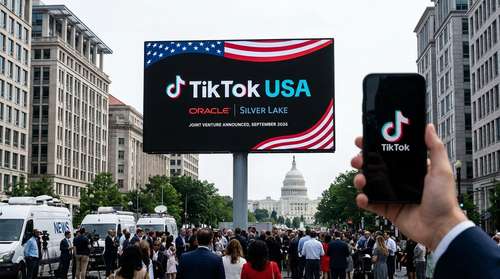
After more than a year of high-stakes legal maneuvering and political uncertainty, the saga of the TikTok ban update 2026 has reached a definitive conclusion. In a landmark development announced late Thursday, ByteDance has finalized a deal to transition the platform's American operations into a new majority U.S.-owned entity, effectively averting a permanent nationwide ban. The agreement establishes TikTok USA, a joint venture designed to satisfy strict national security requirements while keeping the app online for its 200 million American users.
The Historic Agreement: Inside 'TikTok USA'
The deal, which received final approval from the White House this week, fundamentally restructures the ownership of the social media giant. Under the terms of the ByteDance divestiture deal, the new 'TikTok USA' entity will be majority-owned by a consortium of American investors. Leading the venture are tech giant Oracle and private equity firm Silver Lake, who, along with Abu Dhabi-based AI investment firm MGX, will hold a combined 45% controlling stake as managing investors.
According to the official announcement, an additional 35% of the company will be held by a group of eight other investors, including the personal investment office of Michael Dell and trading firm Susquehanna International Group. Crucially, ByteDance will retain a minority 19.9% passive stake—a figure carefully calculated to remain just below the 20% threshold mandated by federal regulators. This complex financial architecture ensures that TikTok ownership news is dominated by American interests, addressing the core concerns of the Protecting Americans from Foreign Adversary Controlled Applications Act.
How We Got Here: The Path From Ban to Buyout
The road to this agreement has been fraught with tension. The original deadline for divestiture set by Congress was January 19, 2025. As that date approached, the platform faced an imminent "go dark" scenario, with app stores preparing to block downloads. However, the inauguration of President Donald Trump the following day changed the trajectory. Through a series of executive orders utilizing national security waivers, the administration delayed enforcement, creating a year-long window for negotiations that culminated in this TikTok USA joint venture.
Legal experts note that this outcome represents a significant shift in U.S. social media regulation. By allowing ByteDance to retain a passive minority stake rather than forcing a total severing of ties, regulators have set a new precedent for how foreign-owned tech companies can operate within American borders. "This deal balances economic reality with national security necessity," says digital policy analyst Sarah Jenkins. "It preserves the platform's algorithm—which was the main sticking point—while placing it inside an American containment vessel."
Data Security & Project Texas 2.0
Central to the deal is an enhanced version of the company's previous security proposal, now dubbed internally as "Project Texas 2.0." TikTok data security will be overseen entirely by Oracle, which will not only host the user data on its domestic cloud infrastructure but also have the authority to review and validate the platform's source code and content recommendation algorithms on an ongoing basis.
The agreement stipulates that all source code updates must be vetted by Oracle engineers before being pushed to users. This mechanism addresses the fears of foreign influence operations that drove the initial ban legislation. Furthermore, the governance of TikTok USA will be handled by an independent board of directors approved by the U.S. Committee on Foreign Investment in the United States (CFIUS), ensuring that decision-making power resides firmly on American soil.
What This Means for the Creator Economy
For the millions of influencers, small businesses, and marketers who rely on the platform, this TikTok ban update 2026 brings a collective sigh of relief. The TikTok creator economy, estimated to contribute billions to the U.S. GDP annually, had been in a state of suspended animation, with brands hesitant to commit to long-term campaigns on a platform facing an uncertain future.
With the legal clouds clearing, analysts predict a surge in advertising spend and creator investment. "The uncertainty tax is gone," explains digital marketing strategist Marcus Thorne. "Creators can now build their businesses knowing the platform isn't going to vanish overnight." As TikTok USA begins its operations this month, the focus shifts from survival to evolution, proving that even in a fragmented geopolitical landscape, the digital commons can endure through compromise and innovation.