A catastrophic aviation disaster has struck one of South America's most famous archaeological sites. On Saturday, August 1, 2026, a tragic Peru tourist plane crash claimed the lives of 13 people during a scenic flight over the world-renowned Nazca Lines. The small aircraft went down just minutes into the tour, leaving no survivors and plunging the international tourism community into mourning. This devastating Nazca Lines plane crash 2026 has once again raised urgent questions about aviation safety regulations surrounding the historic UNESCO World Heritage site.
The AeroDiana Flight Crash: What We Know
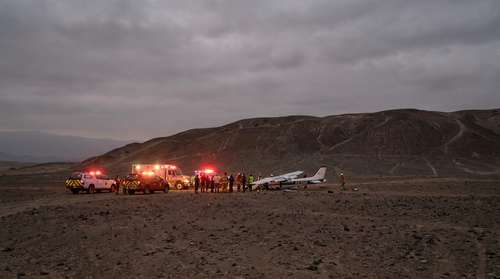
Authorities confirmed that the aircraft, a Cessna Grand Caravan operated by the local carrier AeroDiana, departed from the nearby city of Pisco shortly after 1:00 p.m. local time. According to early police reports, air traffic control lost contact with the flight roughly 20 minutes later. The plane violently crashed into a dry agricultural field in the Pueblo Viejo area, located approximately four miles from the city of Nazca and 12 kilometers from the ancient geoglyphs.
First responders faced an impossible rescue mission. Upon impact, the aircraft immediately caught fire, leaving the smoldering wreckage completely engulfed in flames before emergency teams could extinguish the blaze. This AeroDiana flight crash marks one of the deadliest aviation incidents in the region's recent history.
Victims of the Peru Sightseeing Flight Accident
The Peru sightseeing flight accident resulted in the deaths of all 11 passengers and two crew members. The Peruvian Ministry of Transport and Communications confirmed that the victims were entirely composed of European tourists seeking to view the ancient desert drawings from the sky.
The deceased foreign nationals include:
- Seven Italian citizens, ranging in age from 18 to 54.
- Two Spanish nationals, aged 52 and 53.
- Two German citizens, ages 77 and 78, who were traveling together.
Because these European tourists killed Peru were part of international tour groups, embassies have rapidly mobilized to notify families and assist with the repatriation of remains. The two local crew members who perished were identified as pilot Américo Salazar Cuéllar and co-pilot Irenka Guanilo del Carpio.
Investigating the Cessna Caravan Crash in Pisco, Peru
Aviation authorities and local prosecutors have secured the charred wreckage to determine what caused the Cessna Caravan crash Pisco Peru. While the official investigation is still in its infancy, meteorological records show that a severe sandstorm swept through the Ica region just 24 hours before the flight. Investigators are working to ascertain if residual weather conditions, mechanical failure, or a combination of factors triggered the fatal descent.
The aircraft operator, AeroDiana, has provided sightseeing tours over the Nazca region for 14 years. The company issued a statement extending its sincere condolences to the families of the victims, confirming full cooperation with the national aviation investigative board.
Nazca Ancient Geoglyphs Tour Safety Under Fire
This latest tragedy has reignited an ongoing debate about Nazca ancient geoglyphs tour safety. The massive, enigmatic animal and geometric shapes carved into the desert floor can only be fully appreciated from the air, drawing roughly 100,000 visitors annually.
The Historic Weight of the Nazca Lines
Created between 500 BC and 500 AD, the Nazca Lines are massive drawings etched into the arid plains of southern Peru. Designated as a UNESCO World Heritage site, the figures include giant hummingbirds, spiders, and monkeys that span hundreds of feet across the desert floor. Because of their immense scale, aerial viewing is the primary way to grasp their full complexity, making light aircraft flights an essential staple of the local tourism industry.
However, the airspace above the site has a dark history. Dozens of small planes compete for flight paths, and operators have previously faced heavy scrutiny regarding maintenance standards and pilot fatigue. In 2022, a similar crash killed seven people—including Dutch and Chilean tourists—while a 2010 disaster claimed six lives, among them four British citizens.
Government Action and Possible Airport Suspension
Following Saturday's disaster, the national government indicated that immediate regulatory actions might be imminent. President Keiko Fujimori publicly expressed her deep regret over the loss of life and announced that authorities are considering a temporary suspension of operations at the airport.
Fujimori stated that any final decision regarding airspace closure will be made once comprehensive reports are filed by the Ministry of Transport and Communications. A suspension would severely disrupt the local tourism economy but may be necessary to implement stricter safety protocols for all regional carriers.
As the recovery efforts continue in the desert heat, the global travel community waits for answers. Families of the victims are demanding transparent investigations, hoping that this devastating event will finally force systemic changes to ensure no more lives are lost over one of the world's greatest archaeological mysteries.