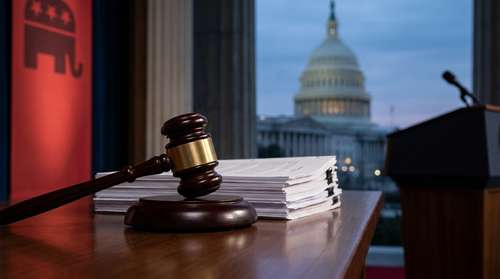
The political battle over the Department of Justice has reached a sudden and explosive boiling point. On Saturday morning, President Donald Trump issued a fierce Trump AG nomination ultimatum, threatening to revive his highly controversial $1.8 billion payout initiative if Senate Republicans do not confirm Todd Blanche, Attorney General nominee, next week. This sudden reversal has thrown the upcoming Senate Judiciary Committee vote into absolute chaos, highlighting a deepening Republican Senate standoff over the direction of the Justice Department.
If confirmed, Blanche would take the permanent helm of the DOJ. However, Trump made it clear that if the nomination is stalled, he is perfectly content to keep him as acting Attorney General Todd Blanche while aggressively pushing Congress to pass the payout legislation.
Trump AG Nomination Ultimatum Rattles the Senate
Taking to Truth Social, Trump delivered a direct threat to Republican holdouts who have been blocking the confirmation process. The president specifically called out the lawmakers stalling the vote, stating that if they do not approve Blanche—whom he called "one of the most respected professionals"—he will immediately put the payout fund back on the table.
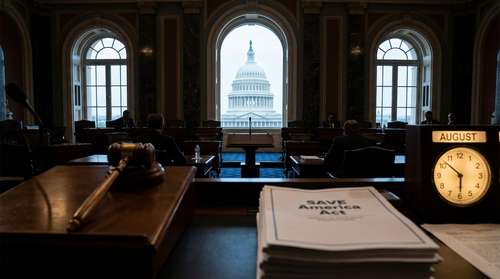
This weekend's declaration is a staggering pivot. Just one day prior, the administration had signaled to lawmakers that the fund was completely dead. Now, Trump is using the staggering $1.8 billion proposal as maximum leverage to force a successful confirmation before the Senate leaves for its August recess.
The Controversy Behind the Trump Anti Weaponization Fund
At the center of this legislative hostage situation is the Trump anti weaponization fund. Originally announced in May 2026 as part of a settlement resolving a massive lawsuit between Trump and the Internal Revenue Service, the nearly $1.8 billion fund was designed to financially compensate individuals who claim they were politically persecuted by the government.
The IRS settlement that originally birthed the fund also granted the president, his family, and his businesses sweeping immunity from tax audits. For many lawmakers on Capitol Hill, combining audit immunity with a billion-dollar compensation pool for political allies was a bridge too far. When Blanche faced the committee for his confirmation hearings earlier in the summer, he refused to definitively rule out the fund's existence in writing, citing long-standing legal precedents. That verbal evasion laid the groundwork for today's explosive confrontation.
The proposal immediately faced severe bipartisan backlash. Critics expressed deep concerns that the money could act as a taxpayer-funded slush fund for the president's political allies, including individuals convicted of crimes related to the January 6 Capitol riot. Facing legal setbacks and intense scrutiny, Justice Department officials—including Blanche himself—previously testified under oath that the administration was scrapping the initiative. Trump's new threat to revive the initiative via a legislative "Anti-Weaponization Bill" breathes new life into a policy many lawmakers thought was permanently buried.
John Cornyn, Thom Tillis, and the Republican Senate Standoff
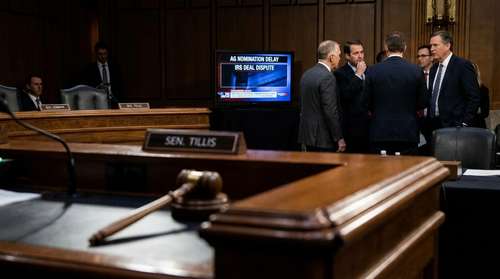
The president's fiery weekend post was squarely aimed at two crucial Judiciary Committee members. The ongoing Republican Senate standoff is largely driven by Senators John Cornyn, Thom Tillis, who have steadfastly refused to vote for Blanche's permanent role unless the Justice Department puts it in writing that the fund will never see the light of day.
Neither senator appears willing to back down. Following Trump's Truth Social post, Tillis fired back on X, slamming the proposed payouts. "Despite comments as late as yesterday that the fund is dead, President Trump clearly intends to resurrect the payout pot for punks," Tillis wrote. He accused the president of either trying to inappropriately establish a bogus fund or attempting to force a congressional bill that a majority of Senate Republicans would firmly oppose.
Cornyn has similarly demanded formal, written documentation that the IRS settlement fund is unequivocally terminated. Without his support, the committee simply does not have the votes to advance the nomination to the full Senate floor.
The Impact of an Acting Role
If the stalemate persists, the president's threat to keep his nominee in an acting capacity carries significant weight. Serving as acting Attorney General Todd Blanche allows the administration to bypass the immediate need for Senate confirmation, though it fundamentally changes the dynamic of congressional oversight. It also leaves the DOJ operating under temporary leadership during a highly contentious political period.
What's Next for the Senate Judiciary Committee Vote?
All eyes are now fixed on the upcoming Senate Judiciary Committee vote. Committee Chairman Chuck Grassley had previously postponed the markup to give the White House more time to secure the necessary Republican votes. Now, those delicate negotiations have been blown wide open by the president's aggressive public strategy.
To move the nomination forward, Blanche needs the support of all 11 Republicans on the committee, assuming unified Democratic opposition. Even a single Republican defection kills the nomination in committee. Democrats on the panel, led by Ranking Member Dick Durbin, have uniformly opposed the confirmation. They have relentlessly criticized both the nominee's qualifications and the original IRS immunity settlement. This unified front means Republicans have zero margin for error. If Cornyn and Tillis hold their ground, the math simply does not work for the Trump administration.
As lawmakers scramble to untangle this political knot, the clock is ticking. The standoff presents a brutal political calculus for the GOP: either surrender to the president's demands and advance a nominee they have lingering questions about, or block the confirmation and risk a brutal intra-party war over a $1.8 billion payout bill. Whether the administration can successfully twist the arms of its own party members—or if this ultimatum permanently sinks the nomination—will define the balance of power in Washington for the foreseeable future.