A historic escalation in regional conflict has triggered a severe Middle East travel alert 2026, paralyzing major transit hubs and stranding hundreds of thousands of passengers globally. Following an unprecedented wave of hostilities that erupted in late February, aviation authorities have enforced widespread airspace closures across the Gulf. As of March 9, 2026, over 27,000 flights have been abruptly canceled, sending shockwaves through the global aviation network. This sudden grounding has resulted in severe travel chaos, upending commercial travel just as the busy holiday season begins. Travelers are facing massive reroutes, surging airfares, and urgent diplomatic warnings as the situation continues to unfold at a rapid pace.
Middle East Airspace Closures Today: The Epicenter of the Crisis
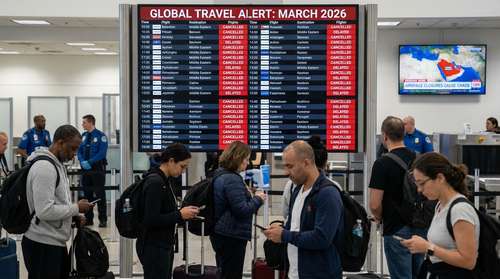
The sheer scale of the disruption is staggering. According to aviation analytics data, more than half of the 51,600 scheduled flights to and from the region since February 28 have been grounded. The Middle East airspace closures today have forced commercial airliners to completely avoid the skies over Iran, Iraq, the United Arab Emirates, and surrounding nations due to the ongoing risk of drone and missile activities. With the airspace effectively closed to regular commercial traffic, the ripple effects are being felt worldwide. Aircraft, flight crews, and millions of passengers are out of position, making it nearly impossible to maintain normal schedules even in unaffected regions.
Dubai Airport Flight Cancellations Strand Millions
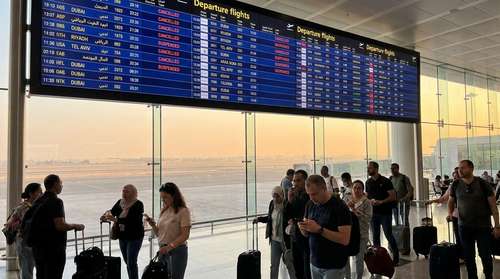
At the center of this logistical nightmare are unprecedented Dubai airport flight cancellations. As the world's busiest international transit hub, Dubai International Airport (DXB) was forced into a highly restricted operating mode for consecutive days, effectively shutting down standard commercial travel. Major regional carriers like Emirates and flydubai temporarily suspended all routine scheduled flights, shifting to a limited roster of essential repatriation and cargo services. Tens of thousands of passengers are currently stranded in transit lounges or city hotels, trapped in what industry insiders are calling a logistical limbo. Passengers have been strictly advised not to travel to the airport without explicit, direct confirmation of their flight's departure. Other hubs, including Abu Dhabi and Doha, have faced similar operational freezes, forcing global airlines to suspend their westbound and eastbound connections indefinitely.
US State Department Travel Advisory March 2026: 'Depart Now'
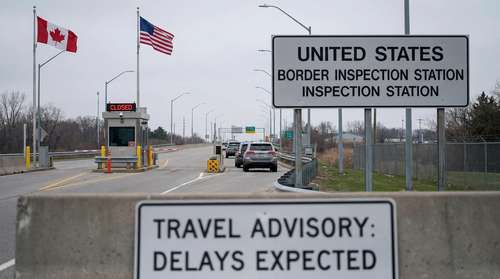
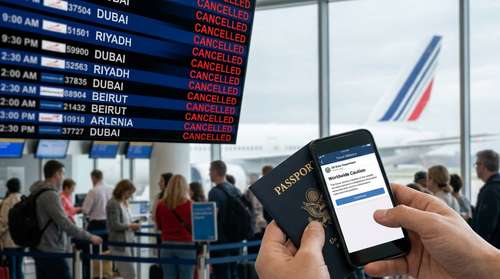
The geopolitical fallout has prompted immediate and severe government intervention. The US State Department travel advisory March 2026 updates are some of the most urgent issued in recent history. Citing serious safety risks from the escalating conflict, authorities upgraded multiple Gulf and Arab nations—including the UAE, Saudi Arabia, Oman, and Jordan—to Level 3, advising citizens to reconsider travel. U.S. officials went a step further, ordering the departure of non-emergency embassy personnel from several diplomatic posts across the region. A stark depart now warning was issued to American citizens in impacted countries, urging them to utilize any available commercial transportation to evacuate immediately. Furthermore, a worldwide caution was deployed, advising all citizens abroad to remain vigilant as the global security landscape remains incredibly volatile.
Spring Break 2026 Travel Disruptions
For vacationing families and college students, this diplomatic shift has sparked massive Spring Break 2026 travel disruptions. Popular holiday itineraries and common transit routes to Asia or Africa that filter through Middle Eastern hubs have been effectively obliterated. Travelers are scrambling to rewrite their plans as airlines desperately try to accommodate displaced passengers on alternative routes. Vacationers are strongly advised to consult their travel insurance providers immediately, as many standard policies feature specific clauses regarding acts of war and airspace closures.
International Flight Rerouting News and Airline Price Surge 2026
For the few flights that are still operating, the required logistical gymnastics are costing significant time and money. International flight rerouting news highlights that aircraft are now taking extreme detours across northern or southern corridors to bypass the active conflict zones safely. These massive detours require extra fuel, supplementary crew shifts, and unplanned layovers, fundamentally altering long-haul travel economics. Unsurprisingly, this bottleneck has triggered an unprecedented airline price surge 2026. With commercial seats virtually nonexistent, the demand for alternative routes has skyrocketed. Desperate travelers and corporate executives are reportedly chartering private jets to escape the region, with brokerage firms quoting astronomical prices—some reaching up to $350,000 for a single emergency flight from Riyadh to Europe.
Airline Repatriation Efforts and Passenger Rights
In response to the chaos, international carriers are slowly rolling out contingency plans. Airlines like Lufthansa, Air India, and IndiGo have deployed additional wide-body aircraft to neighboring operational hubs in Oman and Saudi Arabia to help repatriate stranded citizens,. Many carriers have extended fee-free cancellation waivers and rebooking windows through late March and April to ease the financial blow on consumers. If you are caught in this aviation freeze, communication is your best asset. Rely on official carrier portals rather than third-party booking apps, and ensure your contact details are updated to receive direct alerts. As the global network slowly pieces itself back together, flexibility and close monitoring of government advisories will be essential.