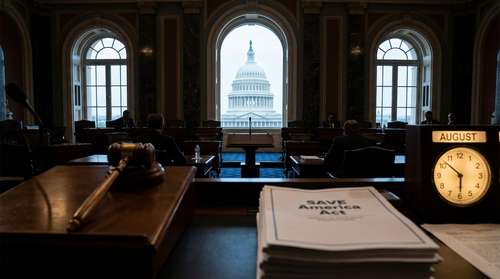
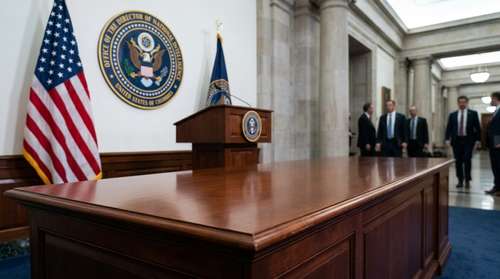
In a pivotal move that concludes weeks of intense political maneuvering, the Senate confirmed Jay Clayton as Director of National Intelligence on Tuesday, July 28. The 51-47 party-line vote officially installs the former Securities and Exchange Commission chairman as the nation's top intelligence official, bringing an end to the highly controversial interim tenure of acting director Bill Pulte. As the new US spy chief, Clayton faces the immediate challenge of stabilizing an intelligence apparatus rocked by recent mass layoffs, while his confirmation is widely expected to jumpstart stalled congressional negotiations on reauthorizing Section 702 of the Foreign Intelligence Surveillance Act (FISA).
A Narrow Senate Intelligence Vote Ends Pulte's Controversial Tenure
Clayton's elevation to the role of Director of National Intelligence follows a tumultuous period for the Trump administration national security apparatus. He replaces Bill Pulte, a federal housing official and real estate executive whom President Donald Trump appointed on a temporary basis following the sudden resignation of Tulsi Gabbard in late May.
Pulte's brief time at the helm drew fierce bipartisan backlash due to his almost total lack of national security experience. His approach to managing the Office of the Director of National Intelligence (ODNI) was marked by severe, immediate workforce reductions that alarmed career intelligence professionals. Just hours before the Senate intelligence vote that would ultimately confirm his successor, Pulte proudly announced a fifth round of terminations on social media. He claimed to have slashed agency staff by approximately 30 percent in a matter of weeks, framing the cuts as a necessary purge of "the bloated and corrupt elite class".
By finalizing Jay Clayton's confirmation, lawmakers have effectively closed the chapter on Pulte's aggressive and deeply polarizing restructuring efforts, shifting the focus back to traditional intelligence operations.
Reviving Stalled Negotiations on FISA Section 702
Beyond stabilizing the agency's internal workforce, placing Jay Clayton in the top intelligence spot resolves a major legislative roadblock on Capitol Hill. When the president appointed Pulte to lead the ODNI on an interim basis in June, the decision alienated lawmakers across the aisle. Crucially, the move prompted Democrats to walk away from a fragile bipartisan agreement to reauthorize FISA Section 702.
This critical warrantless surveillance authority, which allows US intelligence agencies to gather foreign intelligence, officially lapsed on June 12 as the political standoff deepened. Without a permanent and qualified director in place, the legislative impasse threatened to severely limit the government's ability to collect vital intelligence abroad, with critics warning that allowing the law to lapse was a dangerous gamble.
Now, Republican leaders are hopeful that Clayton's confirmation will bring Democrats back to the negotiating table. Senate Majority Leader John Thune explicitly urged his colleagues to stop blocking the surveillance tool's reauthorization now that a permanent, vetted official is overseeing the agencies. The immediate reinstatement of Section 702 of the Foreign Intelligence Surveillance Act (FISA) remains one of the most pressing national security priorities for the newly minted director, as he works to bridge the partisan divide over surveillance practices.
What Jay Clayton Brings to Trump Administration National Security
As the new US spy chief, Walter Joseph "Jay" Clayton III enters the intelligence community with a robust legal and regulatory background, though he is not a traditional intelligence insider. Most recently serving as the US Attorney for the Southern District of New York, Clayton is best known for his tenure as the chair of the Securities and Exchange Commission from 2017 to 2020. His reputation as a seasoned attorney and corporate manager will be thoroughly tested as he transitions to overseeing the nation's sprawling intelligence network.
Navigating Political Pressures
Despite early bipartisan praise for his nomination, Clayton's path to confirmation was not without turbulence. His initial confirmation hearing before the Senate Intelligence Committee was abruptly delayed by the White House, a move that surprised Republicans and angered Democrats. When he finally testified in mid-July, Clayton faced intense scrutiny regarding his independence from the Oval Office.
Democratic lawmakers pressed Clayton during his hearings, seeking assurances that he would prevent the intelligence community from being weaponized for political gain. During questioning, Clayton notably declined to state outright that Joe Biden won the 2020 election, instead carefully noting that Biden was "certified" as president—a response that frustrated several committee members. Following Tuesday's floor vote, Senator Mark Warner, the top Democrat on the Senate Intelligence Committee, emphasized that the new director has both an opportunity and a strict responsibility to ensure intelligence is never manipulated to fit a political narrative.
The Future of the US Intelligence Community
The confirmation of Jay Clayton as DNI marks a critical turning point for the nation's intelligence framework. He inherits an agency that has been significantly downsized and publicly criticized by its own recent acting director. Rebuilding morale and reestablishing operational stability across the 18 federal agencies that make up the intelligence community will be his first major operational test.
Furthermore, as the United States approaches the crucial November midterm elections, the Office of the Director of National Intelligence will play a central role in monitoring and preventing foreign election interference. Lawmakers from both parties will be watching closely to see if Clayton can restore traditional order, secure the essential renewal of FISA Section 702, and fiercely protect the integrity of American intelligence operations in an increasingly volatile global landscape.