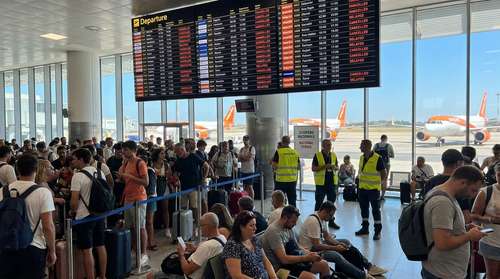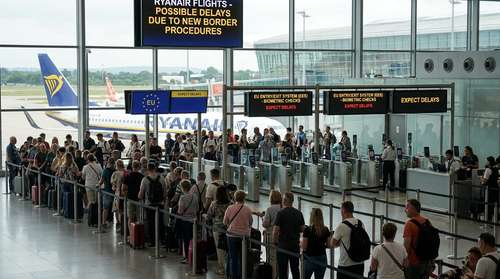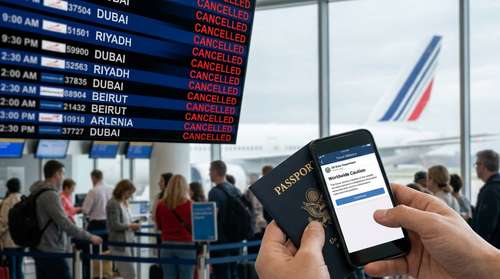
The U.S. Department of State has just escalated its global security posture, issuing a sweeping Worldwide Caution US Citizens alert on July 22, 2026. Triggered by an increasingly complex and volatile security environment, this urgent alert advises Americans to exercise heightened vigilance worldwide, particularly when navigating mounting Middle East travel disruptions. The sudden advisory comes as geopolitical tensions reach a boiling point, prompting major international airlines to heavily alter their schedules, leading to sudden airspace closures and significant travel chaos.
State Department Travel Advisory: Middle East Complexities
When it comes to international transit, the new State Department travel advisory Middle East parameters paint a stark picture. Officials have highlighted the potential for "unforeseen escalation," noting that U.S. diplomatic facilities, businesses, and commercial interests could become sudden targets by actors operating in the region. For Americans currently stationed in or visiting the region, the directive is clear: maintain a low profile and prepare for rapid, unpredictable changes to civilian infrastructure, including temporary airport closures.
The July 2026 update goes far beyond standard cautionary guidance. Multiple foreign ministries, including the Dutch and Australian governments, have similarly intensified their own travel warnings, effectively turning much of the Gulf region into a tightly restricted zone for Western tourists. The Dutch government, for instance, upgraded its travel advisory to a "code red" for Bahrain and issued stern warnings against travel to the UAE, Saudi Arabia, and Qatar. Consequently, the State Department strongly recommends that travelers reconsider non-essential movement through key transit hubs and remain glued to local news updates.
Widespread Flight Cancellations: Dubai, Riyadh, Beirut
Aviation markets are feeling the immediate sting of these security measures. Travelers are currently battling massive logistical hurdles due to sweeping flight cancellations Dubai Riyadh Beirut, which are forcing thousands of passengers to seek alternative routes. Major airports that typically serve as global connecting hubs—such as Dubai International Airport (DXB), one of the busiest in the world—are experiencing a ripple effect of delays as airlines proactively ground operations to safeguard passengers and crew.
The disruption is not isolated to a single day of schedule changes. European Union Aviation Safety Agency (EASA) advisories have prompted operators to avoid specific Gulf airspaces completely, forcing long-haul flights to adopt lengthy detours via Egypt, Saudi Arabia, or the Caucasus. Consequently, even travelers whose final destination lies completely outside the Middle East—such as those heading to Southeast Asia or Australia—are finding their itineraries severely impacted by missed connections, extended flight times, and sudden aircraft reassignments.
Air France Flight Suspensions and Global Carrier Adjustments
Leading the wave of operational pauses, Air France flight suspensions have significantly impacted European connections to the Middle East. Following a rigorous internal security review, the French flag carrier confirmed it has extended its suspension of flights to Dubai International Airport through July 27, 2026, and to King Khalid International Airport in Riyadh through July 24, 2026. Furthermore, services to Rafic Hariri International Airport in Beirut remain grounded until at least August 2, 2026, as the airline assesses the rapidly evolving geopolitical landscape.
Other global carriers are adopting equally aggressive safety margins. Singapore Airlines recently announced it will keep its Dubai routes suspended until October 24, underscoring a highly pessimistic outlook on near-term regional stability. Budget carrier Scoot paused its Jeddah flights, while European airlines like KLM, Lufthansa, and British Airways have pushed back their return dates to various Middle Eastern destinations, leaving passengers with few commercial options. Airlines are largely offering free rebooking or cancellations, yet the sheer volume of stranded travelers makes finding open seats on alternative carriers a monumental challenge.
Navigating US Travel Warnings in July 2026
For those caught up in these Middle East travel disruptions, understanding the latest US travel warnings July 2026 is critical for safe passage. To navigate the current landscape effectively, consider the following actionable steps:
- Monitor Your Itinerary: Verify your flight status directly through your airline's mobile application before departing for the airport, as schedules are shifting by the hour.
- Leverage Digital Support: Customer service phone lines at major travel agencies are currently overwhelmed. Use digital platforms and apps, which remain the most efficient way to process rebookings or claim refunds.
- Register with STEP: If you are already in transit or located in a high-risk zone, enroll in the Smart Traveler Enrollment Program (STEP) to receive instant security alerts directly from the nearest U.S. embassy.
- Review Insurance Policies: Ensure your travel insurance explicitly covers sudden airspace closures, as standard trip cancellation policies frequently exclude geopolitical conflicts.
Keep your mobile devices charged, monitor local broadcasts, and be ready to adapt. While the current aviation landscape is fraught with uncertainty, exercising increased caution and staying informed will be your best defense against the escalating travel chaos.