TEHRAN — The crisis in Iran has reached a bloody tipping point as of Monday, January 12, 2026, with human rights groups confirming over 500 deaths in a crackdown that activists are calling a "massacre." As the Islamic Republic enforces a near-total internet blackout to conceal the violence, President Donald Trump has placed the U.S. military on high alert, declaring that his administration is weighing "very strong options" to intervene while simultaneously claiming Tehran is desperate to negotiate.
'Locked and Loaded': Trump's Ultimatum to Tehran
President Trump, fresh from a decisive military intervention in Venezuela earlier this month, has issued his starkest warning yet to Iran's Supreme Leader Ayatollah Ali Khamenei. Speaking to reporters aboard Air Force One on Sunday, Trump confirmed he is reviewing a suite of military responses prepared by the Pentagon. "The military is looking at it, and we're looking at some very strong options," Trump stated, reiterating his pledge to "rescue" Iranian protesters if the regime continued its lethal suppression.
However, in a characteristic twist, the President also revealed that Iranian officials had reached out to his administration through back channels. "The leaders of Iran called," Trump said, suggesting the crushing sanctions and internal unrest have forced Tehran's hand. "They want to negotiate. They're tired of being beat up." This dual-track approach—threatening imminent strikes while floating the possibility of a deal—has left the region on a knife-edge, with U.S. carrier strike groups in the Persian Gulf reportedly moving to higher readiness levels.
Reports of a 'Massacre': 500+ Killed in Crackdown
Despite the regime's attempt to shroud the country in digital darkness, horrifying details of the violence have trickled out via smuggled Starlink connections. The U.S.-based Human Rights Activists News Agency (HRANA) verified on Sunday that at least 538 people have been killed since the protests erupted on December 28, 2025. Of those, nearly 500 were demonstrators, many shot at close range in the head, neck, and eyes—a tactic medical groups say indicates a "shoot-to-kill" policy.
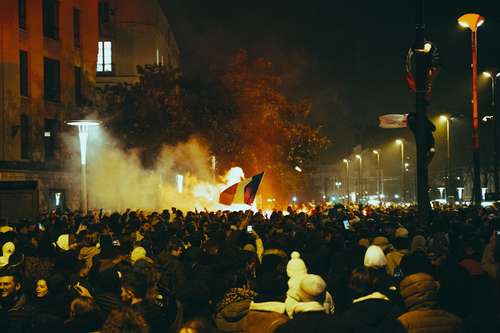
Reports from the ground describe scenes of chaos in cities like Mashhad and Tehran. Video footage verified by open-source intelligence groups shows security forces raiding hospitals to arrest wounded protesters, while morgues in Kahrizak are reportedly overflowing. "A massacre is unfolding," warned the Center for Human Rights in Iran. The judiciary has escalated the stakes further, with officials threatening to charge protesters as "moharebeh"—enemies of God—a crime punishable by death, signaling that mass executions could follow the street violence.
Regime Threatens 'Legitimate Targets'
In response to Trump's rhetoric, the Iranian regime has adopted a posture of defiant belligerence. Parliament Speaker Mohammad Bagher Qalibaf, a former IRGC commander, warned Washington against "miscalculations" on Sunday. "Let us be clear: in the case of an attack on Iran, the occupied territories [Israel] as well as all U.S. bases and ships will be our legitimate target," Qalibaf declared.
The Digital Siege: Starlink Jamming and Internet Blackout
A critical front in this conflict is the information war. Since Thursday, Iran has imposed one of the most sophisticated internet blackouts in its history, cutting off mobile networks and domestic landlines. Unlike previous shutdowns, the regime has deployed military-grade jammers to disrupt satellite signals, specifically targeting Starlink terminals that have become a lifeline for activists.
Experts note that while Elon Musk's Starlink network was instrumental during the 2022 uprising, the current interference has resulted in up to 80% packet loss in some regions, rendering many terminals useless. President Trump indicated he plans to speak with Musk to bolster connectivity for the Iranian people. "I may speak to Elon, because as you know he's very good at that kind of thing," Trump remarked, hinting at potential U.S. technical assistance to bypass the jamming. For now, however, the digital iron curtain remains drawn, leaving the world to piece together the full scale of the tragedy from fragmented updates.
What Happens Next?
As the protests enter their third week, the dynamic has shifted from economic grievances to openly revolutionary calls for the fall of the Islamic Republic. With the shadow of the U.S. operation in Venezuela looming large, the credibility of Trump's military threat is higher than in his previous term. Whether the President chooses to strike IRGC targets or pursue the "negotiation" he claims Tehran is seeking will likely depend on the developments of the next 48 hours. For the protesters on the streets of Tehran, facing live ammunition and a blackout, the hope for external support is now a matter of life and death.