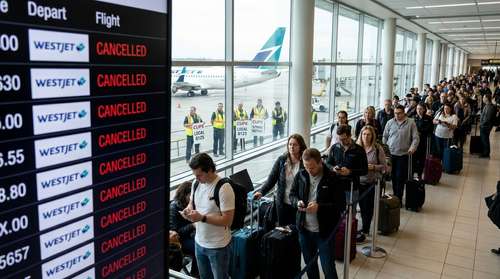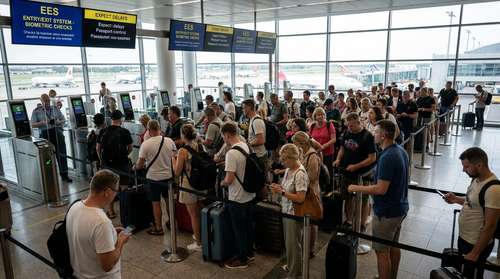
As millions pack their bags for Europe summer travel 2026, a severe roadblock is emerging at the continent's major airports. According to a newly released report by the World Travel & Tourism Council (WTTC), Europe's fully implemented biometric Entry/Exit System (EES) is creating unprecedented bottlenecks that could wreak havoc on the vacation season. The stark WTTC tourism warning reveals that if current wait times persist, up to 41 million travelers could abandon their European holiday plans entirely. This staggering drop in international arrivals threatens to strip a massive $45.4 billion in visitor spending from the European economy this year.
The Impact of EU EES Border Delays on International Tourism
The highly anticipated EES launched its full operational phase in April 2026, aiming to modernize border management across 29 European countries. Instead of the promised seamless experience, the reality on the ground has been fraught with logistical nightmares. EU EES border delays have regularly stretched from three to six hours during peak periods. For non-EU tourists, including highly lucrative markets like the United States, the United Kingdom, Canada, and Australia, these unwieldy lines are becoming a major deterrent.
In a recent survey of over 2,500 travelers across these four key demographics, the WTTC found that roughly one-third of prospective visitors would choose to avoid the Schengen Area completely if they expected to face a three-to-four-hour customs hold-up. Breaking down the data, 39 percent of British travelers, 33 percent of Americans and Canadians, and 27 percent of Australians reported they would be much less likely to cross the Atlantic under these conditions. These figures represent a massive liability for a regional tourism industry banking heavily on a booming 2026 summer season.
Schengen Biometric Checks: What Is Causing the Bottleneck?
The core issue driving the current European airport queues is the mandatory initial registration process. The modernized border framework requires all non-EU citizens to submit fingerprints and facial biometric data upon their first entry. While subsequent visits are designed to allow for a fast-tracked process, the sheer volume of travelers registering for the first time has completely overwhelmed existing border control infrastructure.
Early reports from major hubs, including Paris's Charles de Gaulle International Airport, highlight extreme scenarios where travelers spent hours waiting to clear customs, missed their connecting flights, and were ultimately forced to repeat the entire screening process. Uku Särekanno, a director at the EU border agency Frontex, recently cautioned that member states are struggling to adopt the technology efficiently, noting that the situation might not fully stabilize for another one to two years.
This timeline is alarming for the travel sector, as Schengen biometric checks were fundamentally designed to speed up processing, not hinder it. Although travelers generally support enhanced border security—with 65 percent of respondents backing the EES concept once informed—the messy execution is severely testing traveler patience.
WTTC Tourism Warning: Navigating the $45 Billion Risk
Industry leaders are urgently calling for immediate, structural intervention. Gloria Guevara, President and CEO of the WTTC, stressed that while initial teething problems are inevitable during any major digital transformation, the focus must shift to immediate problem-solving before the summer rush peaks. She emphasized that governments, airport authorities, and the travel sector need to collaborate effectively to smooth out the implementation.
To mitigate the crippling Entry Exit System delays, the WTTC and other travel authorities are recommending the broader adoption of digital pre-registration tools. Specifically, there is a strong industry push to popularize the Travel to Europe mobile application, which allows passengers to input vital information before they even step off the plane. Coupled with robust public awareness campaigns—considering more than half of surveyed travelers remain entirely unfamiliar with the EES requirements—these digital solutions are viewed as essential to averting a multibillion-dollar economic hit.
Preparing for Travel to Europe Summer 2026
If you are plotting a travel to Europe summer 2026 itinerary, adjusting your expectations and logistics is paramount. Travel experts strongly advise building projected border delays into your arrival schedule. This means planning substantial buffer time between connecting flights, especially if you are entering the Schengen Area through heavily trafficked hubs in France, Italy, Portugal, or Spain, which have reported some of the longest holdups.
Keep your travel documents, including your passport, easily accessible upon landing, and do not pack them away after security. Follow airport instructions closely to expedite the biometric registration process. By staying informed, utilizing available pre-registration apps, and packing a healthy dose of patience, you can help minimize your time spent in customs lines and get back to enjoying your European getaway.