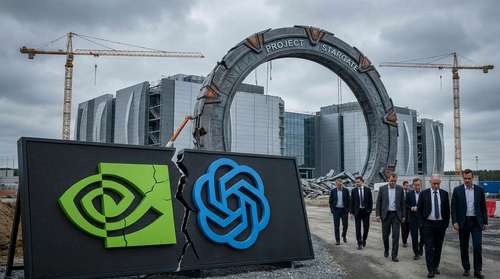
In a stunning development that could reshape the trajectory of the artificial intelligence industry, Nvidia and OpenAI’s negotiations for a massive $100 billion investment have reportedly collapsed. The deal, which was set to fund the ambitious "Stargate" AI infrastructure project, has hit a definitive stalemate, according to sources close to the matter. This breakdown casts significant doubt on the timeline for building the next generation of artificial intelligence infrastructure required to power future generative AI models.
The Collapse of the $100 Billion AI Deal
The tech world was sent reeling today following reports that talks between chip giant Nvidia and AI pioneer OpenAI have disintegrated. The proposed deal, initially signaled by a non-binding letter of intent in September 2025, would have seen Nvidia inject up to $100 billion into OpenAI. This capital was intended to support the construction of massive data centers capable of handling 10 gigawatts of computing power—roughly equivalent to the peak electricity demand of New York City.
Sources indicate that the collapse stems from deep-seated strategic disagreements. Nvidia CEO Jensen Huang has reportedly expressed private concerns regarding OpenAI's business strategy, criticizing a perceived "lack of discipline" in the startup's operational approach. Furthermore, growing competition from rivals like Google and Anthropic has reportedly made Nvidia hesitant to commit such an unprecedented sum to a single partner, preferring to maintain its position as the neutral "arms dealer" of the AI revolution.
What Was the ‘Stargate’ Project?
The "Stargate" project was envisioned as the crown jewel of Sam Altman’s expansive vision for the future of AI. Far more than just a data center, Stargate was designed to be a supercomputer of unparalleled scale, utilizing millions of Nvidia’s next-generation GPUs to train models orders of magnitude more powerful than GPT-5. The project was part of a broader $500 billion infrastructure roadmap aimed at securing American dominance in artificial intelligence.
With the Nvidia investment now off the table, the feasibility of this timeline is in jeopardy. While OpenAI has secured approximately $52 billion in committed equity from other partners like SoftBank and Oracle, the loss of Nvidia’s direct financial backing leaves a massive funding gap. This setback forces OpenAI to scramble for alternative capital to keep its generative AI hardware ambitions alive.
Amazon Steps In as Potential Savior
As the door closes on Nvidia, another tech titan may be stepping through. Reports have emerged that Amazon is in advanced discussions to invest up to $50 billion in OpenAI. This potential pivot highlights the fluid nature of alliances in the tech industry news 2026 cycle. An Amazon partnership would likely leverage its AWS cloud infrastructure and proprietary chips, potentially reducing OpenAI’s reliance on Nvidia’s hardware ecosystem—a move that could ironically validate Nvidia’s hesitation to fund a competitor’s independence.
Implications for the AI Hardware Market
The breakdown of this mega-deal signals a cooling of the "at any cost" mentality that has defined AI investment for the last three years. Investors and hardware manufacturers are beginning to scrutinize the long-term profitability of these massive capital expenditures. For Nvidia, walking away from the deal preserves its capital and strategic flexibility. For OpenAI, however, the pressure is mounting. Facing projected losses of $14 billion in 2026, the company is under immense strain to secure the funding needed to bridge the gap to profitability while preparing for a potential IPO later this year.
This development serves as a reality check for the entire sector. It suggests that while the demand for artificial intelligence infrastructure remains insatiable, the checkbooks of the world's most valuable companies are not bottomless. The coming months will be critical as OpenAI navigates this financial minefield, potentially reshaping the alliances that will define the next decade of computing.