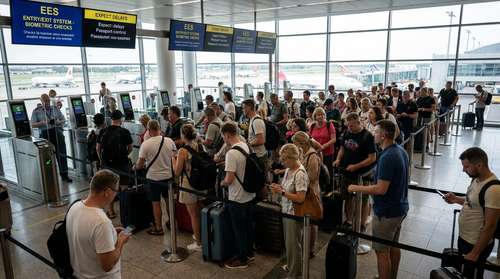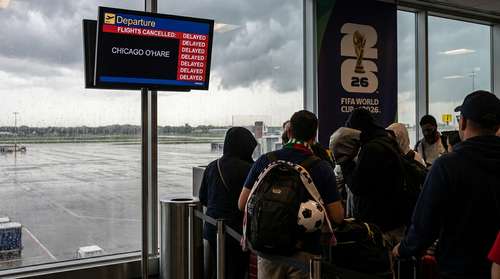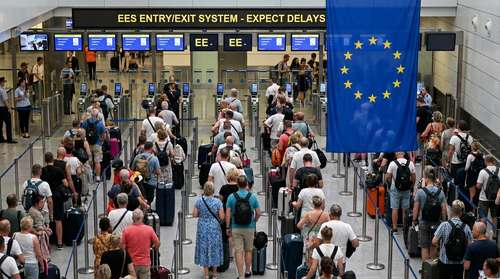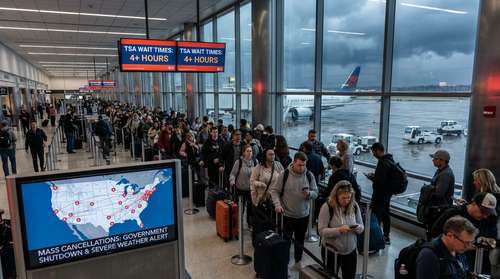
A perfect storm of political gridlock and severe weather has turned Spring Break travel 2026 into an unprecedented nightmare for millions of Americans. Across the country, passengers are encountering crippling airport security delays, with lines snaking out of terminal doors and onto sidewalks. The TSA wait times today have reportedly eclipsed the four-hour mark at several major hubs. This staggering gridlock is the direct result of an acute airport staffing shortage triggered by the ongoing partial government shutdown. Compounding the misery, severe thunderstorms and tornado warnings sweeping through the Southeast have triggered widespread Federal Aviation Administration ground stops, adding over 1,600 US flight cancellations to the board by Wednesday morning.
Government Shutdown Travel Impact Reaches Breaking Point
The root cause of the current terminal paralysis lies in Washington. The partial government shutdown, which began in mid-February, has forced Transportation Security Administration officers to work without pay for over a month. The financial strain has decimated morale, leading to a severe airport staffing shortage as officers are forced to call out sick or seek secondary income.
The government shutdown travel impact is now highly visible. According to the Department of Homeland Security, airports like Houston Hobby experienced a staggering 55% call-out rate over the weekend. With fewer lanes open during one of the busiest travel periods of the year, bottlenecks were inevitable. At Houston airports alone, officials expected 2.2 million travelers for the spring break rush. While passengers enrolled in TSA PreCheck are experiencing shorter wait times, standard screening lanes have devolved into a chaotic waiting game, forcing many travelers to miss their flights entirely. The situation has grown so dire that the Department of Homeland Security recently described the scenario as spring break under siege.
Severe Weather Triggers Mass US Flight Cancellations
If the staffing crisis lit the match, the weather poured gasoline on the fire. The aviation network was already reeling from Winter Storm Iona, a massive mid-March blizzard that dumped feet of snow across the Midwest and forced thousands of flight disruptions at Chicago O'Hare and Minneapolis-St. Paul earlier in the week.
Now, the threat has shifted east. Severe thunderstorms carrying the risk of hail and tornadoes are battering the Southeast and Mid-Atlantic. Federal regulators have been forced to implement temporary ground stops at some of the nation's busiest air spaces, including Atlanta Hartsfield-Jackson and Charlotte Douglas. The combination of severe weather and unstaffed security checkpoints has created a cascading failure across airline networks, leaving travelers stranded on terminal floors as agents scramble to rebook displaced passengers.
Which Airports Are Hit the Hardest?
The dual threat of extreme weather and unpaid federal workers has left specific airports struggling to maintain basic operations.
Atlanta Hartsfield-Jackson (ATL)
The world's busiest airport was hit with a punishing combination of severe weather and extreme security backups. After storm systems triggered ground stops earlier in the week, hundreds of departures were wiped from the board. Passengers clearing security on Wednesday faced massive lines fueled by the ongoing shutdown, with some wait times reaching 127 minutes just to reach the screening area.
Chicago O'Hare (ORD)
Still digging out from Winter Storm Iona, Chicago remains a major pain point. O'Hare recorded over 1,000 cancellations on Monday alone, marking the highest single-day count of the current season. While runways have reopened, displaced aircraft and crew shortages mean residual cancellations will continue to plague the Midwest hub through the week.
Houston Airports (IAH and HOU)
Houston has become the epicenter of the shutdown's toll on security personnel. With officers missing their paychecks and call-out rates spiking, airport authorities have pleaded with lawmakers to resolve the funding lapse immediately. Standard checkpoint processing times have fluctuated wildly, at times pushing past the two-hour mark.
Essential Travel Advice March 2026
For those flying this week, preparation is your only defense against the chaos. Here is our travel advice March 2026 for navigating the current gridlock:
- Arrive Much Earlier Than Usual: The standard two-hour rule no longer applies. Airport officials are explicitly instructing domestic travelers to arrive at least three to four hours prior to departure.
- Monitor Checkpoint Status: Do not rely on historical data or standard apps. TSA wait times today are highly volatile. Check your specific airport's official website or social media feeds for real-time updates before leaving for the terminal.
- Prepare for Disruption: With rolling US flight cancellations due to Southeast tornado warnings, ensure your airline's app is downloaded and push notifications are enabled. If your flight is canceled, rebook via the app rather than waiting in hours-long customer service lines.
- Utilize Expedited Screening: While standard lines are crawling, TSA PreCheck and CLEAR lanes are generally moving faster, though they are not entirely immune to the delays. Note that while the Global Entry program was recently reactivated after a politically charged suspension, international arrivals should still expect extended processing times as the system recovers.
Until the funding lapse is resolved and the severe weather subsides, passengers will need to pack an extraordinary amount of patience before heading to the airport.