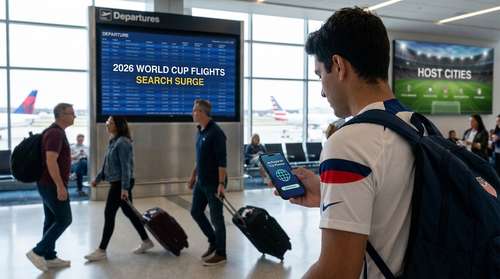
The 2026 World Cup travel surge is officially underway, and the logistics are proving to be as competitive as the matches themselves. With the massive global tournament approaching, major booking platforms are reporting a staggering 23% spike in US host city flight searches this week alone. For millions of fans plotting their summer itineraries, navigating the sheer scale of a 48-team, 104-match event spread across North America is a daunting task. Supply is shrinking, prices are volatile, and the window for affordable bookings is rapidly closing.
The Data Driving FIFA 2026 Hotel Bookings Fever
If you are waiting for a last-minute deal, current market data suggests a rapid change in strategy is necessary. The unprecedented demand for accommodations has already triggered massive price hikes across all three host nations. Recent industry tracking reveals that hotel prices have climbed 36% in the United States, 55% in Canada, and an eye-watering 119% in Mexico compared to typical summer rates.
Specific regional markets are feeling the squeeze more than others. Kansas City has emerged as a major breakout destination, with flight searches exploding by 168% year-over-year. The economic impact is equally massive. A recent study from the U.S. Travel Association projects that international attendees will spend upwards of $5,000 per person—roughly 1.7 times more than the average international trip. As soccer fan tourism USA reaches record levels, attendees are realizing that finding a reasonably priced bed near major venues requires speed and precision.
Tech Leaders Launch Travel AI Planning Tools 2026
The complexity of coordinating flights, accommodations, and rental cars across multiple time zones has pushed the travel technology sector to adapt quickly. In direct response to mounting consumer pressure, tech companies are rolling out advanced booking solutions tailored for this exact scenario. Just days ago, major platforms introduced specialized travel AI planning tools 2026 designed to eliminate the friction of multi-city trip coordination.
Kayak's Conversational Interface and Dashboards
Leading the charge, Kayak recently debuted Ask AI, a conversational booking experience wrapped in an intuitive chat interface. Unlike traditional basic chatbots, this system updates flight, hotel, and rental car results live alongside a user's natural language conversation. A traveler can simply type a request for a room near a specific stadium for under $200, and watch the platform pull live inventory without opening a dozen different browser tabs.
Simultaneously, the newly launched Kayak World Cup trends dashboard is providing fans with real-time pricing intelligence. This dashboard highlights shifting prices and availability across all 16 host cities, giving proactive fans a distinct competitive advantage when timing their purchases.
Tackling the Complexities of 2026 Summer Travel Demand
Planning for a typical vacation is challenging enough, but following a national team through the group stages requires an entirely different level of organization. You are not just booking a simple round trip; you are stitching together complex logistical puzzles. Competitors in the tech space, such as Stardrift and Travelscape, have also gained traction this spring by offering preference-driven planning that maps out realistic multi-destination routes.
The introduction of these smart assistants could not be better timed. A significant portion of 2026 summer travel demand involves international fans who are largely unfamiliar with the sheer distances between American transit hubs. A flight from Miami to Los Angeles takes roughly three to five hours depending on routing—a reality that can quickly derail a poorly planned matchday schedule. Intelligent routing tools help fans visualize these geographical gaps, estimate realistic travel times, and avoid punishing layovers.
A Strategic Playbook for the Final Booking Window
As the tournament draws closer, booking speed remains your greatest asset. An affordable rental car or hotel room available over breakfast could easily spike in price or vanish entirely by dinner. If your match dates are set, leveraging these new digital dashboards to monitor price fluctuations is essential for protecting your budget.
For those still finalizing their plans, alternative lodging strategies are gaining traction. Travel experts note that looking just outside the primary FIFA 2026 hotel bookings zones can yield massive savings. For example, staying in Fort Worth instead of Dallas, or Fort Lauderdale instead of Miami, can shave over $50 off a nightly rate while keeping fans within a manageable 30-minute transit radius.
Bundling your flights and hotels through a unified platform often shields you from the worst price volatility. The travel landscape for this historic sporting event is undeniably fierce, but with the right digital tools, alternative city routing, and immediate action, securing your spot in the stands is still highly achievable.