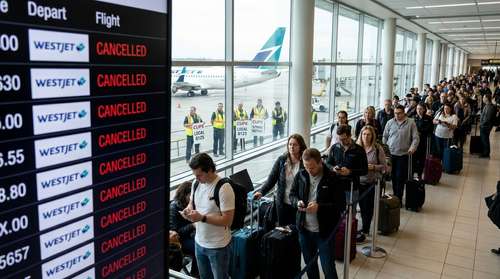
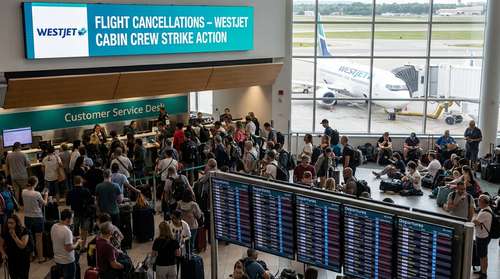
Hundreds of thousands of travelers are stranded across North America as the WestJet cabin crew strike 2026 enters its second day. Representing more than 4,400 flight attendants, the Canadian Union of Public Employees (CUPE) initiated a massive walkout on Sunday, August 2, 2026. The sudden halt in operations has led to sweeping WestJet flight cancellations, grounding nearly 600 daily flights and derailing vacation plans for an estimated 250,000 passengers.
This labor dispute could not have arrived at a more chaotic time. Coinciding directly with a nationwide civic holiday, the walkout is sparking severe August long weekend travel disruptions. Airports across the country are grappling with massive lines, confused passengers, and parked aircraft, forcing both federal officials and business leaders to warn of mounting economic fallout.
What Triggered the CUPE Flight Attendant Strike?
The core issue driving the CUPE flight attendant strike centers heavily on compensation for ground work. Union members are demanding proper pay for pre- and post-flight duties performed while aircraft are parked at the gate. Historically, this mandatory time—which includes safety briefings, boarding procedures, and waiting out rolling tarmac delays—has gone largely unpaid. It is a standard industry practice that the union argues is deeply unfair to its workforce. Recent shifts in the broader aviation industry have further emboldened CUPE's stance. In recent years, major carriers like Delta Air Lines and Air Canada updated their contracts to compensate flight attendants for ground hours, setting a new baseline expectation for North American aviation workers.
After nearly 11 months of intense bargaining, negotiations broke down completely over the holiday weekend. CUPE representative Alia Hussain did not hold back in her assessment of the situation, stating plainly, "We would not be here if the airline had taken our concerns seriously". The union insists that asking employees to perform critical safety and operational tasks for free is no longer acceptable in the modern travel ecosystem.
WestJet executives, however, maintain that their final proposal was highly competitive and addressed multiple quality-of-life concerns. The airline's rejected offer included a double-digit wage increase featuring a 13 percent boost slated for October 2026, retroactive pay dating back to January, expanded healthcare spending accounts, and a generous 17-week maternity leave top-up. WestJet CEO Alexis von Hoensbroech expressed obvious frustration over the deadlock. "We're disappointed to be here; this directly impacts the travel plans of our guests, our WestJetters, and the communities and businesses we serve," von Hoensbroech noted just hours after the picket lines formed.
The Impact: Massive WestJet Flight Cancellations
The immediate paralysis of Canada's second-largest airline is sending shockwaves through the national economy. With over 300 flights scrapped by early Sunday morning alone, the operational shutdown has ballooned into nearly 600 daily canceled routes. WestJet began proactively parking its 737 and 787 fleets at major hubs well before the strike deadline to avoid leaving aircraft stranded in remote outstations.
Tourism operators are bracing for a steep drop in revenue. The Canadian Federation of Independent Business (CFIB) warned that a prolonged strike during the peak summer tourism season would be "devastating" for small businesses that rely heavily on holiday travelers. According to the CFIB, roughly one-third of local enterprises depend directly on the surge of summer tourism to survive, making the timing of this walkout especially painful.
Political leaders are watching the escalating standoff closely. Federal Jobs Minister Patty Hajdu publicly voiced her disappointment over the failed negotiations, urging both sides to return to the table. While the federal government previously intervened in recent airline disputes using Section 107 of the Canada Labour Code to order binding arbitration, CUPE has strongly urged officials to step back. The union insists that allowing the collective bargaining process to run its natural course without external interference is the only way to secure a fair deal.
Navigating the WestJet Refund Policy During the Strike
If you are caught in the crossfire of these widespread disruptions, understanding your passenger rights is critical. The official WestJet refund policy strike guidelines allow travelers holding tickets for flights through August 6, 2026, to make a one-time change to their itinerary or cancel their trip entirely without incurring a penalty fee. Crucially, if the airline officially grounds your specific flight, you are legally entitled to a full refund processed back to your original form of payment, rather than being forced to accept a restrictive travel voucher.
The logistical ripple effect is also heavily impacting international codeshare partners. Fliers holding Delta Air Lines tickets operated by WestJet have faced considerable confusion at international terminals. Some partner airlines scrambled over the weekend to issue their own corresponding travel waivers in response to the sudden fleet grounding, leaving some travelers temporarily in limbo. Ensure you communicate directly with the airline that issued your ticket, rather than the carrier painted on the side of the plane.
How to Rebook Your WestJet Flight Successfully
Figuring out how to rebook WestJet flight itineraries right now requires extreme patience and a strategic approach. With roughly 250,000 displaced passengers flooding the system simultaneously, traditional customer service channels are buckling under the weight.
Actionable Steps for Stranded Passengers
Here are the immediate steps you should take if your travel plans are derailed:
- Use the digital portal first: Phone call centers are currently overwhelmed with hours-long wait times. Attempt to process your one-time free change directly through the WestJet mobile app or the official website's "Manage Trips" section.
- Check partner availability: If you must travel immediately, search for seats on alternative partner airlines. While WestJet's mainline fleet is parked securely at the gates, certain independent regional flights operated by WestJet Encore or connecting partners may still be functioning, though capacity is extremely limited.
- Document every expense: Save all your receipts for meals, hotels, and alternate ground transportation. Depending on the final regulatory rulings by the Canadian Transportation Agency, you may be eligible to submit these out-of-pocket expenses for reimbursement later.
Perhaps the most important piece of advice from aviation authorities is this: do not head to the airport unless you have a confirmed, ticketed seat on a functioning flight. The airline has officially locked out its striking cabin crew, meaning there are absolutely no spare attendants available to board idle aircraft. Until a tentative agreement is signed and ratified, travelers should expect rolling delays, continuous cancellations, and heavily restricted alternative booking options across all major North American carriers.