Global financial markets were thrown into chaos this Monday following President Donald Trump's unprecedented announcement of punitive tariffs on eight European nations. The so-called "Greenland Tariffs" have triggered a massive flight to safety, sending the gold price record 2026 soaring to near $4,700 per ounce. As the White House demands the immediate sale of the autonomous territory, the US Europe trade war has entered a volatile new phase, with safe-haven assets surging while the U.S. dollar faces intense selling pressure.
The 10% Levy: A Geopolitical Ultimatum
In a move that has stunned diplomatic allies and financial analysts alike, President Trump announced via Truth Social that a 10% tariff would be imposed on all goods imported from Denmark, Norway, Sweden, France, Germany, the United Kingdom, the Netherlands, and Finland. Effective February 1, 2026, this levy is explicitly tied to the President's demand for the United States to acquire Greenland.
The ultimatum carries a severe escalation clause: if purchase of Greenland negotiations do not yield a "Complete and Total" sale by June 1, the tariffs will skyrocket to 25%. Trump justified the move by citing national security concerns, specifically the need for a "Golden Dome" missile defense system in the Arctic to counter Russian and Chinese influence. "This Tariff will be due and payable until such time as a Deal is reached," the President wrote, framing the economic penalty as a necessary lever to force Denmark's hand.
Targeting Key Allies
The selection of targets—including staunch NATO allies like the UK and Germany—has amplified the global market shock. By broadening the scope beyond Denmark to include major European economic powers, the administration appears to be betting that collective economic pain will fracture European unity. However, early signs suggest the strategy may be backfiring, hardening resolve across the continent.
Markets React: Gold and Silver Soar
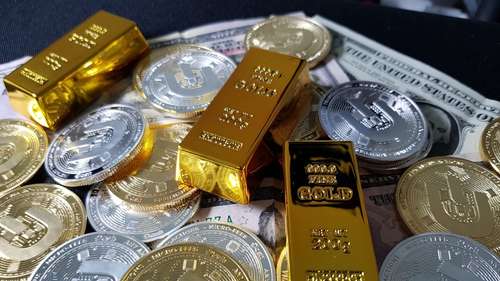
The financial reaction was instantaneous and severe. Investors, fearing a protracted conflict, abandoned risk assets in favor of physical commodities. Gold prices shattered previous ceilings, surging over 1.8% in Asian trading to touch unprecedented highs near $4,700 per ounce. Silver followed suit, jumping to a record $94 per ounce, driven by both its industrial utility and its role as a monetary hedge.
This safe haven asset surge comes at the expense of the U.S. dollar, which weakened significantly against the Japanese yen and Swiss franc. "The market is pricing in a worst-case scenario where trade diplomacy completely collapses," noted a senior currency strategist in London. "Capital is fleeing uncertainty, and right now, American policy is the primary source of that uncertainty." Equities in both Europe and the U.S. futures market tumbled, with the NASDAQ 100 facing steep declines as traders digested the implications of higher input costs and supply chain disruptions.
European Union Vows Retaliation
European leaders have wasted no time in condemning the move as "economic blackmail." An emergency summit has been called in Brussels, where officials are drafting a comprehensive European Union economic retaliation package. French President Emmanuel Macron reportedly urged the bloc to activate its "Anti-Coercion Instrument," a powerful trade weapon designed specifically to counter such geopolitical strong-arming.
The EU is weighing retaliatory tariffs on approximately €93 billion ($108 billion) of U.S. goods, targeting politically sensitive American exports. United Kingdom Prime Minister Keir Starmer echoed the continental outrage, stating that applying tariffs on allies for pursuing collective security is "completely wrong." The unified front suggests that rather than capitulating to Trump Greenland tariffs, Europe is preparing for a full-scale economic siege.
The Strategic Stakes in the Arctic
Beyond the immediate economic fallout, the standoff highlights the intensifying competition for the Arctic. The Trump administration views Greenland not just as a territorial acquisition but as a critical strategic asset for 21st-century defense. The island's location is pivotal for detecting and intercepting ballistic threats, a fact the White House is using to justify its aggressive posture.
However, the diplomatic cost of this strategy is mounting. By linking trade policy directly to territorial expansion, the U.S. risks alienating the very partners it relies on for broader security cooperation. As the February 1 deadline looms, the world watches to see who will blink first: a White House determined to redraw the map, or a European alliance fighting to protect the rules-based international order.