DUBAI — A catastrophic aviation shutdown has gripped the Middle East this week, leaving tens of thousands of passengers stranded and grounding global commerce in one of the most severe air travel disruptions of the decade. As of Thursday, March 5, 2026, aviation analysts estimate that over 13,000 flights have been cancelled following the emergency closure of airspace across Iran, Iraq, and the Gulf region. The unprecedented suspension of operations at major super-hubs like Dubai International (DXB) and Doha’s Hamad International (DOH) has severed vital arteries between East and West, forcing airlines to scramble for emergency flight corridors while travelers face indefinite delays.
Massive Airspace Shutdown Grounds Global Hubs
The crisis began late on February 28, following a sharp escalation in military activities involving US and Israeli air operations over Iran. In response, civil aviation authorities in the region issued immediate NOTAMs (Notices to Air Missions) closing the airspace over Iran, Iraq, and huge swathes of the Persian Gulf to commercial traffic. The ripple effect was instantaneous.
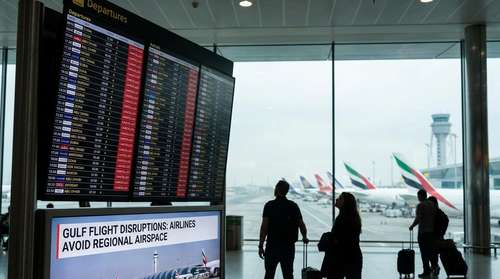
Dubai International Airport, the world’s busiest hub for international passengers, has seen its departures board turn into a sea of red. “We are currently facing the single largest logistical challenge since 2020,” said an airport spokesperson in a press briefing. “With the closure of the Northern and Eastern corridors, our capacity to safely launch aircraft has been reduced by 85%.”
Satellite data from FlightRadar24 shows a startling void over the region, usually one of the most congested skies in the world. Instead of the steady stream of A380s and Boeing 777s connecting Europe to Asia, the skies over the Gulf are eerily empty, save for military sorties. The closures have effectively blocked the “Silk Road of the Sky,” the primary path for flights between London, Paris, Frankfurt, and destinations in Australia and Southeast Asia.
Airline Status Updates: Emirates, Qatar Airways, and Etihad
For travelers holding tickets on the “Big Three” Gulf carriers, the situation remains fluid and frustrating. Here is the latest verified status as of March 5, 2026:
- Emirates: The Dubai-based giant has extended its suspension of most scheduled passenger flights until at least March 7, 2026. While limited repatriation services are running for UAE nationals, transit passengers are being advised strictly not to go to the airport.
- Qatar Airways: Operations from Doha remain largely suspended due to the total closure of Qatari airspace to inbound commercial traffic. However, the airline has activated an emergency contingency plan, operating limited “relief flights” from Muscat, Oman, and Riyadh, Saudi Arabia, to transport stranded passengers to key European gateways like London Heathrow and Berlin.
- Etihad Airways: The Abu Dhabi carrier has cancelled all commercial services through the morning of March 6. A reassessment is expected later today, but sources suggest a full restart is unlikely before the weekend.
Foreign Carriers Pull Back
International airlines have moved swiftly to avoid the conflict zone. Lufthansa, Air France, and British Airways have cancelled all flights to the region through March 8. Meanwhile, carriers like Singapore Airlines and Qantas are rerouting their Europe-bound flights via significantly longer paths over Egypt and Saudi Arabia, or alternatively through Central Asia, adding up to 3 hours to flight times and requiring technical fuel stops in places like Athens or Cairo.
The “Great Reroute” and Emergency Corridors
With the standard flight paths over Iran and Iraq declared no-fly zones, airlines are fighting for slots in the few remaining safe corridors. The primary alternative route—flying south over Saudi Arabia and Egypt—has become critically congested. Air traffic controllers in Cairo and Jeddah report a 300% surge in traffic volume, leading to airborne holding patterns lasting hours.
“It’s a bottleneck of historic proportions,” explains aviation analyst Sarah Jenkins. “You can’t just shove thousands of wide-body jets into a narrow corridor over the Red Sea without causing massive delays. We are seeing flights from Sydney to London divert to Athens just to refuel because they burned so much gas waiting for clearance to cross the Sinai.”
To mitigate the pressure, the International Civil Aviation Organization (ICAO) is working with Saudi authorities to open temporary “contingency airways” at lower altitudes, usually reserved for military use, to allow more commercial traffic to pass through safely.
Stranded Passenger Rights: What You Need to Know
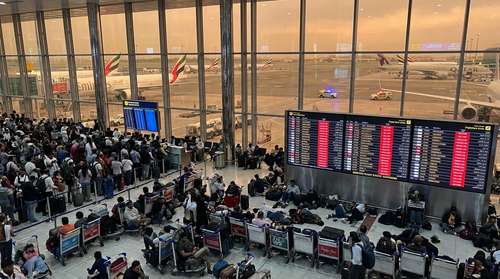
More than 20,000 passengers are currently stranded in transit hotels across the UAE and Qatar, with thousands more stuck at origin airports worldwide. The burning question for many is: Who pays for this?
Under standard regulations like the EU261 (for flights departing Europe) or the Montreal Convention, airlines are typically liable for care and assistance. However, the current crisis falls under “extraordinary circumstances” or force majeure. This acts as a legal shield for airlines regarding cash compensation for the delay itself. That said, passengers still have specific rights:
- Right to Care: Airlines must provide meals and hotel accommodation for stranded passengers, regardless of the cause of the delay. Reports from Dubai indicate Emirates has booked entire hotel blocks to house transit passengers.
- Refunds vs. Vouchers: If your flight is cancelled, you are entitled to a full cash refund within 7 days. Do not feel pressured to accept a travel voucher if you prefer cash.
- Travel Insurance Loopholes: Many travelers are discovering the hard way that standard travel insurance policies often have exclusions for “acts of war” or “civil unrest.” Travelers should check if their policy includes a “cancel for any reason” (CFAR) clause, which is the only sure protection in this scenario.
As the geopolitical situation remains volatile, the aviation industry is bracing for a weeks-long recovery period even after the airspace reopens, as carriers work to reposition displaced crews and aircraft.