
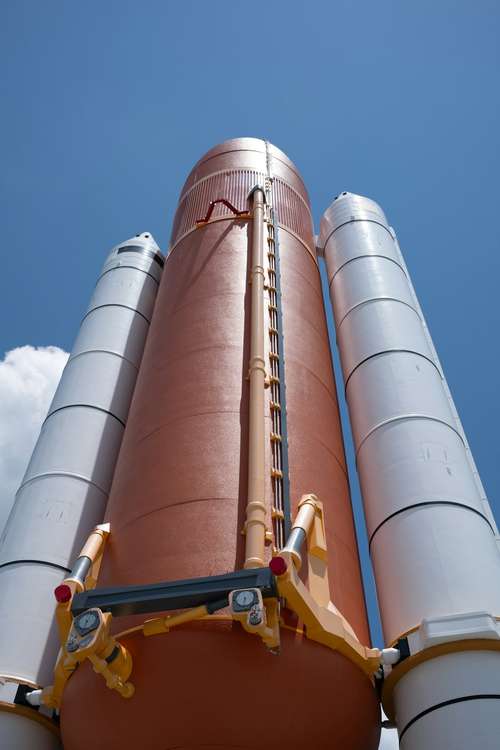
History is on the move at NASA’s Kennedy Space Center today. For the first time in over 50 years, a moon rocket destined to carry astronauts has emerged from the Vehicle Assembly Building (VAB), marking the start of the Artemis II rollout. The colossal 322-foot Space Launch System (SLS) rocket and Orion spacecraft began their slow, majestic four-mile trek to Launch Complex 39B early Saturday morning, January 17, 2026. This pivotal milestone signals that humanity’s return to the lunar vicinity is no longer just a plan—it is an imminent reality.
The Long Haul: A Four-Mile Journey to the Pad
The atmosphere at the Kennedy Space Center is electric as the massive crawler-transporter 2 (CT-2) inches the towering rocket along the crawlerway. Moving at a top speed of just under 1 mph, the SLS rocket launchpad journey is a feat of engineering precision. The combined weight of the rocket, the mobile launcher, and the crawler itself tips the scales at approximately 18 million pounds—heavier than 20 fully loaded 777 airplanes.
Engineers and spectators alike watched in awe as the VAB’s high bay doors opened, revealing the vehicle that will return humans to deep space. The trip to the pad is expected to take between 8 to 12 hours. Once secured at Pad 39B, the rocket will undergo final preparations for a target launch date as early as February 6, 2026.
Meet the Crew of the Artemis Generation
While the hardware is impressive, the mission is defined by its explorers. The Artemis 2 astronauts—Commander Reid Wiseman, Pilot Victor Glover, and Mission Specialists Christina Koch and Jeremy Hansen—are poised to become the first humans to travel to the Moon since the Apollo 17 mission in 1972. This diverse crew represents the "Artemis Generation," with Glover set to become the first person of color and Koch the first woman to venture beyond low-Earth orbit.
"This rollout makes it real," said an agency spokesperson during the Kennedy Space Center live coverage. "We aren't just rolling out a rocket; we are rolling out the hopes of a new era of exploration." The NASA Moon mission 2026 will send these four astronauts on a 10-day lunar flyby, testing the Orion spacecraft’s life support systems and validating the technology needed for future lunar landings.
What Happens Next: Wet Dress Rehearsal and Launch
Arrival at the pad is just the beginning of the final pre-launch phase. Once the rocket is hard down on the pedestal, teams will prepare for a critical "wet dress rehearsal" scheduled for late January. This test involves loading the rocket with over 700,000 gallons of supercooled liquid hydrogen and oxygen propellants and practicing the countdown timeline—everything short of igniting the engines.
Current NASA SLS launch status reports indicate that if the wet dress rehearsal proceeds smoothly, the agency will hold to the early February launch window. This mission is a crucial stepping stone. Its success is required before Artemis III can attempt a lunar surface landing later in the decade.
The Technology Powering the Flight
The Block 1 SLS rocket is the most powerful rocket NASA has ever built for human spaceflight, generating 8.8 million pounds of thrust at liftoff. Perched atop it is the Orion capsule, which will serve as the crew's home during their 685,000-mile journey. The first crewed moon flight of the 21st century will take the crew around the far side of the Moon, venturing thousands of miles beyond it before using the Moon’s gravity to slingshot back to Earth for a splashdown in the Pacific Ocean.
A New Era for Space Exploration
As the sun rises over the Florida coast, the silhouette of the Artemis II vehicle against the sky serves as a tangible reminder of American and international leadership in space. With the Artemis II rollout underway, the path is clear. The hardware is ready, the crew is trained, and the world is watching. We are going back to the Moon.