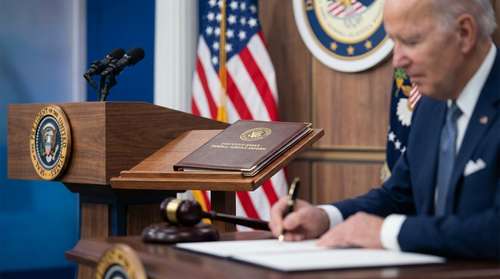
In a sweeping overhaul of the American civil service system, the Trump administration has finalized a controversial new rule reclassifying approximately 50,000 senior-level federal employees as "at-will" workers. Issued Thursday by the Office of Personnel Management (OPM), the directive effectively strips tens of thousands of career officials of long-standing job protections, granting agency heads the authority to fire them with unprecedented speed. The move, which resurrects the contentious "Schedule F" concept from Donald Trump’s first term, marks a decisive step in the President's vowed campaign to dismantle what he terms the "deep state."
OPM Finalizes 'Schedule Policy/Career' Reclassification
The new regulation, formally set for publication in the Federal Register on February 6, 2026, establishes a new employment category known as "Schedule Policy/Career." According to the OPM, this classification applies to federal workers in "policy-determining, policy-making, or policy-advocating" positions. While the administration describes the shift as a necessary modernization to ensure accountability, critics argue it fundamentally alters the nonpartisan nature of the federal workforce.
Under the new rule, these 50,000 employees—roughly 2% of the total federal workforce—will lose their rights to appeal terminations to the Merit Systems Protection Board. The OPM's directive explicitly states that the change is designed to allow agencies to "quickly remove employees from critical positions who engage in misconduct, perform poorly, or obstruct the democratic process by intentionally subverting Presidential directives."
Impact on Senior Civil Servants
The reclassification targets seasoned professionals rather than entry-level staff. Affected roles likely include senior analysts, scientists, attorneys, and regulatory experts who interpret and implement federal law. By designating these roles as "at-will," the administration removes the requirement for supervisors to provide extensive documentation or performance improvement periods before dismissal. OPM Director Scott Kupor defended the move, asserting that "people can't be conscientious objectors in the workforce in a way where it interferes with their ability to carry out their mission."
Unions and Democrats Slam 'Return to Spoils System'
The announcement has triggered immediate and fierce backlash from federal employee unions and Democratic lawmakers. Everett Kelley, National President of the American Federation of Government Employees (AFGE), condemned the rule as a "direct assault on a professional, nonpartisan, merit-based civil service." Union leaders warn that the policy essentially demands political loyalty over professional competence, reviving the 19th-century "spoils system" where government jobs were traded for political support.
Major concerns raised by opponents include:
- Loss of Whistleblower Protections: Fears that experts will be fired for reporting illegalities or refusing to manipulate data.
- Brain Drain: The potential mass exodus of institutional knowledge as career experts are pushed out or resign in protest.
- Politicization of Science and Policy: Concerns that decisions on public health, safety, and environmental regulations will be driven by political whim rather than evidence.
Senators Mark Warner and Tim Kaine (D-VA) issued a joint statement slamming the move, calling it "predictable" and dangerous. "If we want to continue to lead the world, then we must have a federal workforce based on merit, not politics," the Senators stated, warning that the rule threatens national security and the stability of government services.
Legal Battles and Broader 'Deep State' Purge
The implementation of the "at-will" rule is not happening in a vacuum. It follows a week of aggressive personnel moves, including the firing of over 400 employees at the Department of Homeland Security (DHS) just days prior. Legal groups are already mobilizing to challenge the new OPM rule in court. Democracy Forward, a legal advocacy group, declared Thursday, "We will see you in court," arguing the rule sidesteps due process protections and violates the statutory framework of the civil service.
The administration, however, appears prepared for litigation. The rule's language was carefully crafted to leverage Article II executive powers, with OPM asserting that the President has the constitutional authority to control the personnel who execute his policies. Unlike the stalled efforts of 2020, this 2026 rollout is immediate and backed by a finalized regulatory framework, making it harder for opponents to delay its effects through procedural complaints alone.
As the rule takes effect, the landscape of the U.S. federal government faces its most significant structural change in decades. For the 50,000 workers now classified as "Schedule Policy/Career," the once-stable promise of federal employment has vanished, replaced by a new reality where job security is directly tethered to the priorities of the White House.