
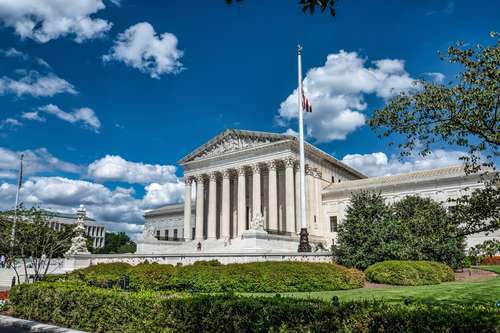
WASHINGTON, D.C. — In a moment that will likely define the future of the American economy, Federal Reserve Chair Jerome Powell made a rare and historic appearance at the Supreme Court on Thursday. Sitting alongside former Chair Ben Bernanke, Powell looked on as the nine justices heard oral arguments in Trump v. Cook, a landmark case determining whether the President of the United States has the authority to fire Federal Reserve governors at will. The atmosphere inside the courtroom was charged with tension as the Court weighed the sanctity of Federal Reserve independence against the sweeping executive powers claimed by the Trump administration.
A Historic Clash Over Central Bank Autonomy
The case centers on Governor Lisa Cook, whom President Trump attempted to fire in August 2025 over allegations of mortgage fraud—charges that Cook’s legal team describes as a pretext for a political purge. The legal battle has escalated into a constitutional crisis, pitting the administration's "unitary executive" theory against the century-old congressional mandate that Fed governors can only be removed "for cause."
During the heated session, U.S. Solicitor General D. John Sauer argued that the President must have the power to remove subordinate officials who display "gross negligence," referencing the disputed loan documents. However, the conservative majority of the Court appeared skeptical of the administration's broad interpretation. Justice Brett Kavanaugh, in a pointed exchange, warned that the government's position could incentivize a "search and destroy" mission against independent regulators, effectively shattering central bank autonomy.
Supreme Court Justices Skeptical of Trump's Claims
Legal analysts observing Jerome Powell SCOTUS appearance noted that the Chief Justice seemed unconvinced by the administration's justification for removal. Chief Justice John Roberts characterized the alleged "fraud"—involving a confusion over primary residence designations on loan applications—as an "inadvertent mistake" rather than the high crime or malfeasance typically required to bypass statutory protections.
The "For Cause" Debate Intensifies
Paul Clement, representing Lisa Cook, delivered a forceful defense of the Federal Reserve's unique structure. He argued that allowing the President to fire a governor for minor personal infractions would turn the Fed into a political arm of the White House. "If the President can remove a governor because he disagrees with interest rate policy, under the guise of 'cause,' then the era of an independent monetary policy is over," Clement told the Court. This argument seemed to resonate with Justice Amy Coney Barrett, who questioned the lack of due process afforded to Cook before her attempted termination.
Political Stakes and US Interest Rates 2026
The timing of the hearing is critical. With US interest rates 2026 remaining a flashpoint in the recovering economy, the market has been on edge. The Lisa Cook lawsuit is not just about one job; it is about whether the Federal Reserve can set monetary policy without fear of retaliation. President Trump has been a vocal critic of Powell and the Board, frequently demanding lower rates to boost growth.
The presence of Jerome Powell in the gallery was a silent but powerful statement. Typically, Fed Chairs avoid the political fray of the Supreme Court, but the existential threat posed by Trump v. Cook compelled the current leadership to show a united front. Powell's term, which has been marked by navigating the post-2024 inflation landscape, has seen him become a target of executive ire, making this case a proxy war for his own survival as Chair.
What Happens Next?
As the session concluded, the consensus among court watchers was that the administration faces an uphill battle. A ruling is expected by June, but the Court could issue an emergency order sooner given the economic stakes. If the Court rules in favor of Trump, it could radically alter the landscape of Jerome Powell news and the global financial system, potentially allowing the President to stack the Board with loyalists.
For now, Lisa Cook remains on the Board under a preliminary injunction, and the Fed continues its work. But as Powell and Bernanke exited the Supreme Court steps on Thursday, the message was clear: the battle for the soul of the Federal Reserve is far from over.