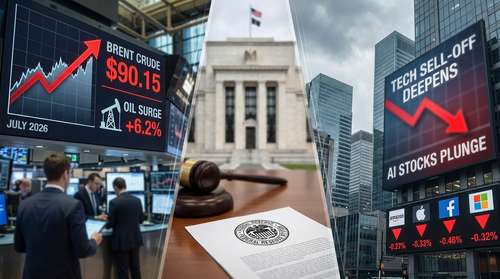
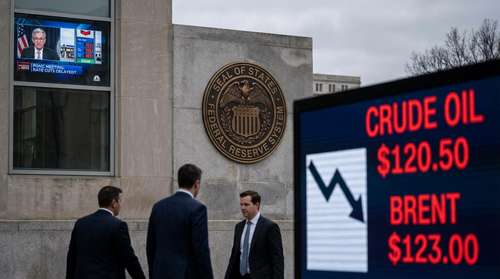
As Wall Street braces for the highly anticipated Federal Reserve March 2026 meeting, the economic narrative has violently shifted from aggressive easing to defensive pausing. Just weeks ago, traders were pricing in a dovish pivot that would finally offer relief to capital markets. Today, those hopes are practically dead in the water. Surging energy markets—spearheaded by Brent crude breaching the $119.50 per barrel mark—have completely rewritten the central bank's playbook. Triggered by rapidly escalating conflicts in West Asia, this geopolitical shockwave is already fueling a massive equities sell-off and forcing policymakers to confront a nightmare scenario of resurgent inflation and stalling growth.
The Impact of $120 Oil on the Economy and Global Supply Chains
The sudden, violent leap in energy prices is sending shockwaves through every sector of the global economy. The impact of $120 oil on the economy extends far beyond pain at the gas pump. In macroeconomic terms, a sudden surge in energy costs acts as a brutal, regressive tax on consumers, destroying discretionary income overnight. Because energy inputs are required to produce and transport virtually every commercial good, the ripple effects are both immediate and severe.
The core of the current crisis lies in the Strait of Hormuz. Following intensifying military engagements involving the United States, Israel, and Iran, vessel transit through this critical maritime chokepoint has slowed to a near standstill. Given that roughly 20% of the world's daily oil supply flows through this narrow artery, the logistical bottleneck is unprecedented. Major shipping conglomerates are already rerouting fleets or halting operations entirely due to soaring war-risk insurance premiums. If the blockade stretches through the end of the month, commodities analysts at Goldman Sachs warn that crude could easily eclipse its historical 2008 high of $146 a barrel, placing a stranglehold on global growth.
Why the Stock Market Correction 2026 is Accelerating
Equities were previously priced for absolute perfection—specifically, the flawless execution of a "soft landing" paired with multiple interest rate cuts. The sudden geopolitical eruption has shattered that fragile optimism, triggering a brutal stock market correction 2026 investors were wholly unprepared for. Major U.S. indices, including the S&P 500 and the Dow Jones Industrial Average, have suffered sharp consecutive pullbacks, mirroring steep losses in Japanese and South Korean markets.
Capital is fleeing risky assets and rushing toward the safety of the U.S. dollar and short-dated Treasury bills. Wall Street is currently repricing valuations based on a stagflation model: a toxic combination of high inflation and slowing economic output that destroys corporate margins.
Inflation Risks Escalate Amid West Asia Tensions
For months, the Federal Reserve celebrated a slow, steady decline in core inflation metrics. Now, the inflation risks US-Iran war headlines are generating threaten to unmoor consumer price expectations entirely. The Personal Consumption Expenditures (PCE) price index—the Fed's preferred inflation gauge—was already showing signs of stubbornness earlier this quarter. A sustained 25% to 30% jump in crude oil will feed directly into headline inflation, driving up the cost of diesel, commercial aviation, and agricultural production.
Central bankers find themselves trapped. Monetary policy is a blunt instrument; hiking rates cannot physically clear a shipping lane or pump more oil. Yet, the Fed cannot simply ignore surging prices, even if they are driven by external supply shocks. Allowing inflation to run hot risks a repeat of the 1970s, where consumer psychology adapted to perpetual price hikes, forcing even more draconian policy measures down the road.
The FOMC Interest Rate Decision: A Return to Defensive Posturing
When policymakers announce their FOMC interest rate decision on March 18, the outcome is now essentially a foregone conclusion. Prediction markets, which just last month debated the size of a potential cut, currently show 100% odds of rates remaining unchanged in the 3.50% to 3.75% range. The era of higher for longer interest rates is back with a vengeance.
While dissenting voices on the committee—such as Governors Stephan Miran or Michelle Bowman—might still push for modest easing to protect labor markets, Chairman Jerome Powell is widely expected to hold the line. During his scheduled press conference, Powell will likely adopt a stern, hawkish tone, reiterating that defeating inflation remains the central bank's absolute mandate.
Updating the US Economic Forecast March 2026
Beyond the immediate rate decision, markets are laser-focused on the release of the Fed's updated Summary of Economic Projections, commonly known as the Dot Plot. The revised US economic forecast March 2026 is expected to reflect a grim new reality. Participants will almost certainly downgrade their assessments of gross domestic product (GDP) growth while simultaneously marking up their estimates for near-term inflation and unemployment.
Investors should prepare for a volatile spring. With the Federal Reserve forced to prioritize price stability over market relief, defensive posturing is no longer optional. As the global economy watches the Middle East with bated breath, the impending decisions made in Washington will dictate the financial trajectory for the remainder of the year. The days of relying on swift central bank interventions to rescue sliding equity portfolios are over. Investors must now navigate an environment where liquidity remains stubbornly tight, credit conditions are restrictive, and geopolitical shocks dictate the terms of trade. Until the physical supply bottlenecks in the energy sector are resolved, the Federal Reserve will be effectively paralyzed, forced to maintain high borrowing costs regardless of the pain inflicted on Wall Street.