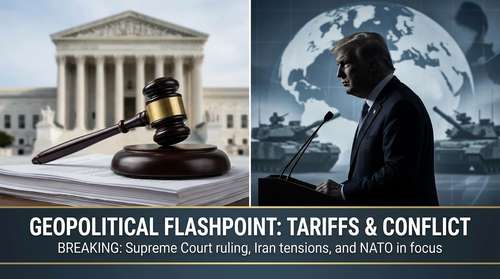
In a dramatic convergence of domestic and international crises, the escalating showdown over the Trump Supreme Court tariffs ruling has thrust the United States into a historic constitutional battle. President Donald Trump has declared an "absolute right" to impose global trade duties, directly challenging a landmark judicial decision that struck down his previous economic measures. This unprecedented domestic friction arrives at a perilous moment, coinciding with the third week of a fierce U.S.-Israeli military campaign against Iran. As global supply chains buckle under the weight of the Middle Eastern conflict, the President has also issued a blunt ultimatum to European allies, warning of a "very bad" future for the alliance in what is quickly becoming a defining Strait of Hormuz NATO crisis.
Testing Presidential Executive Power Limits
Just weeks after America's high court issued a momentous 6-3 decision striking down the administration's 2025 global tariffs imposed under the International Emergency Economic Powers Act (IEEPA), the President forcefully rejected the judicial rebuke. In a fiery Sunday post on his Truth Social platform, Trump blasted the court for allegedly favoring foreign nations and stripping the U.S. of critical economic leverage. "I have the absolute right to charge TARIFFS in another form, and have already started to do so," he declared, signaling a relentless commitment to his protectionist trade agenda.
The administration has quickly pivoted to Section 122 of the Trade Act of 1974, announcing new 15 percent global tariffs to replace the voided duties. This aggressive maneuver has sparked fierce debates regarding presidential executive power limits, with legal scholars and trade experts warning of a deepening constitutional crisis. The Supreme Court explicitly stated that the power of taxation belongs to the legislature, yet the White House maintains that trade imbalances justify ongoing unilateral action.
The Fight for Corporate Relief
For corporate sectors closely tracking the Trump Supreme Court tariffs litigation, the focus has shifted entirely toward recovering lost capital. With the IEEPA duties formally nullified, many manufacturing and retail trade groups are exploring aggressive legal avenues to secure an illegal tariffs refund 2026. However, the swift reimposition of these alternative taxes ensures that American consumers and businesses will see almost no immediate relief from inflated operational costs. In tandem, U.S. officials have launched sweeping new trade probes into 60 global economies, further escalating trade barriers under the banner of national security.
Iran War 2026 Updates: A Paralyzed Maritime Chokepoint
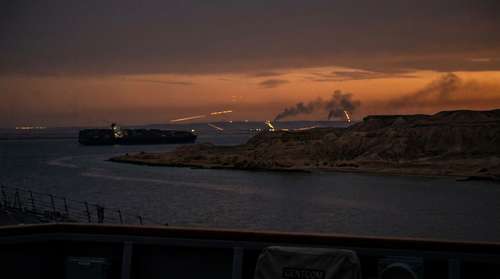
While the Trump Supreme Court tariffs dispute shakes domestic markets, it is being severely compounded by profound geopolitical instability abroad. The latest Iran war 2026 updates reveal a catastrophic disruption to global energy networks as the U.S.-Iran conflict enters its third consecutive week. Following intensive U.S. and Israeli airstrikes on Iranian infrastructure—which American military officials claim have incapacitated over 6,000 targets, including ballistic missile sites and air defense systems—Tehran has effectively blockaded the Strait of Hormuz. This vital maritime artery normally handles a fifth of the world's daily oil supply.
By March 14, commercial vessel traffic through the strait had plummeted to absolute zero. Multi-source maritime intelligence confirms that roughly 400 oil tankers and cargo ships are currently stranded in the Gulf of Oman, unable or unwilling to risk the perilous journey past Iranian drone and missile batteries. For those seeking the latest US Iran military conflict news, the situation on the water remains exceedingly grim. Recent strikes on merchant vessels, including a Thai bulk carrier set ablaze last Wednesday, have left thousands of civilian crew members trapped in the crossfire. The resulting supply shock has triggered massive spikes in global crude oil prices, which surged past $104 a barrel during early Monday trading.
Trump NATO Threats Today Over Maritime Security
Frustrated by the economic fallout of the closed waterway, the President is now demanding that international beneficiaries of Middle Eastern oil step up to share the military burden. In a widely circulated March 15 interview with the Financial Times, Trump insisted that European allies, Japan, and China deploy their own minesweepers and warships to escort commercial vessels through the hazardous Gulf waters.
His rhetoric toward the North Atlantic Treaty Organization has been particularly severe, causing deep anxiety in European capitals. Adding to the Trump NATO threats today, the President stated that if European partners offer a negative response to his maritime coalition demands, it will be "very bad for the future of NATO". He argued that the U.S. has shouldered the burden of Western security for far too long, explicitly linking ongoing American military support in other global theaters to the requirement for European cooperation in the Persian Gulf.
Navigating the Strait of Hormuz NATO Crisis
The ensuing Strait of Hormuz NATO crisis highlights a rapidly growing fracture between Washington and its traditional allies. Countries like Australia, France, and Japan have offered muted responses or outright declined to send warships, expressing deep concerns about being dragged into a wider, uncontrollable regional war. While the UK is reportedly drafting plans to send minesweeping drones, a full allied naval commitment remains elusive.
Furthermore, Trump has leveraged the chaos against primary geopolitical rivals, threatening to delay an upcoming, high-stakes summit with Chinese President Xi Jinping unless Beijing commits its own naval forces to reopen the strait. "I think China should help, too, because China gets 90% of its oil from the straits," the President noted. As Washington simultaneously navigates domestic constitutional showdowns and an explosive Middle Eastern war, the administration's "America First" doctrine is facing its most complex stress test to date. Whether the President's hardline diplomatic tactics will force allied compliance or further isolate the United States remains the defining global question of 2026.