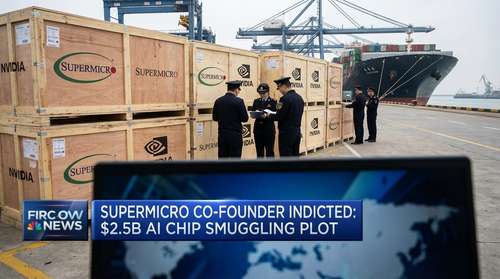
Federal prosecutors have dropped a massive bombshell on the global technology sector. On Thursday, authorities unsealed a sweeping Supermicro indictment against Yih-Shyan 'Wally' Liaw, a 71-year-old co-founder and senior vice president of Super Micro Computer Inc., alongside two associates. The trio is accused of orchestrating a brazen $2.5 billion Nvidia AI chip smuggling operation designed to bypass stringent U.S. national security export controls and supply advanced hardware to China.
This unprecedented case marks a major escalation in the ongoing semiconductor trade war between Washington and Beijing. According to the Department of Justice, Liaw, Supermicro Taiwan sales manager Ruei-Tsang 'Steven' Chang, and third-party broker Ting-Wei 'Willy' Sun illegally funneled thousands of highly restricted AI servers into the Chinese mainland between 2024 and 2025. As the China GPU export ban has severely limited access to cutting-edge artificial intelligence processors, black market demand for these components has surged, creating a lucrative underground economy for top-tier silicon.
The Anatomy of a $2.5 Billion Smuggling Ring
The sheer scale of the operation is staggering. Court documents reveal that the conspirators utilized an unnamed Southeast Asian shell company to act as a pass-through intermediary. They purchased vast quantities of Supermicro servers equipped with top-of-the-line Nvidia GPUs under the guise of local corporate deployment. Once the shipments arrived in Southeast Asia, the hardware was quietly repackaged into unmarked boxes and forwarded directly to end-users in China.
Prosecutors noted that the scheme grew increasingly aggressive over time. In a concentrated three-week window between late April and mid-May 2025, the group successfully diverted at least $510 million worth of equipment, highlighting the massive demand for restricted processors.
Dummy Servers and Hair Dryers
To evade detection from U.S. compliance auditors and federal investigators, the defendants allegedly engineered an elaborate deception. The indictment details how the crew built thousands of non-working dummy servers and placed them in Southeast Asian warehouses. When auditors arrived for routine supply chain inspections, they were presented with this fake inventory, leading them to believe the high-performance hardware had never left the region.
Surveillance footage referenced by investigators even captured warehouse workers using hair dryers to carefully peel off serial number stickers from the genuine Nvidia-powered servers, transferring them to the dummy units. Furthermore, the trio is accused of forging compliance documents and communicating via encrypted messaging apps to keep the true destination of the goods hidden from Supermicro's internal oversight teams.
The Latest Super Micro Computer Scandal Rocks the Market
The financial fallout was swift and brutal. Following the unsealing of the charges, shares of Super Micro Computer plummeted over 30%, wiping billions off the company's market capitalization. While the San Jose-based manufacturer itself was not named as a defendant, this represents the most damaging Super Micro Computer scandal to date, arriving on the heels of recent accounting controversies and auditor resignations.
In a public statement, Supermicro distanced itself from the accused, confirming that Liaw has resigned from the board of directors. The company also placed Chang on administrative leave, terminated its relationship with Sun, and appointed a new acting chief compliance officer. They emphasized full cooperation with the ongoing federal investigation. Nvidia also responded quickly, reiterating its strict adherence to all U.S. export laws and explicitly stating it provides no technical support or service for systems illegally diverted to China.
Closing the Loopholes in AI Hardware Security
This case exposes severe vulnerabilities in global AI hardware security. While border controls and customs agencies historically focus on traditional smuggling routes, this operation demonstrates that the most significant threats can originate from the very top of the supply chain. Liaw was not a low-level rogue middleman; he was a founding member of a major publicly traded corporation, allegedly leveraging his deep industry access to move restricted technology at an industrial scale.
The processors at the center of this dispute—such as the H200 and the highly coveted B200 from Nvidia's Blackwell lineup—represent the absolute gold standard for training massive large language models. Access to these specific chips dictates who will lead the next generation of artificial intelligence development. Consequently, they have become prime targets for foreign entities operating behind the digital iron curtain.
For investors and defense policymakers alike, the implications are profound. As artificial intelligence computing power is increasingly treated as a critical military asset, regulatory agencies are proving they will aggressively prosecute top-tier executives who attempt to circumvent the law. The defendants face severe charges, including conspiring to violate the Export Controls Reform Act, conspiring to smuggle goods from the U.S., and conspiring to defraud the United States government.
Currently, Liaw and Sun have been arrested, with Liaw released on bail, while Chang remains a fugitive at large. The detained men face decades in federal prison if convicted. Those following the latest Nvidia GPU export news can expect Washington to implement even tighter compliance requirements for domestic tech giants, ensuring that the backdoor to America's most powerful silicon remains firmly shut.