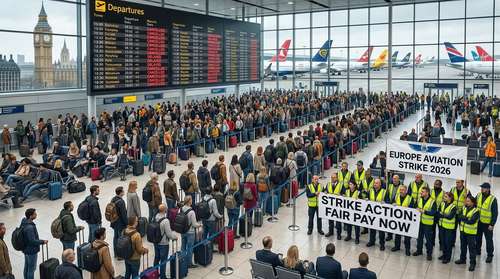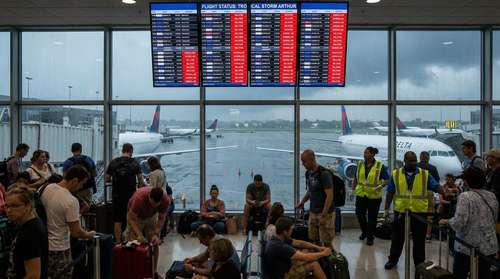
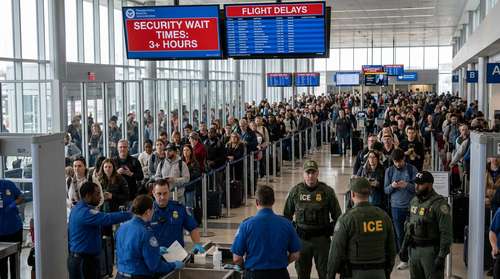
Millions of American families embarking on vacations this week are walking directly into the epicenter of the Spring Break travel delays 2026. Major hubs nationwide are experiencing unprecedented congestion as a prolonged partial government shutdown leaves the Transportation Security Administration (TSA) severely understaffed. In a highly controversial move to mitigate the chaos, the Trump administration has officially deployed Immigration and Customs Enforcement (ICE) personnel to assist at security checkpoints starting Monday, March 23.
The Root of the Air Travel Crisis 2026
The core of this logistical nightmare stems from the ongoing Department of Homeland Security (DHS) funding lapse, which began on February 14. Because of the shutdown, roughly 50,000 TSA officers have been forced to report to work without pay for over five weeks. The financial strain of missing rent, childcare, and gas payments has triggered a devastating TSA staffing shortage. The White House confirmed over the weekend that more than 400 screeners have formally resigned from the agency since the shutdown began.
Those who remain on the payroll are calling out absent at alarming rates. Prior to the shutdown, un-planned absences at airports like San Diego hovered around 20 per day; that number has now spiked to 80. At other major facilities, such as in Houston, call-out rates have reportedly reached 50 percent, forcing officials to shut down multiple screening lanes entirely. This perfect storm of unpaid, exhausted workers and an influx of seasonal vacationers has created a massive government shutdown travel impact that is rippling across the nation's airspace.
What Exactly Are ICE Agents Doing at Airports?
To combat the severe bottlenecks, President Donald Trump announced that ICE officers would be sent to airports to provide operational relief. White House Border Czar Tom Homan, who is leading the initiative, described the deployment as a "force multiplier" intended to keep lines moving.
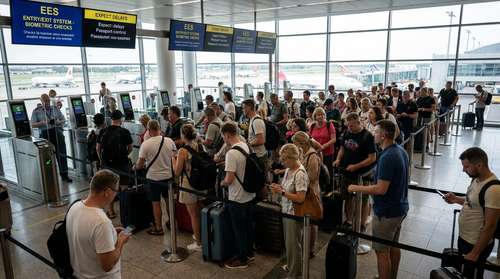
Despite the initial public confusion and dramatic social media speculation, officials have clarified that ICE agents at airports will not be taking over physical security screening. Under federal law, specifically 49 USC 44901, only certified personnel can operate X-ray machines and perform body pat-downs. Instead, ICE staff will handle secondary support tasks. They are expected to monitor exit lanes, manage passenger flow, guide travelers through the stanchions, and check identification documents. This reallocation of duties is designed to free up the remaining TSA personnel to focus strictly on threat detection and baggage screening.
Union Backlash and Security Concerns
The decision to deploy immigration enforcement to civilian transit hubs has sparked intense criticism. Everett Kelley, president of the American Federation of Government Employees (AFGE), strongly condemned the move, noting that ICE personnel are untrained in specialized aviation security. Kelley emphasized that TSA officers spend months learning to detect hidden explosives and weapons—skills that cannot be improvised by throwing uncertified personnel into a checkpoint.
Similarly, travel industry executives warn that bringing armed immigration officers into checkpoints could cause panic, further complicating the customer service experience. Aviation security experts have also expressed alarm, warning that the rushed deployment lacks clear rules of engagement and might expose foreign nationals to ad-hoc questioning.
Major US Airport Delays Reach a Breaking Point
For passengers on the ground, the political standoff translates to grueling physical endurance tests. airport security wait times have ballooned well beyond standard estimates. Travelers flying out of Hartsfield-Jackson Atlanta International Airport over the weekend reported standing in line for three to four hours just to reach the screening bins.
While Dallas/Fort Worth International Airport fared slightly better with wait times nearing 50 minutes, the interconnected nature of air travel means major US airport delays in one city inevitably cause cascading missed flights and standby headaches everywhere else. Passenger frustration is palpable. Families traveling with young children report chaotic terminal conditions, a distinct lack of communication regarding the modified security procedures, and the immense stress of missing non-refundable connections.
Navigating the Checkpoints During the Shutdown
Until Congress and the White House can reach a continuing resolution to restore DHS funding and guarantee back pay for screeners, travelers must prepare for the worst. Industry experts are urging anyone flying domestically to arrive at least two to three hours prior to boarding, while international travelers should allocate even more time.
While the deployment of ICE might temporarily patch the operational gaps, it is clear that the air travel crisis 2026 requires a permanent legislative fix. Travelers are advised to check their airline apps frequently, monitor local airport advisories, and pack extra patience. Until the TSA workforce is made whole, the American public will continue to bear the brunt of this historic gridlock.