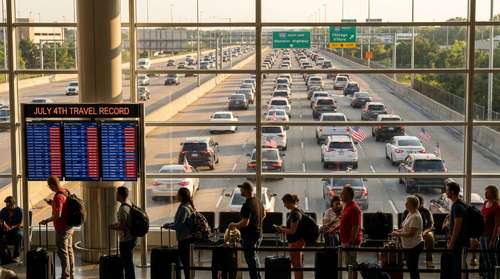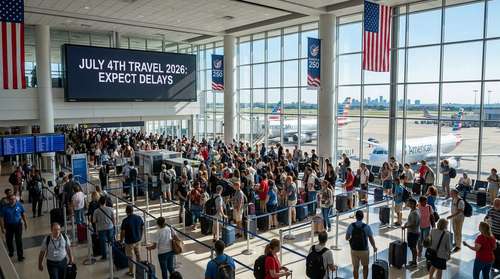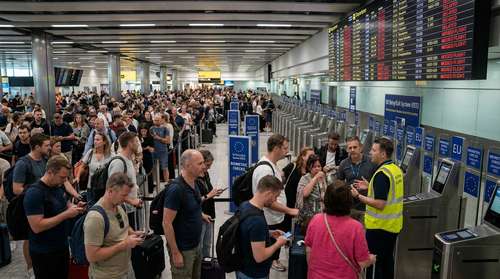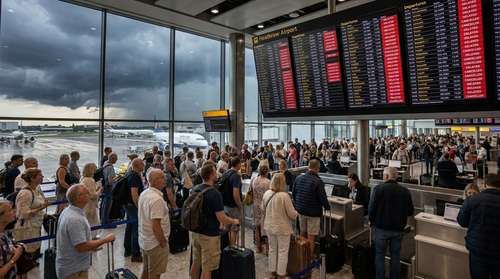
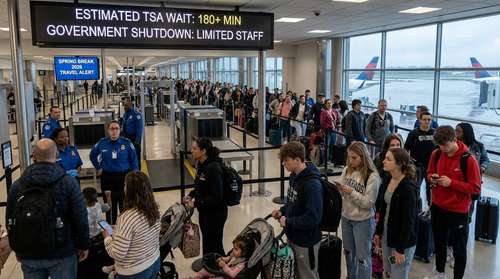
The Spring Break 2026 travel season has officially arrived, but for millions of Americans heading to the airport, the vacation is starting with unprecedented chaos. A perfect storm of record passenger volumes and a severe political stalemate has triggered a massive TSA staffing shortage 2026, leaving travelers stranded in terminals across the country. As the partial government shutdown stretches into its 34th day, unpaid Transportation Security Administration agents are calling out sick in record numbers. The result? Security checkpoints at major national hubs are buckling under the pressure, pushing TSA wait times today to well over three hours in some locations.
The Government Shutdown Travel Impact
To understand the root of these severe airport security delays, you have to look at Washington. Funding for the Department of Homeland Security (DHS) lapsed in mid-February, creating a partial government shutdown that directly impacts the TSA. Because screeners are classified as essential workers, they are required to report to the airport even when funding dries up. However, morale and financial stability hit a breaking point last week when agents missed their first full paycheck.
The financial strain has forced a massive wave of absences. At some facilities, the TSA workforce has been cut by as much as 55% due to organized sickouts and employees simply unable to afford their daily commutes. The Department of Homeland Security noted that Houston Hobby International Airport recently experienced a staggering 55% callout rate on a single Saturday. Furthermore, senior TSA officials report that more than 300 screeners have outright resigned since the funding lapse began. This massive labor deficit is colliding head-on with an estimated 170 million travelers expected to fly this season, with daily screenings projected to hit an all-time high of 2.8 million passengers.
Chicago O'Hare Security Lines and Major Hub Chaos
The cascading effects of the shutdown are highly visible at the nation's busiest transit centers, dominating US airport travel news. Chicago O'Hare security lines have ballooned, a situation exacerbated by a brutal combination of missing personnel and severe weather. Earlier this week, Winter Storm Iona brought blizzard conditions to the Midwest, forcing over 1,000 flight cancellations at O'Hare and stranding thousands of passengers in the terminal. As runways slowly reopened, the backlog of rebooked travelers flooded understaffed security checkpoints.
The situation is equally dire in the South. At Atlanta Hartsfield-Jackson, passengers faced a logistical nightmare when severe weather grounded flights and TSA wait times soared to 127 minutes at the main checkpoint. Travel experts and airport officials are now taking extreme measures, universally advising passengers to arrive a minimum of three hours before their scheduled domestic departures just to ensure they make it to their gate before boarding ends.
Will the TSA Staffing Shortage 2026 Close Smaller Airports?
While major hubs are struggling to keep lines moving, the crisis poses an existential threat to smaller, regional airfields. The Trump administration and TSA leadership have issued stark warnings that some regional airports could be forced to suspend operations entirely if the staffing crisis worsens.
Without a critical mass of screeners to legally operate a checkpoint, these smaller facilities simply cannot process passengers safely. If a regional airport closes its security lanes, travelers will be forced to rely on airline rebooking policies, likely requiring them to drive hours to larger, already-overcrowded hubs where the TSA remains partly operational. For families traveling during the peak Spring Break window, a suspended local checkpoint could mean a completely canceled vacation.
Navigating Airport Security Delays Today
If you have a flight booked in the coming weeks, preparation is your only defense against the current travel meltdown. While the political gridlock in Washington remains unresolved, there are a few strategies you can employ to minimize your time standing in line.
Maximize Digital Tools and Trusted Traveler Programs
Enrollment in programs like TSA PreCheck or CLEAR+ is more valuable than ever, though travelers should be aware that even these expedited lanes are experiencing bottlenecks. At some heavily impacted airports, officials have been forced to close dedicated PreCheck lanes entirely to funnel all available staff into general security screening. Checking your specific terminal's status before leaving home is critical. The TSA recently rolled out digital system updates on the MyTSA app, providing real-time wait time data for major hubs like Dallas-Fort Worth, JFK, and Orlando. Some locations, such as Orlando International Airport, even allow passengers without PreCheck to reserve a specific security time slot in advance.
Pack Smart and Arrive Early
The standard advice of arriving two hours early is no longer sufficient. To survive the current landscape, consider these essential tactics:
- Arrive three hours early: Plan to be at the terminal doors at least three hours before your flight, regardless of your destination.
- Avoid peak rush hours: The morning rush between 6:00 a.m. and 9:00 a.m. is seeing the most severe bottlenecks. If possible, travel on off-peak days like Tuesday or Wednesday.
- Skip the checked bag: Bypassing the airline bag drop eliminates one massive line from your itinerary, allowing you to head straight to the security queue.
The Spring Break 2026 travel season will likely be remembered for its historic logistical failures. Until Congress resolves the DHS funding lapse and TSA agents receive their missing paychecks, travelers must pack an unprecedented amount of patience alongside their sunglasses and swimsuits.