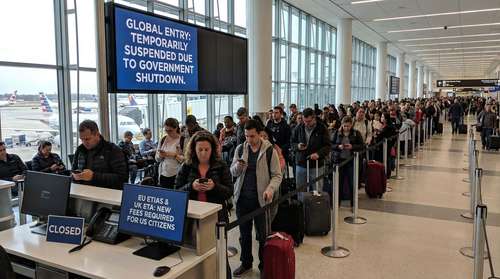
The 2026 Spring Break travel season has officially descended into chaos. A prolonged partial federal funding lapse has left the Department of Homeland Security scrambling, resulting in the dreaded reality of Global Entry suspended 2026. With TSA agents working without pay and massive staffing shortages crippling major hubs, international travelers are facing unprecedented Spring Break travel delays. To make matters worse, Americans jetting off to Europe are colliding with the strict new enforcement of digital travel authorizations. Between domestic bottlenecks and international red tape, navigating the skies this week requires more patience—and paperwork—than ever before.
Government Shutdown Airport Impact: Global Entry Suspended 2026
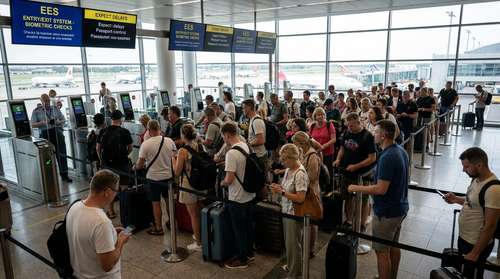
The ongoing federal funding lapse, which specifically targeted the Department of Homeland Security starting in mid-February, has severely disrupted border operations. As a result, Customs and Border Protection has temporarily halted the Global Entry program to reallocate their dwindling personnel to standard passport control lanes. For the millions of pre-screened travelers who rely on expedited customs clearance, the government shutdown airport impact is painfully clear: returning to the U.S. now means enduring hours-long waits in unmanaged queues.
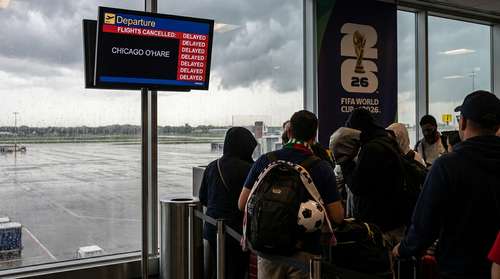
The ripple effects across the aviation industry are staggering. Major airports, from Houston Hobby to Newark Liberty, are reporting security and customs lines exceeding two to three hours. TSA absences are rising steadily as officers face missed paychecks, prompting a coalition of airline CEOs to publicly beg Congress for a swift resolution. If you are actively tracking flight cancellations today, many are indirectly tied to these severe staffing constraints. Airlines are being forced to preemptively thin their schedules to prevent cascading delays and avoid stranding passengers in endless security lines.
The UK ETA Requirement 2026 Leads to Boarding Denials
Domestically, the operational situation is grim, but international departures are introducing an entirely different set of hurdles. As of February 25, the UK ETA requirement 2026 is actively being enforced for all U.S. citizens. This Electronic Travel Authorisation mandates that visa-exempt travelers secure a digital pass before boarding any flight, ferry, or Eurostar train bound for the United Kingdom.
Costing £16 and valid for two years, the digital permit is designed to process within minutes. However, countless Spring Break vacationers arrived at their departure gates this past weekend completely unaware of the new rule. Airlines are strictly enforcing a 'no permission, no travel' policy. Because carriers face heavy fines for non-compliance, they are actively denying boarding to families who lack the approved ETA. Crucially, the rule applies to travelers of all ages—meaning parents who secured their own passes but forgot to apply for their infants are being turned away at the ticket counter.
ETIAS for US Citizens: The European Rollout Confusion
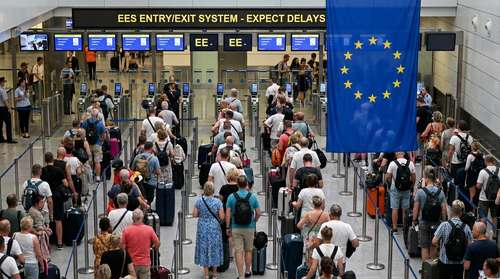
The United Kingdom isn't the only destination tightening its borders this season. American tourists are also getting tangled in the shifting landscape of European travel. The impending launch of ETIAS for US citizens—the European Travel Information and Authorisation System—has generated widespread anxiety and confusion among tourists. While the mandatory 20-euro ETIAS pre-authorization for the Schengen Zone isn't fully required until later in 2026, the simultaneous rollout of the EU Entry/Exit System (EES) biometric checks has already begun at major airports.
These new international travel requirements 2026 mean that border crossings into popular destinations like Spain, Italy, and France now require mandatory fingerprint and facial data collection. When you combine this new biometric friction with the staggering volume of Spring Break tourists and widespread misinformation about ETIAS launch dates, European entry points are experiencing massive bottlenecks. Travelers are reporting missed connections across the continent as border guards process the new data points.
Surviving Spring Break Travel Delays and Flight Cancellations Today
With infrastructure strained on both sides of the Atlantic, travelers must adapt their strategies immediately. First, audit your destination's entry rules at least 72 hours before departure. If you are flying to London or transiting through a UK airport, download the official UK ETA app and secure your family's approvals before packing your bags.
For your return to the United States, prepare for the reality that expedited services are temporarily off the table. With Global Entry suspended 2026 showing no immediate signs of reinstatement, you must budget extra time. Arrive at the airport a minimum of three hours early for domestic flights and four hours for international departures. Pack essential snacks, travel with carry-on luggage to bypass overwhelmed baggage claim belts, and rely on your airline's mobile app to monitor flight cancellations today. The current Spring Break season will undoubtedly be remembered for its historic gridlock, but proactive planning can still protect your hard-earned vacation.