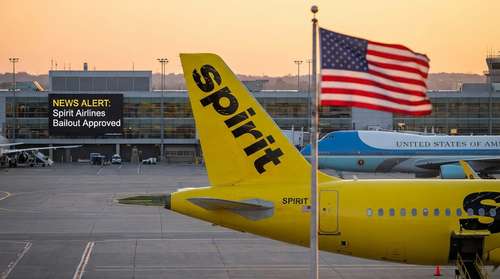
In a dramatic intervention that reshapes the American aviation landscape, key creditor groups have officially backed a $500 million federal rescue plan for Spirit Airlines. The landmark Spirit Airlines bailout averts an imminent liquidation that would have grounded the carrier, eliminated roughly 17,000 jobs, and stranded thousands of travelers. Orchestrated by the White House, this emergency financing package will result in the U.S. government taking an unprecedented 90% ownership stake in the beleaguered budget airline.
The Anatomy of the Trump Administration Airline Rescue
The financial lifeline comes after months of mounting pressure and a second Chapter 11 filing in less than two years. Under the terms of the Trump administration airline rescue, the federal government will provide a $500 million first-in-priority loan with favorable interest rates. In exchange for the capital injection, taxpayers will receive warrants representing 90% of the reorganized company's shares once it officially emerges from bankruptcy proceedings.
According to sources close to the negotiations, the administration is heavily leaning on the Defense Production Act to legally justify the move. By utilizing this emergency wartime authority, the Pentagon plans to leverage Spirit's excess capacity. The airline will be tasked with transporting military cargo, equipment, and active-duty troops during periods of underutilized civilian airspace. This dual-purpose strategy essentially transforms the commercial budget carrier into a state-sponsored aviation asset, guaranteeing a steady revenue stream while keeping its signature yellow planes in the sky.
Creditors Green-Light the Bailout
Securing the bailout required complex buy-in from divided financial factions. This week, two major creditor groups—including holders of a $275 million senior revolving credit facility and a committee of unsecured creditors—agreed to the government's terms. These financial stakeholders recognized that an outright liquidation would have resulted in an estimated $4 billion in losses for unsecured lenders. Prominent bondholders, such as Cyrus Capital and Citadel Americas, have been engaged in finalizing the remaining debt restructuring agreements to pave the way for the federal takeover.
What Fueled the Latest Spirit Airlines Bankruptcy Update?
The path to near-collapse was paved by a perfect storm of regulatory roadblocks, manufacturing hurdles, and international crises. Spirit's downward spiral accelerated rapidly after the Biden administration's Department of Justice successfully sued to block its proposed $3.8 billion merger with JetBlue on antitrust grounds. Without the capital, expanded network, and operational scale that the merger would have provided, Spirit struggled to manage its towering debt load, which had reached about $7.4 billion by its second bankruptcy filing.
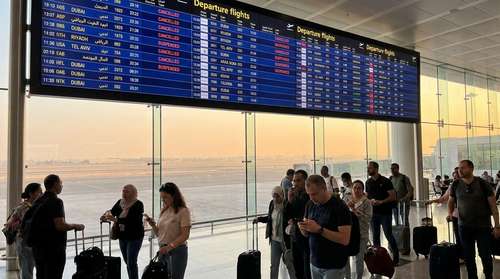
Any comprehensive Spirit Airlines bankruptcy update must also highlight the devastating impact of global geopolitics. Skyrocketing jet fuel costs, directly triggered by the ongoing conflict involving Iran, completely eroded the airline's already razor-thin profit margins. While legacy carriers managed to absorb the fuel price shocks, Spirit's ultra-low-cost model left it uniquely vulnerable to the sudden spike in basic operational expenses.
A Pivot from Typical Low-Cost Carrier Liquidation
Historically, failing airlines in the United States—from Pan Am to Eastern—have been allowed to fold gracefully into the history books. Stepping in to halt a low-cost carrier liquidation represents a massive philosophical shift for federal policymakers. While former aviation bailouts during the post-9/11 fallout and the COVID-19 pandemic were broad, industry-wide stabilization efforts, targeting a single struggling company has drawn sharp political division.
Transportation Secretary Sean Duffy publicly warned against throwing "good money after bad," noting Spirit's long-standing profitability issues even before the fuel crisis. Similarly, prominent conservative voices like Senator Ted Cruz have heavily criticized the prospect of an airline industry government stake, arguing the government has no business running a budget airline. However, Commerce Secretary Howard Lutnick and President Donald Trump pushed the deal forward, explicitly citing the preservation of 17,000 domestic jobs and the strategic value of keeping Spirit's modern fleet operational.
Budget Travel News 2026: What This Means for Passengers
For everyday flyers tracking budget travel news 2026, the federal intervention provides immediate, tangible stability. If Spirit had been forced to liquidate its assets and sell off its valuable airport slots at hubs like Newark to legacy carriers like United Airlines, market competition would have plummeted. Industry analysts broadly agree that Spirit's sheer existence applies massive downward pressure on ticket prices across the board. Saving the airline makes affordable flights USA a reality, even on routes dominated by larger, more expensive competitors.
Labor organizations, including the International Association of Machinists and Aerospace Workers (IAM), have voiced strong support for the bailout, provided the final agreement includes strict protections against involuntary furloughs or pay cuts. Workers point to the CARES Act as a successful model for keeping aviation employees on the payroll during turbulent times.
For now, Spirit Airlines operations will continue without interruption. Passengers holding tickets or vouchers for the upcoming summer travel season can expect their flights to operate as scheduled. The only major difference will be the new umbrella of federal oversight ensuring the planes stay fueled, the crew stays paid, and the company stays airborne.