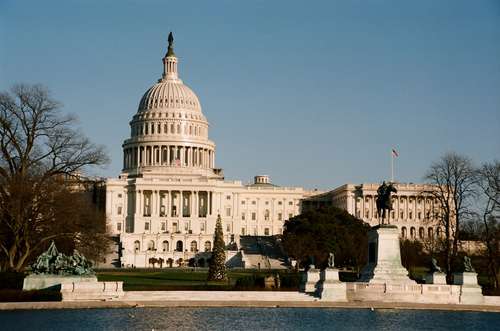
Secretary of State Marco Rubio delivered a forceful defense of the U.S. military’s January 3 operation to capture Nicolás Maduro during a high-stakes Senate Foreign Relations Committee hearing on Wednesday. Addressing a room packed with lawmakers and journalists, Rubio clarified the administration’s post-raid strategy, confirming that while no further military action is planned, the United States is moving swiftly to oversee the sale of Venezuelan oil to stabilize the region’s economy. The hearing offered the first comprehensive look at the White House’s long-term plan following the dramatic "Operation Absolute Resolve" that removed the Venezuelan strongman earlier this month.
Stabilizing Venezuela Through Controlled Oil Sales
The centerpiece of Rubio’s testimony was the administration's economic roadmap for the transition period. Rubio revealed that the U.S. Treasury will oversee a special trust account designated for Venezuelan oil revenue, ensuring funds are used strictly for humanitarian aid, essential services, and rebuilding critical infrastructure. “This is not about profit for the United States; it is about preventing systemic collapse,” Rubio told the committee.
The plan involves lifting specific sanctions to allow the interim Venezuelan government—currently led by Delcy Rodríguez, who has signaled cooperation with Washington—to offload between 30 and 50 million barrels of crude currently sitting in storage. Rubio emphasized that this “controlled return” of Venezuelan oil to global markets is designed to lower energy costs worldwide while depriving the remnants of the Maduro regime of unchecked financial resources.
Humanitarian Aid and Infrastructure Focus
Under questioning from both Republican and Democratic senators, Rubio detailed how the oil proceeds would be distributed. The funds are earmarked for restoring Venezuela's crumbling electrical grid and importing food and medicine, sectors that have suffered catastrophic neglect over the last decade. “We are creating a mechanism where the wealth of Venezuela finally serves the people of Venezuela, not a corrupt elite,” Rubio asserted.
Defending the January 3 Military Operation
Rubio faced sharp questions regarding the legality and risks of the January 3 raid that resulted in Maduro’s transfer to federal custody in New York. The Secretary of State remained defiant, characterizing the operation as a necessary preemptive measure against a “narco-terrorist state” that had become a forward operating base for U.S. adversaries. He cited intelligence reports indicating that Maduro was actively facilitating operations for Iranian and Russian military assets within the Western Hemisphere.
“The situation was untenable,” Rubio stated, leaning into the microphone. “We did not invade a country; we extracted a criminal enterprise that was holding a nation hostage.” He assured the committee that the administration is "not postured to, nor do we intend or expect to have to take any military action in Venezuela at any time” in the future, aiming to quell fears of a prolonged U.S. military presence on the ground.
The Role of the Interim Government and Opposition
A significant portion of the hearing focused on the complex political landscape left in Maduro’s wake. While Delcy Rodríguez has been sworn in as interim president and is cooperating with U.S. demands, Rubio acknowledged the vital role of the traditional opposition. He confirmed he would be meeting later that afternoon with opposition leader María Corina Machado to discuss a timeline for free and fair elections.
This dual-track approach—working with the remnants of the former administration for stability while engaging democratic reformers for the future—represents a pragmatic shift in U.S. foreign policy. Rubio argued that an abrupt dismantling of the entire state apparatus could lead to anarchy, akin to past failures in nation-building. Instead, the U.S. seeks a "managed transition" where economic recovery paves the way for democratic renewal.
Global Market Implications
Energy analysts are already reacting to the news of Venezuelan oil re-entering the market. With global prices fluctuating, the addition of millions of barrels of heavy crude is expected to have a stabilizing effect. However, Rubio cautioned that the infrastructure decay in Venezuela means a return to full production capacity could take years, requiring significant foreign investment and technical expertise.
The hearing concluded with a sense of cautious optimism. While skepticism remains about the speed of Venezuela's democratic transition, Rubio’s testimony provided a clear signal: the U.S. is deeply committed to managing the aftermath of the raid, using economic levers rather than military force to steer the country toward stability.