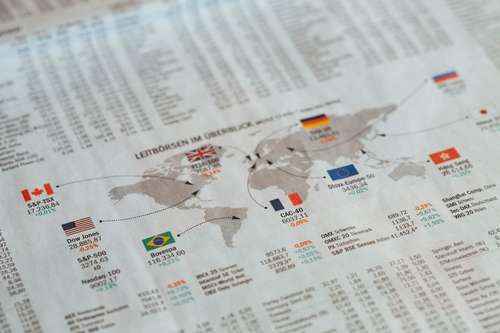
Global markets are reeling this morning after President Donald Trump stunned the international community with a threat to impose a 10% tariff on eight European nations, citing their opposition to his administration's renewed push to acquire Greenland. The announcement, made via Truth Social on Saturday, has triggered a massive flight to safety, sending gold and silver prices to historic record highs as U.S. stock futures plummet. With the World Economic Forum in Davos kicking off today, the stage is set for a high-stakes diplomatic showdown that threatens to reignite a full-scale transatlantic trade war.
Markets React: Futures Sink, Safe Havens Soar
The financial world’s reaction to the weekend's bombshell has been swift and severe. While U.S. markets remain closed for Martin Luther King Jr. Day, stock futures signal a rough opening for Tuesday. Dow Jones Industrial Average futures have slid 0.6%, while S&P 500 and Nasdaq futures are down 0.7% and 1% respectively. Investors are fleeing risk assets in droves, fearing that this geopolitical gambit could destabilize an already fragile global recovery.
In Europe, the mood is even grimmer. The Euro has dropped to a seven-week low against the dollar, trading around $1.1572, as traders price in the economic damage of potential trade barriers. "This is no longer just political rhetoric; markets are pricing in a genuine fracture in the NATO economic alliance," noted a senior analyst at Deutsche Bank. The threat targets some of America's closest allies—Denmark, Norway, Sweden, France, Germany, the United Kingdom, the Netherlands, and Finland—creating uncertainty that is rippling through every major exchange from London to Frankfurt.
Gold and Silver Hit Record Highs
As anxiety grips equity markets, commodities are experiencing a historic surge. Gold prices skyrocketed in early Asian trading, shattering previous records to hit a high of nearly $4,690 per ounce. Silver followed suit, jumping over 4% to reach a record $94 per ounce. This aggressive move into precious metals underscores the severity of investor fear, as capital rotates out of currencies and stocks into tangible safe-haven assets.
The Greenland Ultimatum: A Diplomatic Firestorm
President Trump's ultimatum is stark: a 10% tariff on all goods from the eight targeted nations beginning February 1, 2026. He warned that this rate would climb to a punishing 25% by June 1 if a "deal for the Complete and Total purchase of Greenland" is not reached. The President justified the move by citing national security concerns, specifically referencing the strategic importance of Greenland for the U.S. "Golden Dome" missile defense system and warning of encroaching influence from China and Russia.
The diplomatic fallout has been immediate. European leaders issued a joint statement warning that such coercive measures "undermine transatlantic relations and risk a dangerous downward spiral." Even staunch allies have voiced dissent; Italian Prime Minister Giorgia Meloni, typically close to Trump, reportedly called the move "a mistake" during a diplomatic visit to South Korea. In Brussels, emergency talks are already underway, with EU officials weighing the activation of their "anti-coercion instrument"—a powerful legal tool designed specifically to retaliate against economic bullying.
Davos 2026: The New Battleground
The timing of this escalation could not be more dramatic. As the global elite gather in the Swiss Alps for the World Economic Forum (WEF) in Davos today, the trade dispute has instantly become the dominant theme. President Trump is scheduled to attend the forum later this week, setting the scene for what could be one of the most contentious gatherings in the organization's history.
"Davos was supposed to be about 'Rebuilding Trust,' but it is now effectively a war room," said one European diplomat on condition of anonymity. The specter of a U.S.-Europe trade war looms large over every panel and cocktail reception. Business leaders are scrambling to assess their exposure to the threatened tariffs, which would hit major sectors including German automobiles, French luxury goods, and British financial services. The uncertainty is palpable, with many fearing that a breakdown in Western unity could provide an opening for geopolitical rivals to exploit.
What Comes Next?
The next two weeks are critical. If the February 1 deadline passes without a resolution, the imposition of 10% tariffs would mark a significant escalation in protectionist policy, likely triggering immediate countermeasures from the EU. This tit-for-tat dynamic could drag the global economy into a slowdown just as inflation appeared to be stabilizing. For investors, the message is clear: volatility is back, and the old rules of diplomatic engagement no longer apply.