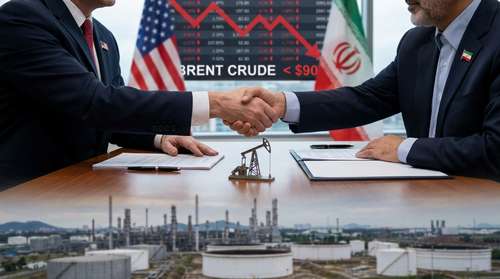
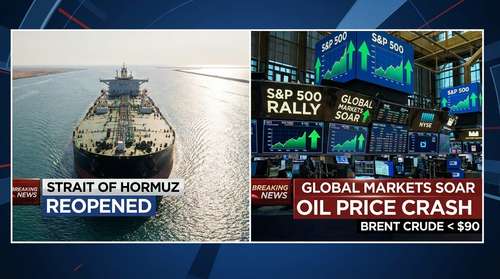
A dramatic diplomatic breakthrough has sent shockwaves through global financial markets, triggering the monumental oil price crash 2026. Brent crude prices plummeted below the critical $90 per barrel threshold after Iranian officials declared the highly contested Strait of Hormuz 'completely open' for commercial shipping. The sudden de-escalation of maritime hostilities unwound weeks of heavy war premiums, sparking a massive Wall Street rally today as investors cheered the prospect of immense gas price relief for the global economy.
Strait of Hormuz Reopening Eases Supply Bottlenecks
The sudden shift in the Middle East energy impact narrative arrived late Friday when Iranian Foreign Minister Abbas Araghchi announced the lifting of maritime restrictions. Araghchi confirmed that commercial vessels can now transit the vital chokepoint for the duration of a newly brokered 10-day ceasefire between Israel and Lebanon. While tankers must still navigate a specific 'coordinated route' managed by Iran's maritime authorities—a passage shipping analysts dubbed the 'Tehran tollbooth' due to reported $2 million transit fees—the resumption of traffic removes a blockade that paralyzed up to 20% of the world's oil trade.
The Strait of Hormuz reopening acts as a critical release valve for approximately 800 stranded vessels, including roughly 300 oil and gas tankers that had been idling in the Persian Gulf. By restoring these supply chains, the immediate threat of a crippling energy shortage has diminished. Prior to Friday's announcement, the International Energy Agency warned that Europe had only about six weeks of remaining jet fuel supplies.
Brent Crude Prices Plummet Below $90
Commodity floors reacted instantly to the diplomatic developments, cementing the oil price crash 2026 as one of the steepest single-day drops in recent history. Brent crude prices, the international benchmark, tumbled more than 10% to settle around $88.80 per barrel. This marks a drastic retreat from the geopolitical peak of $119 seen last month. U.S. benchmark West Texas Intermediate (WTI) experienced an even sharper decline, sliding over 11% to roughly $83.65 per barrel.
For consumers and businesses alike, the collapse in crude valuations signals significant downstream gas price relief. With millions of barrels poised to move toward open waters, inflationary pressures tied to transport and grocery costs are expected to cool. The yield on the 10-year Treasury dropped to 4.24%, reflecting bond market confidence that central banks might resume interest rate cuts to invigorate the economy.
Wall Street Rally Today: Airline Stocks Surge
Equities exploded higher in response to plunging energy costs. The Wall Street rally today pushed the S&P 500 up 1.2%, securing its longest weekly winning streak since last Halloween. The Dow Jones Industrial Average briefly rocketed more than 1,100 points intraday before settling into heavy gains. Investors rapidly rotated capital into sectors heavily dependent on affordable fuel and favorable borrowing rates.
Travel and transport equities led the charge as their operating cost projections shrank. Airline stocks surge reliably in this environment; United Airlines climbed nearly 9%, while Southwest Airlines posted aggressive gains. The cruise industry mirrored the aviation sector's success. Heavyweights like Royal Caribbean and Norwegian Cruise Line both posted gains approaching 9%, reflecting trader optimism that travel demand will remain robust without the burden of skyrocketing ticket prices. Housing and auto-related companies, including PulteGroup and Carvana, also rallied heavily on hopes that lower inflation will spur cheaper mortgages and auto loans.
Middle East Energy Impact and the Path Forward
While the immediate financial reaction has been overwhelmingly positive, market analysts maintain a degree of caution regarding the long-term Middle East energy impact. President Donald Trump, whose administration helped broker the underlying ceasefire, welcomed the maritime development but confirmed the U.S. naval blockade on Iranian ports remains in full force until a comprehensive diplomatic deal is finalized. Trump indicated that negotiations are progressing rapidly, noting that Tehran had proposed refraining from acquiring nuclear weapons for over two decades, and stated the broader war 'should be ending pretty soon'.
Despite the optimism fueling the oil price crash 2026, Brent crude prices remain roughly $15 to $18 higher than their pre-war baseline of $70 per barrel. This lingering premium suggests energy markets are still pricing in the fragile nature of the 10-day truce. Major shipping conglomerates are reacting with similar prudence. Germany's Hapag-Lloyd and the Norwegian Shipowners' Association announced they would refrain from immediately passing through the strait while assessing safety protocols and the potential presence of sea mines. As the world watches these vital shipping lanes, global markets hinge on whether this temporary relief can translate into permanent geopolitical stability.