
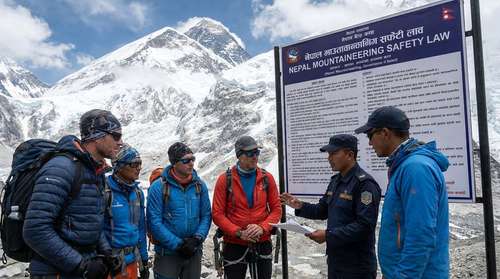
KATHMANDU — The era of the "novice adventurer" on the world's highest peak may officially be over. In a historic legislative move that promises to reshape the mountaineering industry, Nepal’s National Assembly has officially passed the Integrated Tourism Bill. The landmark legislation, approved on February 9 and publicized today, introduces the strictest Everest climbing requirements in history, including a non-negotiable mandate that all aspirants must have successfully summited a 7,000-meter peak in Nepal before even applying for a permit.
The "7,000-Meter Barrier": A New Standard for Everest
For decades, the only true barrier to attempting Mount Everest was the price tag. Now, the Nepal tourism bill 2026 has erected a formidable physical and technical wall. Under the new Everest permit regulations 2026, prospective climbers must provide government-verified proof of having summited a peak above 7,000 meters (22,965 feet) specifically within Nepal.
This "Nepal-only" clause is a critical distinction. Summits of foreign peaks like Aconcagua (6,961m) or Denali (6,190m) will no longer suffice. The legislation aims to ensure that climbers have proven their ability to handle the unique high-altitude conditions, technical logistics, and extreme weather patterns of the Himalayas. "This isn't just about thinning the crowds," stated Tourism Minister Anil Kumar Sinha during the assembly session. "It is about ensuring that every person on that mountain has the skills to survive without endangering others."
Mandatory Health Certificates and Safety Overhaul
Beyond climbing resume requirements, the bill introduces a rigorous Mount Everest health certificate system. Gone are the days of rubber-stamped medical forms from doctors abroad. The new Nepal mountaineering safety law mandates that every climber—along with their liaison officers and guides—must undergo a comprehensive health examination at a government-approved medical institution in Nepal within one month of their expedition.
This provision targets the rising number of fatalities linked to preventable medical issues like exhaustion, altitude sickness, and pre-existing heart conditions. If a climber is deemed medically unfit by Nepali doctors, their permit will be summarily denied. Furthermore, the bill officially bans solo expeditions and mandates that all guides and high-altitude staff must be Nepali citizens, a move designed to protect local employment and ensure expert oversight.
Permanent Environmental Fund to Tackle Waste
Addressing the ecological crisis that has plagued the "Roof of the World," the legislation establishes a permanent Mount Everest environment fund. This Environment Protection and Mountaineers' Welfare Fund will be financed directly by a portion of the climbing permit fees, which were recently hiked to $15,000 per person.
Unlike previous ad-hoc cleanup campaigns, this fund creates a sustainable financial mechanism to manage waste. The bill enforces a strict "carry-in, carry-out" policy, with the fund covering the costs of processing human waste and recovering old trash revealed by melting glaciers. "We are taking a polluter-pays approach," said a Ministry spokesperson. "The mountain has given us everything; we must now invest permanently in its preservation."
Industry Impact: What Climbers Need to Know
The 7000m peak experience Nepal requirement is expected to drastically reduce the number of permits issued for the 2027 season and beyond. International expedition operators may see a short-term dip in Everest bookings, but local agencies are preparing for a surge in demand for 7,000-meter preparatory expeditions on peaks like Himlung Himal and Baruntse.
While the bill has cleared the National Assembly—the upper house—it now moves to the House of Representatives for final endorsement, a step expected to be a formality given the broad political support for reforming mountain tourism. For aspiring climbers, the message is clear: the path to Everest now begins on a 7,000-meter training ground, and there are no shortcuts to the top.