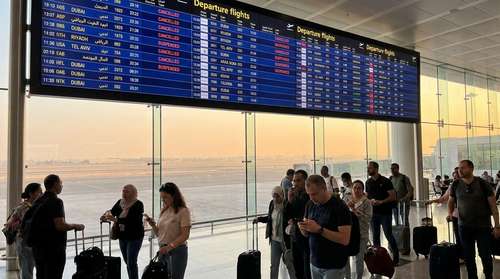
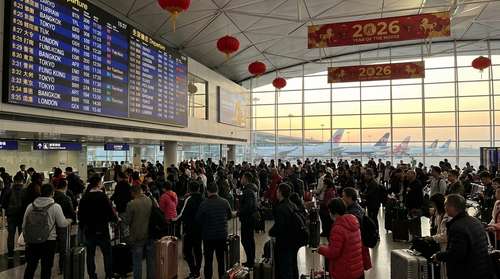
As the world prepares to ring in the Year of the Horse on February 17, the global travel industry is currently witnessing what officials are calling the largest human migration in history. With the 2026 Lunar New Year just days away, transport authorities have forecasted a staggering 9.5 billion passenger trips during the 40-day 'Spring Festival' rush. From the packed railway hubs of Beijing to the sun-soaked beaches of Thailand, the sheer scale of this year's mobilization is obliterating previous records, signaling a definitive end to the post-pandemic recovery phase and the dawn of a new, hyper-mobile era of global tourism.
The Numbers: Breaking Down the 9.5 Billion Forecast
The numbers emerging from transport ministries this week are nothing short of astronomical. The 'Chunyun' period—the 40-day travel window surrounding the Lunar New Year—has always been a logistical titan, but 2026 is setting a new benchmark. Official data released earlier this week projects 9.5 billion inter-regional trips, a figure that eclipses the 2025 record and signals a full return to pre-pandemic mobility patterns.
While the headline number is massive, the breakdown reveals a significant shift in how people are moving. Approximately 80% of these journeys are expected to be self-driving road trips, reflecting a growing preference for flexibility and personal space. However, public transport is also seeing unprecedented demand. The railway network alone is bracing for 540 million passengers, while civil aviation authorities anticipate handling over 95 million air trips—a clear indicator that long-distance travel is back in full force.
International Flight Bookings Skyrocket by 400%
The surge isn't contained within national borders. International travel is experiencing a seismic boom, driven by expanded visa-free policies and a renewed hunger for global exploration. Data from major travel platforms like Trip.com and Qunar indicates that international flight bookings to Asia have jumped by a staggering 400% compared to the same period last year.
Thailand Reclaims the Top Spot
Among the beneficiaries of this outbound wave, Thailand has firmly reclaimed its status as the number one destination for Chinese tourists, overtaking Japan amidst shifting diplomatic winds and safety concerns. The 'Year of the Horse' celebrations in Bangkok are set to be legendary, with major venues like ICONSIAM preparing for millions of visitors. Other visa-free destinations, including Singapore, Malaysia, and surprisingly, Russia, are also reporting fully booked hotels and flights, proving that ease of access is currently the ultimate currency in global tourism.
The Rise of 'Experience-Based' Travel
What stands out in 2026 isn't just where people are going, but why. The era of the 'shopping spree' tourist is fading, replaced by a demographic hungry for immersive cultural experiences. Industry analysts are calling this the 'Experience Economy' of the Year of the Horse.
Travelers are increasingly seeking out 'Ice and Snow' tourism in northern regions like Harbin, or diving deep into cultural heritage with Hanfu (traditional clothing) photo shoots in ancient towns. On the flip side, the 'warm winter' trend is driving millions to tropical locales for wellness retreats and island hopping. This shift is reshaping the economic landscape, with spending moving away from luxury retail and toward dining, entertainment, and unique local activities.
Inbound Tourism: The World Comes to Asia
It is not just a story of outbound migration. Inbound tourism to China and the broader Asia-Pacific region is seeing a renaissance. The recent expansion of visa-free entry for citizens of dozens of countries has greased the wheels for international visitors. European and American travelers are booking 'Spring Festival' tours in record numbers, eager to witness the lantern festivals and dragon dances firsthand.
Data from the first week of February showed a 30% year-on-year increase in domestic flight bookings by non-Chinese passport holders, suggesting that international business travelers and tourists are taking advantage of the festive season to explore the region's interior. Cities like Chengdu and Xi'an are seeing foreign booking rates that rival tier-one metropolises like Shanghai and Beijing.
Economic Implications for 2026
The economic ripple effects of this travel surge are expected to be profound. For destination countries, the influx of tourists provides a critical injection of foreign currency and a boost to the hospitality sector. Airlines, battered by years of volatility, are finally operating at capacity on key Asian routes, with ticket prices stabilizing at profitable levels.
As the first major global holiday of 2026, the Lunar New Year is serving as a bellwether for the rest of the year. If these first two weeks of February are any indication, the tourism industry is not just recovering; it is evolving into a more dynamic, experience-driven, and massive global engine of growth. With the Lantern Festival still ahead, the world watches as billions of journeys weave a new tapestry of global connection.