
DAVOS, Switzerland — The 56th Annual Meeting of the World Economic Forum (WEF) opened today in Davos under a heavy cloud of geopolitical friction, as global leaders gathered to navigate a volatile mix of trade warfare and technological disruption. While the official theme, "A Spirit of Dialogue," calls for cooperation, the atmosphere inside the Congress Centre is charged with tension following the United States' stunning announcement of new tariffs on European allies, sparking fears of a trans-Atlantic trade war.
Against this backdrop of fracturing diplomacy, the technology sector remains a relentless engine of economic transformation. New data released this morning projects global AI business investment 2026 to hit a staggering $2.52 trillion, despite growing skepticism about immediate returns. As over 2,500 delegates—including a high-profile U.S. delegation led by President Donald Trump—descend on the Alpine resort, the dual narratives of Agentic AI trends and deepening global trade tensions are set to dominate the week.
Trade Tensions: The 'Greenland Crisis' Overshadows Dialogue
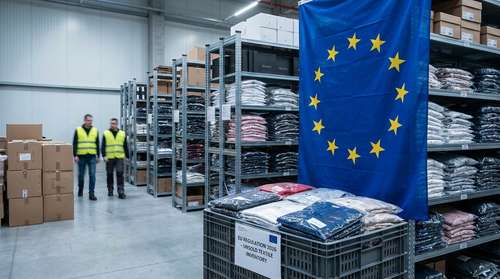
The Davos 2026 news cycle has been hijacked by the escalating diplomatic standoff between Washington and Brussels. Just days before the summit, the White House threatened a punitive 10% tariff on goods from eight European nations—including Germany, France, and the UK—set to take effect on February 1. The move is widely seen as retaliation for the deployment of European military support to Greenland, a territory the U.S. administration has aggressively sought to purchase.
European Commission President Ursula von der Leyen, present in Davos, is expected to hold crisis talks with U.S. officials. "The era of trade certainty is effectively over," noted Carsten Brzeski, global head of macro at ING, in a note to clients this morning. "What we are seeing is the weaponization of economic policy on a scale that threatens the foundational alliances of the West."
Markets have reacted sharply to the global trade tensions. European equity futures dropped 1.3% ahead of the opening plenary, while safe-haven assets like gold and silver surged to fresh record highs. Inside the WEF corridors, the "Spirit of Dialogue" faces its ultimate test as European leaders weigh reactivating the EU's anti-coercion instrument—a "nuclear option" for trade retaliation.
The $2.5 Trillion AI Bet: Infrastructure Over Moonshots
While diplomats wrangle over tariffs, the business elite is focused on a different number: $2.52 trillion. That is the forecast for worldwide AI business investment 2026, a 44% increase year-over-year, according to a major report released by Gartner today. However, the mood has shifted from the unbridled hype of 2024 to a gritty, pragmatic focus on infrastructure and ROI.
The 'Trough of Disillusionment'
Analysts are calling this phase the "Trough of Disillusionment." Corporations are no longer funding experimental "moonshot" projects with abandon. Instead, nearly $1.3 trillion of the projected spending is earmarked for hard infrastructure—AI-optimized servers, data centers, and the energy grids required to power them. The message for CEOs in Davos is clear: prove the value or lose the funding.
"AI adoption is now shaped by organizational readiness, not just financial investment," said a lead analyst at the forum. The consensus emerging from early sessions is that 2026 is the year of "plumbing"—building the robust, unglamorous foundations necessary for AI to scale responsibly.
Agentic AI Trends: The Rise of the 'Autonomous Employee'
If Generative AI was the buzzword of 2024, Agentic AI trends are the obsession of 2026. Moving beyond simple chatbots that answer prompts, "Agentic AI" refers to autonomous systems capable of executing complex, multi-step workflows with minimal human oversight. This shift represents a fundamental change in how enterprises operate, moving from "AI as a tool" to "AI as a coworker."
Key sessions on the WEF Davos schedule are dedicated to "Bounded Autonomy"—the governance framework needed to let these agents operate safely. Tech leaders are showcasing systems that can independently negotiate supply chain contracts, manage cybersecurity defense grids, and optimize logistics networks in real-time.
However, the rise of Agentic AI brings new risks. With the 2026 economic forecast already clouded by trade volatility, the prospect of autonomous agents making high-speed financial decisions has regulators on edge. A closed-door session titled "Governing the Agentic Future" is rumored to be one of the most oversubscribed events of the week.
A Week of Consequence
As the World Economic Forum highlights continue to roll out, the contrast between the technological optimism of the private sector and the geopolitical pessimism of the public sector is stark. The 2026 summit may well be remembered as the moment where the digital future collided with the analog realities of territorial disputes and protectionism.
For the 2,500 leaders in attendance, the challenge will be to prevent the "Spirit of Dialogue" from becoming a ghost of the past. With tariffs looming and AI agents poised to rewrite the rules of labor, the decisions made in the Swiss Alps this week will likely define the economic trajectory of the decade.