
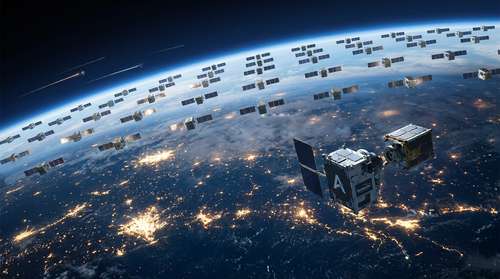
The space race for global internet dominance just hit warp speed. On April 14, 2026, tech giant Amazon officially cemented the Amazon Globalstar acquisition in a landmark $11.57 billion deal. This aggressive maneuver fundamentally reshapes the low-Earth orbit (LEO) broadband landscape, setting the stage for a massive showdown with SpaceX's Starlink. By absorbing an established space communications provider, Amazon is moving fast to close the deployment gap and deploy a truly comprehensive wireless infrastructure that bypasses traditional terrestrial networks. Standing as the company's second-largest purchase in history—trailing only the $13.7 billion Whole Foods buyout in 2017—this move signals a massive financial commitment to winning the orbital economy.
Breaking Down the Mega-Deal and Apple's Role
Valued at roughly 40 times Globalstar's projected 2026 revenue, the buyout offers shareholders a premium choice of $90 per share in cash or 0.3210 shares of Amazon common stock. But the real prize isn't just existing hardware; it's exclusive real estate in the sky. Globalstar brings invaluable assets to the table, primarily its global regulatory authorizations and Band 53. This highly coveted midband radio frequency, ranging from 2483.5 to 2495 MHz, is uniquely authorized for direct-to-device (D2D) communication and strictly controlled by Globalstar.
You can't discuss this telecom merger without mentioning the iPhone. Apple heavily invested $1.5 billion in Globalstar back in 2024 to power its Emergency SOS features, utilizing roughly 85% of the network's capacity. That deep integration gave Apple essentially veto power over any sale. To make the current merger happen, Amazon secured Apple's blessing by signing a long-term parallel agreement. Future iPhones and Apple Watches will seamlessly leverage the expanding Amazon network for life-saving features, roadside assistance, and location tracking.
Supercharging Project Kuiper Satellite Internet
For years, the Jeff Bezos-founded Project Kuiper satellite internet initiative faced developmental bottlenecks and regulatory ticking clocks. Recently rebranded under the name Amazon Leo, the division currently operates about 240 active satellites in low Earth orbit. That operational footprint pales in comparison to Elon Musk's established network, which boasts roughly 10,000 active units and serves over 9 million users globally.
This historic buyout instantly validates Amazon as a formidable SpaceX Starlink competitor. Instead of building a direct-to-device architecture completely from scratch, Amazon inherits Globalstar's fleet of 24 current satellites, pending agreements for 50 additional units, and three decades of localized aerospace expertise. For those closely tracking Amazon satellite news 2026, this represents the crucial turning point where conceptual blueprints transform into an accelerated commercial rollout. The timing is far from coincidental; just a day before the acquisition announcement, Amazon unveiled its new Leo Aviation Antenna, designed to court major airlines for in-flight Wi-Fi connectivity.
The FCC Deadline Squeeze
Amazon remains under a strict Federal Communications Commission mandate requiring the deployment of half its planned 3,236-satellite constellation by July 2026. Acknowledging the tight timeline, the company recently requested an extension to 2028, estimating it will only have around 700 satellites operational by the original summer deadline. However, absorbing Globalstar's functional assets and regulatory goodwill significantly bolsters their compliance argument.
Mastering Satellite Spectrum Technology
The next era of mobile connectivity won't require bulky dish antennas mounted on rooftops. The integration of advanced satellite spectrum technology allows modern LEO constellations to beam voice, text, and high-speed data directly to unmodified, everyday smartphones.
Rumors heavily indicate that SpaceX also courted Globalstar for these exact airwaves, explaining the premium price tag Amazon ultimately agreed to pay. By successfully cornering this spectrum, Amazon ensures its upcoming D2D system—targeted for a 2028 consumer launch—can seamlessly partner with major mobile carriers to eliminate cellular dead zones worldwide.
Building Tomorrow's Global Broadband Infrastructure
What does an Amazon-controlled LEO satellite network mean for the average consumer and enterprise user? Increased market competition typically drives down subscription costs while aggressively pushing technological boundaries. Amazon expects its network to deliver download speeds up to 1 Gbps, a significant jump over Starlink's typical performance range of 45 to 280 Mbps.
Furthermore, Amazon plans to tightly integrate its orbital network with Amazon Web Services (AWS), offering massive bandwidth, edge computing, and AI processing power directly to maritime, aviation, and rural commercial markets. The company is already conducting localized testing with business clients and plans a broader service rollout by mid-2026. A robust global broadband infrastructure capable of delivering high-speed, low-latency data anywhere on the planet is rapidly taking shape.
By shelling out nearly $12 billion, Amazon has made its long-term ambitions undeniably clear. The race for the stars isn't a monopoly, and the ultimate winner will be the consumer who finally gets a reliable, high-speed alternative in space-based connectivity.