WASHINGTON — In a decisive move to protect the nation's fragile energy grid, the White House has issued a landmark "AI Power Mandate" effectively requiring hyperscalers like Microsoft, Amazon, and Google to directly fund and construct dedicated power infrastructure for their expanding artificial intelligence operations. The policy, formalized this weekend following meetings with the newly established National Energy Dominance Council, aims to insulate American households from skyrocketing electricity costs while ensuring the U.S. maintains its lead in the global AI arms race.
The 'Pay Your Own Way' Policy Explained
The core of the new directive involves an emergency wholesale electricity auction to be administered by PJM Interconnection, the largest grid operator in the U.S. serving 65 million people across 13 states including Virginia, Maryland, and Pennsylvania—the heart of the world's data center alley.
Under the new rules, tech giants must bid on 15-year contracts to fund new "baseload" power generation—primarily natural gas and nuclear facilities. Crucially, the mandate enforces a "pay-for-capacity" model: companies must cover the construction and operational costs of these new plants whether they utilize the electricity or not. This "bring-your-own-power" strategy is designed to prevent the unprecedented energy demand of next-generation AI training clusters from cannibalizing existing grid capacity.
"We are the hottest country in the world for AI, but we cannot allow that boom to darken American homes," a White House official stated during the policy unveiling. "Big Tech must pay their own way. If they need gigawatts of new power, they must build gigawatts of new generation."
Addressing the Data Center Electricity Crisis
The mandate comes in the wake of a strenuous winter that saw regional brownouts across the Mid-Atlantic, attributed to the dual strain of extreme weather and the voracious appetite of AI data centers. According to recent Department of Energy reports, electricity consumption by data centers is on track to double by 2030, with a single AI training facility now consuming as much power as a mid-sized city.
Key components of the mandate include:
- $15 Billion Infrastructure Target: The emergency auction seeks to stimulate at least $15 billion in new power plant construction by late 2026.
- Ratepayer Protection: Strict firewalls to prevent utility providers from passing AI-related infrastructure costs onto residential consumers.
- Baseload Priority: A shift away from intermittent renewables alone, favoring continuous power sources like natural gas and nuclear SMRs (Small Modular Reactors) to ensure 24/7 reliability for AI inference.
Big Tech's Response and the 'Stargate' Collaboration
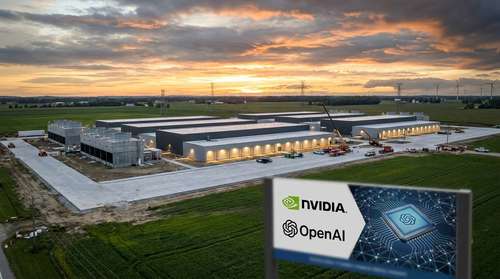
While the policy imposes heavy financial burdens, major industry players have largely signaled cooperation, viewing energy security as the primary bottleneck to their growth. Microsoft and OpenAI have already announced their alignment with the administration's goals, integrating these requirements into their massive "Stargate" supercomputer project.
Just days before the official mandate, Microsoft confirmed it would pay full market rates for new nuclear assets, rejecting tax incentives that would burden local municipalities. "We are committed to paying our own way so that our operations do not increase electricity prices for local communities," an OpenAI spokesperson stated. However, smaller AI startups and mid-sized cloud providers warn that the high capital requirements could entrench the dominance of the largest hyperscalers, as few others can afford to underwrite entire power plants.
Skepticism on Timeline and Sustainability
Despite the aggressive policy, energy experts remain skeptical about the feasibility of the timeline. Building new natural gas plants typically takes 3-4 years, while nuclear projects can take a decade. The administration's push to slash regulatory red tape aims to compress this to under 24 months, but logistical hurdles remain.
Rob Gramlich, president of Grid Strategies, questioned the rapid implementation. "It's not at all clear how this can actually get implemented by September," he noted, referring to the target date for the first capacity auction. Furthermore, environmental groups have criticized the mandate for potentially extending the life of fossil fuel assets under the guise of national security, labeling the move a setback for climate goals.
The Future of U.S. Energy Grid 2026
As the U.S. energy grid moves further into 2026, the convergence of digital infrastructure and physical power generation is becoming absolute. This mandate marks the end of the era where tech companies could simply plug into the grid like any other commercial tenant. From now on, to build the digital brain, they must also build the electric heart.