Exactly 150 years after Alexander Graham Bell placed the first telephone call, AT&T has signaled its intent to reshape the future of American communications. On Tuesday, the telecom giant announced a staggering $250 billion investment to drastically upgrade its network capabilities over the next five years. This historic move is set to supercharge the company's AT&T 5G expansion and accelerate its US fiber rollout across urban, suburban, and rural areas. By significantly outspending its primary competitors, AT&T is clearly laying the groundwork to dominate the national connectivity landscape through 2030.
A Historic Move: The $250 Billion Investment Breakdown
The sheer scale of this financial commitment marks a watershed moment in high-speed internet news. To put the figure into perspective, AT&T plans to funnel an average of $50 billion annually into its network over the next half-decade. Industry experts and market watchers were caught off guard by the magnitude of the commitment; financial analysts had previously projected the company's capital expenditures to hover around $113.6 billion for the same five-year period.
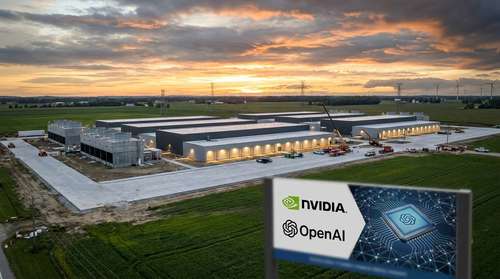
CEO John Stankey emphasized that the initiative is born out of absolute necessity. Voice calls now make up a microscopic fraction of overall network traffic. Instead, data-heavy applications, cloud computing, and the explosive rise of artificial intelligence demand robust, "always-on" connectivity. As tech behemoths pour billions into AI data centers, AT&T recognizes that the bottleneck for consumers and businesses alike will be the physical infrastructure delivering that data. This sweeping AT&T network infrastructure overhaul is designed to eliminate physical data bottlenecks entirely, aggressively decommissioning legacy copper lines in favor of next-generation transmission technologies.
Company executives also indicated that the initiative will reinforce FirstNet, the dedicated communications platform used by emergency responders nationwide. AT&T plans to optimize its network footprint to handle critical public safety data traffic without interruption, even as civilian data usage continues to climb.
Powering the AI Age: US Fiber Rollout and 5G Home Internet 2026
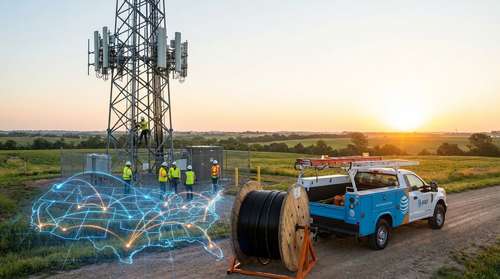
At the core of AT&T's strategy is a massive transition toward high-capacity, low-latency broadband. The company ended 2025 with just over 32 million fiber passings, but this new injection of capital sets an aggressive target of reaching more than 60 million locations by the end of the decade. This accelerated US fiber rollout will run parallel to widespread enhancements in wireless capabilities.
For consumers, this translates directly to a much more competitive market for 5G home internet 2026 offerings. As remote work setups, symmetrical upload demands, and AI-driven home applications become standard, households require bandwidth that older broadband frameworks simply cannot support. AT&T is investing heavily to ensure its AT&T 5G expansion delivers uninterrupted, high-speed access to millions of customers who previously had few reliable choices. The company is also backing up this hardware investment with human capital, pledging to expand AI fluency training for its current workforce.
Closing the Divide: Rural Broadband Coverage and Satellite Ventures
While urban centers will see immediate benefits from the dense fiber networks, the initiative carries massive implications for the digital divide. Expanding rural broadband coverage remains a notorious logistical and financial hurdle for major telecom operators. To reach remote geographies where laying terrestrial fiber or building new cell towers remains economically unviable, AT&T is leaning heavily into space technology.
Through an extended collaboration with AST SpaceMobile, AT&T plans to integrate direct-to-cell satellite connectivity into its broader network ecosystem. This hybrid approach ensures that Americans living in the most remote corners of the country can finally receive adequate rural broadband coverage. By combining fiber lines, traditional 5G towers, and advanced satellite tech, AT&T is attempting to create a seamless blanket of coverage that spans the entire North American continent, ensuring that geographical isolation no longer equates to digital isolation.
Outpacing the Competition: Verizon and T-Mobile in the Rearview?
The telecommunications sector is fiercely competitive, but AT&T's financial commitment threatens to dramatically alter the balance of power. If the company evenly distributes the $250 billion investment, its $50 billion annual spend will heavily dwarf the capital expenditures of its biggest rivals.
Roger Entner, Principal at Recon Analytics, highlighted the stark contrast in industry spending following the announcement. "This is huge," Entner noted. "That's 5x T-Mobile. That's 3x Verizon." In 2025, Verizon spent roughly $17 billion on network buildouts, while T-Mobile spent approximately $10 billion. Moreover, Verizon is actively reducing its capital expenditure to around $16.5 billion in 2026 as part of a broader financial turnaround strategy under CEO Dan Schulman. T-Mobile has also shown more interest in reducing internal costs than radically expanding hardware footprints.
In contrast to the broader industry trend of workforce reduction, AT&T's commitment to physical growth requires a massive influx of skilled labor. The telecom giant plans to recruit thousands of network technicians throughout 2026, explicitly noting that only five percent of these new technical roles will require a four-year college degree. This focus on blue-collar tech jobs emphasizes the tangible, ground-level reality of their aggressive buildout strategy.
While competitors focus on streamlining operations and managing balance sheets, AT&T is playing the long game. The company is betting that a staggering network infrastructure advantage will be the ultimate deciding factor in acquiring and retaining customers in the AI era. Whether this massive financial gamble will translate into unshakeable market dominance remains to be seen, but one thing is certain: AT&T has just set a daunting new benchmark for the future of the internet.