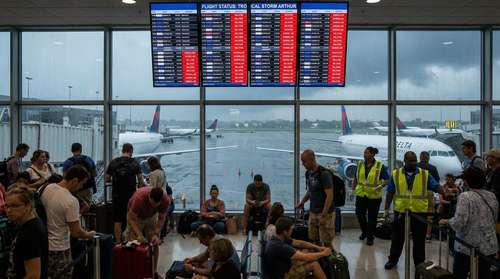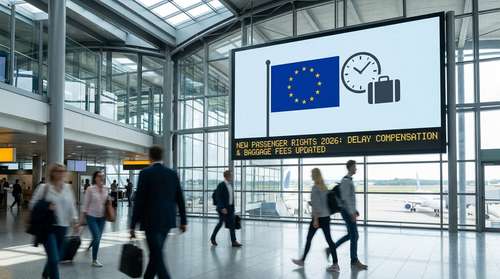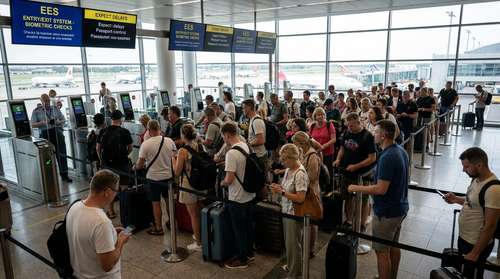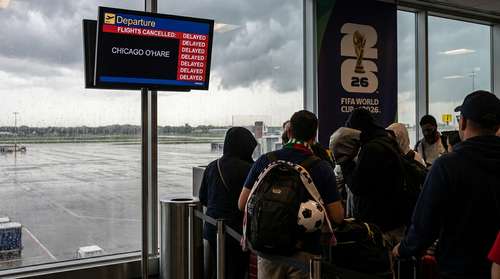
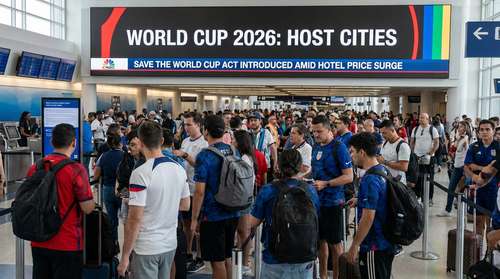
With fewer than 90 days remaining until the summer kickoff, 2026 FIFA World Cup travel demand is officially shattering industry records. Accommodations across the 11 World Cup host cities USA are witnessing unprecedented spikes, with some regional markets reporting booking increases approaching 400% compared to previous years. However, as local hospitality sectors prepare for this massive influx of global visitors, lawmakers in Washington have identified a critical vulnerability: ensuring a safe, welcoming environment free from intimidation. Today, House Democrats officially introduced the Save the World Cup Act, a targeted legislative measure designed to restrict civil immigration enforcement near tournament venues and critical transit hubs.
The Catalyst Behind the World Cup Hotel Price Surge
The anticipated boom in international tourism 2026 is rapidly reshaping the North American economic landscape. Recent forecasts from Expedia Group indicate that total visitor spending across North American host cities will exceed an astonishing $8.1 billion between June and August, representing a $750 million year-over-year jump. Accommodation spending alone is projected to cross the $4.8 billion threshold, serving as the primary driver of a massive World Cup hotel price surge.
Data from travel technology firm Amadeus reveals that overall flight reservations are currently running 15% higher than last year, with a sharp 37% spike recorded immediately following the December match schedule announcement. This immense demand is triggering extreme hotel occupancy rates and staggering regional growth:
- Arlington, Texas: Expected to see a 369% year-over-year increase in accommodation demand.
- Foxborough, Massachusetts: Preparing for a 310% surge as international fans finalize their lodging.
- Houston, Texas: Experiencing a massive 660% booking increase specifically driven by German fans tracking their national team.
Aviation metrics mirror this hotel frenzy. Flight bookings between Scotland and Boston for the tournament period have exploded by an astounding 162-fold compared to 2024, as Scottish supporters mobilize for their opening match against Haiti at Gillette Stadium. Similarly, English fans are driving a 350% booking increase to the New York/New Jersey area ahead of their clash with Panama.
Congress Intervenes: Inside the Save the World Cup Act
To guarantee the tournament's success amid this overwhelming travel boom, Congresswoman Nellie Pou (D-NJ) introduced the Save the World Cup Act today. The legislation strictly prohibits the Departments of Justice and Homeland Security from utilizing federal resources to conduct civil immigration enforcement activities within a one-mile radius of any official FIFA World Cup match or sanctioned fan festival.
"With fewer than 90 days until kickoff, the World Cup should bring the world together and not leave families wondering if ICE agents will be waiting outside stadiums," Pou stated following the bill's introduction. "There is no successful tournament if fans and players are looking over their shoulders".
Expanding Protections to Public Transit
The legislative strategy extends beyond the immediate stadium perimeters. Representative Eric Swalwell (D-CA) has concurrently authored the "Safe Passage to the World Cup" act. This complementary bill seeks to block federal funds from being used for immigration enforcement on public transportation or at transit hubs in any U.S. metropolitan area hosting matches. Lawmakers emphasize that turning everyday transportation systems into enforcement zones would severely damage the tournament's reputation and create an atmosphere of fear among global tourists securing their FIFA 2026 match tickets travel. A third bill, backed by Representative LaMonica McIver, seeks to prevent local agencies receiving federal funds from participating in immigration enforcement programs during the event.
Navigating World Cup 2026 Logistics for Global Fans
Managing World Cup 2026 logistics requires an intricate, highly coordinated balance between robust public safety and international hospitality. The expanded 48-team format spread across three nations makes this the most complex sporting event in history. To cope with the influx, major carriers like United Airlines, American Airlines, and Lufthansa are already expanding capacity and increasing route frequencies to key host cities.
On the ground, the Department of Homeland Security recently allocated $625 million in security grants to the 11 U.S. host cities to support venue preparation. However, legislators warn that heavy-handed immigration sweeps could actively undermine these security investments by eroding trust. The introduction of the Save the World Cup Act establishes a clear boundary, asserting that local and federal law enforcement should focus exclusively on counter-terrorism and crowd management rather than fulfilling civil immigration quotas.
As airlines adjust their schedules and accommodations reach near-full capacity, the unified message from travel executives and congressional leaders is definitive. Protecting the millions of fans driving this economic renaissance remains the highest priority, ensuring the United States delivers a seamless and secure experience when the first whistle blows this June.