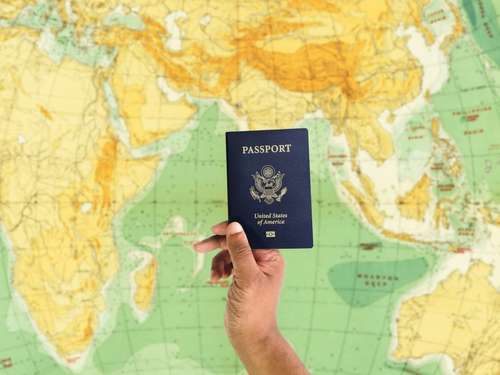
Travel to the United States is set to become significantly more expensive and logistically complex for citizens of 38 nations as the Trump administration expands its controversial U.S. visa bond requirement. In a move designed to deter visa overstays, the State Department announced this week that visitors from an additional 25 countries—including Nigeria, Venezuela, and several 2026 World Cup qualifying nations—must potentially post refundable bonds of up to $15,000 to enter the country. The expanded policy takes effect on January 21, 2026.
State Department Expands Tourist Bond List
The State Department’s expansion nearly triples the scope of the pilot program, which was initially tested on a smaller group of countries in late 2025. Under the new directive, consular officers now have the discretion to require applicants for B-1 (business) and B-2 (tourism) visas from the 38 designated countries to post a bond of $5,000, $10,000, or $15,000 before their visa is issued.
This financial requirement aims to serve as a guarantee that visitors will comply with the terms of their visa and depart the U.S. on time. The bond is refundable upon proof of timely departure, but for many travelers from developing nations, the upfront cost is prohibitive. The policy specifically targets countries whose nationals had high overstay rates in the previous fiscal year, though critics argue the financial barrier disproportionately affects middle-class travelers, students, and families.
Full List of Affected Countries
The updated visa bond list of 38 countries heavily impacts African nations, but also includes countries in Asia, the Caribbean, and South America. The 25 newly added countries effective January 21 include:
- Africa: Algeria, Angola, Benin, Burundi, Cape Verde, Djibouti, Gabon, Ivory Coast, Nigeria, Senegal, Togo, Uganda, Zimbabwe.
- Asia/Pacific: Bangladesh, Fiji, Kyrgyzstan, Nepal, Tajikistan, Tonga, Tuvalu, Vanuatu.
- Americas: Antigua and Barbuda, Cuba, Dominica, Venezuela.
These join the nations already subject to the bond, such as Bhutan, Botswana, The Gambia, and Zambia.
Impact on International Visitation and 2026 Tourism
The expansion comes at a precarious time for the U.S. travel industry. Data from the World Travel & Tourism Council (WTTC) projects that the U.S. could lose up to $12.5 billion in international visitor spending in 2026 due to what analysts describe as "sentiment headwinds" and tighter entry barriers. While global tourism is rebounding, the U.S. is facing a unique decline in traveler confidence.
Industry experts fear this "closed sign" approach will have long-term economic consequences. "Requiring bonds worth years of average income for ordinary travelers risks isolating legitimate visitors and severing business ties," noted one African diplomatic source. For a traveler from a country like Nigeria or Bangladesh, a $15,000 bond requirement effectively acts as a ban, regardless of their intent to return home.
World Cup 2026 Tourism Concerns
A major point of contention is the potential impact on the upcoming World Cup 2026 tourism. several of the newly added nations—including Algeria, Cape Verde, Ivory Coast, and Senegal—are strong contenders or qualifiers for the tournament, which the U.S. is co-hosting. Soccer fans from these nations now face a hurdle that could make supporting their teams in person impossible.
Sports tourism analysts warn that this could dampen the festive atmosphere and economic windfall expected from the tournament. If fans cannot afford the bond or are intimidated by the vetting process, the U.S. risks hosting games with empty seats in sections designated for international visitors.
Strict Logistics: The 3-Airport Rule
Beyond the financial burden, the policy introduces strict logistical constraints. Travelers who post a bond are restricted to entering and exiting the United States through only three designated airports:
- John F. Kennedy International Airport (JFK) in New York
- Boston Logan International Airport (BOS)
- Washington Dulles International Airport (IAD)
This requirement adds another layer of cost and complexity, forcing travelers who might be visiting family in Texas or attending a conference in California to route their travel through the Northeast corridor. Failure to adhere to these entry and exit points could result in the forfeiture of the bond and future visa ineligibility.