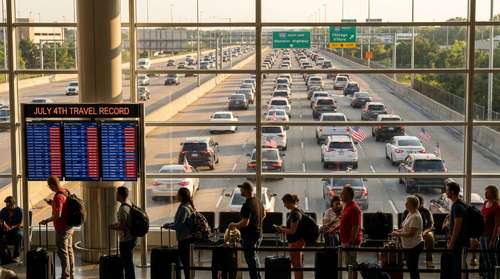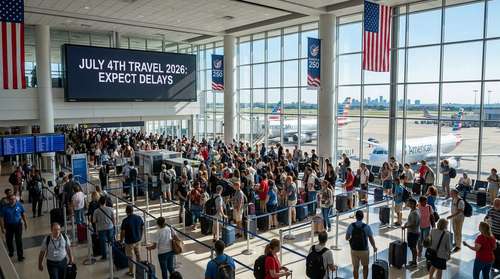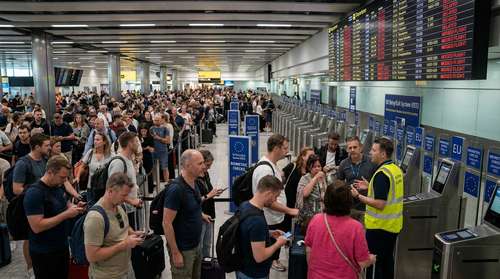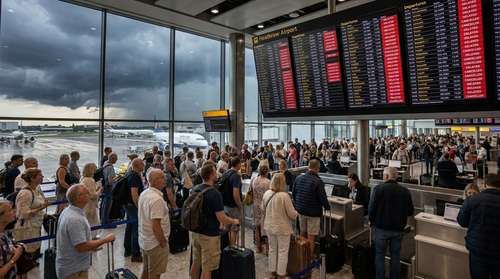
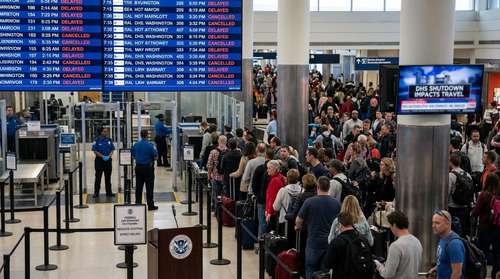
ATLANTA — The collision of a partial government shutdown and the onset of the Spring Break travel rush has created a perfect storm for American aviation today. As the Department of Homeland Security (DHS) funding lapse enters its sixth day, over 61,000 TSA agents are working without pay, leading to a spike in unscheduled absences that has paralyzed operations at major hubs. Travelers at Hartsfield-Jackson Atlanta International Airport (ATL) faced a logistical nightmare this morning, with officials reporting hundreds of flight delays as security lines snaked through terminals, leaving thousands stranded.
TSA Staffing Shortages Reach Critical Levels
The core of the current crisis lies in the financial strain facing the Transportation Security Administration workforce. Since the DHS shutdown began on February 14, 2026, approximately 95% of TSA employees have been deemed "essential" and ordered to work without their bi-weekly paychecks. The result has been a predictable but devastating rise in "call-outs"—agents reporting sick due to financial inability to commute or the need to work temporary cash jobs elsewhere.
"We are seeing a significant increase in unscheduled absences today compared to a year ago," a TSA union representative stated anonymously. "Officers are dedicated to the mission, but they cannot work for free indefinitely. The morale is at an all-time low, and the system is breaking under the pressure."
Federal data indicates that while security standards remain high, the throughput has collapsed. Screening lanes are being consolidated due to lack of personnel, causing wait times to balloon from the standard 15-20 minutes to upwards of two hours at peak times in affected airports.
Atlanta Airport Flight Delays Today: A Warning for the Nation
Nowhere is the impact more visible than at Hartsfield-Jackson Atlanta International Airport, the world’s busiest aviation hub. As of midday Friday, February 20, the airport has logged 188 flight delays and 15 cancellations, numbers that are expected to climb as the afternoon push begins. The ripple effect is already being felt nationwide, with connecting flights to New York, Los Angeles, and Chicago facing cascading disruptions.
Social media is awash with images of frustrated travelers sleeping in the atrium and security queues extending out to the baggage claim areas. "I arrived three hours early as recommended, and I still missed my flight to Miami," said Sarah Jenkins, a student attempting to travel for Spring Break. "There were only two lanes open at the main checkpoint. It’s absolute chaos."
Spring Break 2026 Travel Warnings Issued
The timing could not be worse. The industry is currently bracing for a record-breaking Spring Break season, with airlines projecting over 170 million passengers between now and April. Travel analysts have issued urgent Spring Break 2026 travel warnings, advising passengers to prepare for a "new normal" of uncertainty.
- Arrive Early: The standard two-hour rule is no longer sufficient. Experts recommend arriving 3-4 hours before domestic flights.
- Monitor Flight Status: Use airline apps to track inbound aircraft, not just your departure time.
- Pack Patience: With DHS support staff also furloughed, customs processing for international arrivals is seeing similar slowdowns.
DHS Funding Lapse: The Political Standoff Continues
The root cause of this aviation meltdown is the ongoing stalemate on Capitol Hill. The partial shutdown was triggered after the Senate failed to advance legislation to fund the DHS for the remainder of Fiscal Year 2026. The dispute centers largely on immigration enforcement reforms and border security funding, with both sides entrenched in a political battle that shows little sign of resolving before the weekend.
Unlike previous full government shutdowns, this targeted lapse affects specifically the DHS, leaving other federal agencies operational. However, because the DHS umbrella covers the TSA, Customs and Border Protection (CBP), and FEMA, the impact on national security and travel infrastructure is concentrated and acute.
"This isn't just an inconvenience; it's an economic disaster waiting to happen," noted aviation analyst Michael Boyd. "If this drags on into next week, we could see a collapse of the Spring Break travel economy, costing the industry billions."
Flight Cancellations USA News: What to Expect Next
As we head into the weekend, travelers should anticipate further volatility. While airlines are attempting to mitigate the damage by rebooking passengers and waiving change fees, they cannot control the speed of security screening. If the TSA staffing shortages 2026 crisis deepens, carriers may be forced to preemptively cancel flights to reduce the load on overwhelmed terminals.
For now, the message from the airport floor is clear: If you are flying this weekend, be prepared for long waits, limited services, and the very real possibility that your journey will take much longer than planned. The US government shutdown travel impact is no longer a theoretical threat—it has arrived.