If you are frantically checking TSA wait times today, brace yourself for unprecedented congestion. A severe US travel alert is in effect as the peak Spring Break travel 2026 season collides head-on with a month-long partial Department of Homeland Security (DHS) shutdown. Across the country, passengers are encountering massive airport security delays, with lines stretching out of terminals, snaking through baggage claims, and spilling into parking garages. The crisis has left major aviation hubs scrambling to manage record crowds while operating with severely depleted security personnel, creating a perfect storm for holiday vacationers.
DHS Shutdown Travel Impact Fuels Historic Staffing Crisis
The root of the current chaos stems from the partial government funding lapse that began on February 14. Roughly 50,000 Transportation Security Administration screeners have been forced to work without pay for a month. The financial breaking point arrived this Friday when agents officially opened their pay stubs to see a balance of zero dollars, marking their first completely missed paycheck of this shutdown. This massive DHS shutdown travel impact is now fully visible at security checkpoints nationwide, as federal workers struggle to cover their own basic living expenses.
According to internal data obtained by national outlets, unscheduled absences have skyrocketed. More than 300 officers have formally quit since the shutdown started, exacerbating an already critical TSA staffing shortage. Call-out rates have climbed into double digits at major airports across the Eastern Seaboard and Gulf Coast. John F. Kennedy International Airport averaged a 21% absence rate, the highest among major international gateways. The workforce drain means fewer open lanes just as the US Travel Association projects a record 171 million passengers will take to the skies for March and April getaways.
Houston Hobby TSA Lines and Widespread Hub Disruptions
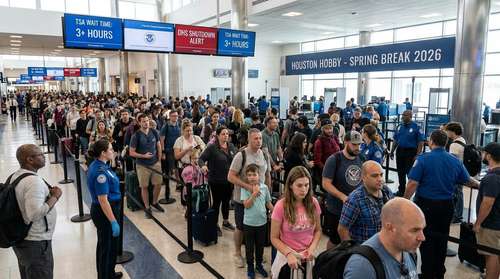
Nowhere is the crisis more evident than in Texas. The Houston Hobby TSA lines have become the epicenter of the shutdown's fallout, with wait times exceeding three hours during peak travel periods. At its worst, 53% of the scheduled screening workforce at William P. Hobby Airport called out sick on a single day, forcing general boarding lines to severely back up. Localized disruptions have led the DHS to label the situation a 'spring break travel nightmare'.
Other major hubs are also feeling the intense squeeze of the ongoing political standoff. Louis Armstrong New Orleans International Airport has warned passengers of waits extending up to two hours, urging travelers to adjust their arrival times accordingly. Hartsfield-Jackson Atlanta International and Charlotte Douglas International have similarly reported significant backups. While wait times at these facilities have fluctuated based on rolling staffing shortages and localized weather disruptions, the sheer volume of spring break travelers ensures that lines remain significantly longer than standard historical averages.
The PreCheck Advantage Amidst the Chaos
While standard screening lanes remain paralyzed, expedited traveler programs offer a stark contrast for those enrolled. At airports where general queues recently hit 180 minutes, TSA PreCheck passengers have reportedly cleared security in about 10 minutes. This dramatic difference has made expedited screening more valuable than ever. Additionally, the Administration officially restarted the Global Entry program this Wednesday after a temporary 17-day suspension, providing some much-needed relief for international arrivals and mitigating further cascading delays.
Strategies for Navigating Spring Break Travel 2026
With the shutdown showing no immediate signs of resolution in Washington, travelers must adapt to the new reality at the checkpoints. Aviation officials are now strongly advising passengers to arrive at least three to four hours before domestic flights, particularly during the early morning rushes between 4 a.m. and 7 a.m.. Missing a flight due to security delays is a growing risk that airlines are struggling to accommodate.
Relying solely on historical wait times or outdated mobile apps is no longer sufficient. Industry experts recommend checking real-time tracking dashboards provided directly by airport websites, such as those at Dallas Fort Worth and Atlanta, which actively monitor lane closures and current capacities. Packing patience, arriving earlier than ever before, and minimizing carry-on luggage can significantly help you navigate the severe airport security delays as dedicated federal workers continue to screen millions of passengers without receiving their paychecks.