February 17, 2026 – The busy mid-February travel window has hit a turbulent patch this week as thousands of airline passengers face a new, mandatory financial hurdle at airport security checkpoints. Following the Transportation Security Administration's (TSA) shift to strict enforcement earlier this month, travelers arriving without a REAL ID-compliant license are now being required to pay a $45 non-compliance fee to undergo alternative identity verification. The program, known as TSA ConfirmID, has caught many flyers off guard, leading to longer lines and heated exchanges at terminals across the country.
Understanding the TSA ConfirmID Surcharge
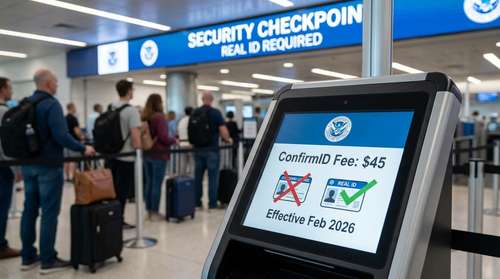
As of February 1, 2026, the grace period for traveling without a REAL ID has officially ended. While the initial enforcement deadline passed in May 2025, the TSA has now implemented a financial deterrent to manage the remaining non-compliant travelers. The new TSA ConfirmID surcharge is a $45 fee charged to any passenger 18 or older who presents a standard, non-compliant driver's license or fails to provide an acceptable form of identification, such as a passport or Global Entry card.
According to TSA officials, this fee is designed to shift the cost of manual identity verification from the taxpayer to the individual traveler. "Processing non-compliant passengers requires significant resources and officer time," a TSA spokesperson stated on Monday. "The ConfirmID fee ensures that those costs are covered by the users of that service."
How the $45 Fee Works
Travelers caught without a REAL ID must pay the fee immediately to proceed. Here is what you need to know about the process:
- Cost: $45 per traveler (non-refundable).
- Validity: The fee purchases a "verification pass" valid for a 10-day travel window. If your trip extends beyond 10 days, you may be required to pay again for your return flight.
- Payment Method: The fee must be paid electronically via Pay.gov or through designated kiosks at the airport. Cash is generally not accepted at checkpoints.
- No Guarantees: Paying the fee allows you to attempt verification. If the TSA cannot verify your identity through their biometric and biographic databases, you will still be denied access to the secure area.
Confusion and Delays at Checkpoints
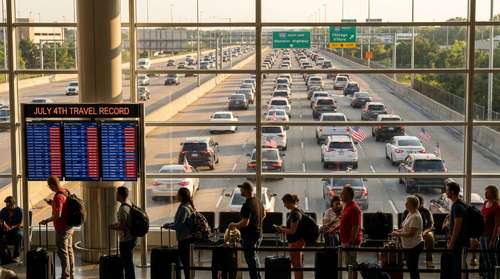
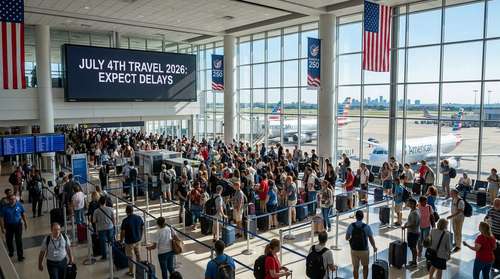
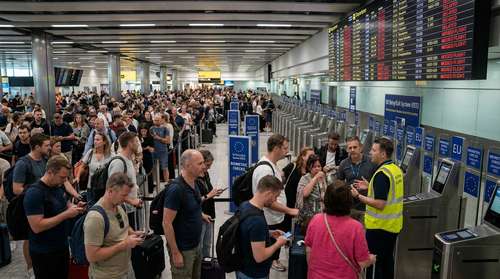
Reports from major hubs like Hartsfield-Jackson Atlanta and Chicago O'Hare indicate that the new rule is causing significant friction. Many travelers, unaware of the domestic flight ID rules change, are arriving at the podium only to be redirected to payment zones. This has created a bottleneck effect, with verification wait times stretching to 30-45 minutes in some locations.
"I had no idea about the fee," said Marcus Thorne, a traveler at JFK International Airport yesterday. "I thought I could just show my credit cards and social security card like the old days. Now I have to pay $45 and wait in a separate line just to maybe get on my flight."
Security experts warn that this confusion is likely to persist through the spring break season. The TSA $45 non-compliance fee is not just a fine; it triggers a more invasive screening process. Travelers opting for ConfirmID should expect to provide additional personal details and undergo facial recognition scans to match against government databases.
The Path to Strict Enforcement
The journey to this point has been long. The REAL ID Act, originally passed in 2005, saw its full enforcement delayed multiple times. The final deadline of May 7, 2025, marked the beginning of the compliance era, but the introduction of the monetary penalty in 2026 signals a "zero-tolerance" approach to operational costs.
Data indicates that approximately 94% of American travelers are now compliant, holding either a REAL ID-compliant license (marked with a gold star) or a valid passport. However, the remaining 6% represents millions of passengers, enough to cause logistical headaches when they converge on airports simultaneously.
Exceptions to the Rule
Amid the rollout, there has been clarity regarding exemptions. The airport security ID requirements do not apply to children under 18 traveling with an adult. Additionally, a recent partnership with the Department of Defense ensures that military recruits and active-duty service members with specific military IDs are exempt from the ConfirmID fee, provided they present their DoD-issued identification.
For the average civilian, however, the options are limited. If you do not have a REAL ID, a U.S. passport, or a trusted traveler card, you must be prepared to pay the surcharge or be turned away.
What Travelers Should Do Now
If you have upcoming travel plans in 2026, the advice from travel experts is clear: check your wallet immediately. Look for the star in the upper-right corner of your driver's license. If it is missing, and you do not have a passport, you are subject to the TSA ConfirmID surcharge.
To avoid the $45 fee and potential missed flights, travelers should upgrade to a REAL ID at their state DMV or renew their passport well before their trip. For those who must fly immediately without compliant ID, the TSA recommends arriving at least three hours early to navigate the new ConfirmID payment and verification process.