
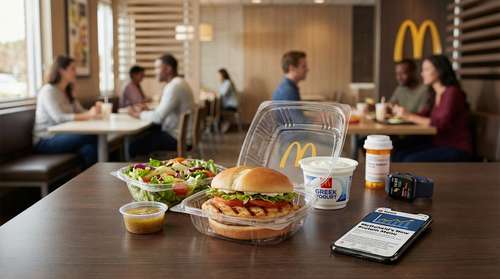
In a strategic pivot that signals a new era for the fast-food industry, McDonald’s has launched pilot tests for a high-protein, nutrient-dense menu specifically tailored to the growing demographic of consumers using GLP-1 weight-loss medications like Ozempic and Wegovy. The initiative, confirmed following the company's Q4 earnings call this week, aims to retain customers whose appetites and dietary habits are being fundamentally altered by the "Ozempic effect." As millions of Americans shift away from traditional high-calorie combos, the Golden Arches is betting big on protein-first options to maintain its dominance in 2026.
McDonald’s Weight Loss Menu Strategy: Adapting to the "New Normal"
The fast-food giant's decision comes as GLP-1 consumer trends in 2026 reach a tipping point. With recent data indicating that nearly 12.4% of Americans are now using prescription weight-loss drugs, the demand for traditional sugary sodas and large fries is softening. McDonald’s CEO Chris Kempczinski addressed this shift directly, noting that while total calorie consumption may drop among these users, their need for high-quality protein has surged to prevent muscle loss associated with rapid weight reduction.
"As adoption grows, we know that consumers' behavior changes," Kempczinski stated during the earnings call. "We're seeing changes around less snacking and a shift away from sugary beverages. However, protein remains a non-negotiable for this demographic, and that is where we are focusing our innovation."
The pilot program, currently rolling out in select U.S. markets, highlights high protein fast food options that strip away the bun and heavy sauces. New test items reportedly include grilled chicken strips, lettuce-wrapped burger variations, and nutrient-fortified egg bites designed to offer maximum satiety with lower caloric density.
The Ozempic Fast Food Impact: A Structural Shift in Dining
The Ozempic fast food impact is no longer theoretical; it is a measurable economic force. Industry analysts have long feared that appetite-suppressing drugs would slash fast-food revenue. However, McDonald’s strategy suggests a more nuanced reality: customers aren't disappearing, but their orders are evolving. A core challenge for users of Wegovy and Zepbound is consuming enough protein to maintain lean muscle mass while eating significantly fewer calories—a gap McDonald's intends to fill.
Redefining Value for the Weight-Conscious Consumer
Traditional value meals, like the $5 bundles that drove traffic in late 2025, are being reimagined. The new pilot menu focuses on "nutrition-per-dollar" rather than just calorie count. By highlighting existing high-protein staples—such as the McCrispy strips and egg-heavy breakfast items—alongside new lower-carb additions, McDonald's is positioning itself as a viable partner in the customer's weight-loss journey rather than a temptation to be avoided.
Industry Disruption: Competitors Race to Catch Up
McDonald’s is not alone in navigating this fast food industry disruption. Competitors like Chipotle have already leaned into "lifestyle bowls" catering to specific dietary protocols, and Shake Shack recently introduced a "Good Fit" menu. Even packaged food giants like Nestlé have launched companion brands like "Vital Pursuit" explicitly for GLP-1 users. However, McDonald’s scale means its entry into this space validates the trend as a permanent fixture of the American dining landscape.
"The sheer volume of McDonald’s footprint means this pilot could normalize low-carb, high-protein fast food in a way no other brand can," explains food industry analyst Sarah Jenkins. "If they can successfully pivot their supply chain to support fresh, grilled proteins at scale, they mitigate the risk of losing their most profitable customers to fast-casual competitors."
Financial Outlook: Weathering the Storm
Despite fears of Wegovy diet changes eroding the bottom line, McDonald’s reported strong Q4 2025 revenue of $6.83 billion, beating analyst expectations. This resilience suggests that the brand's adaptability—shifting from "supersized" portions to nutrient-dense options—is working. As McDonald's business strategy evolves throughout 2026, the success of these high-protein pilots will likely determine whether the chain rolls out these changes globally.
For now, the message from Chicago is clear: The era of the GLP-1 consumer is here, and McDonald’s intends to be on the menu.