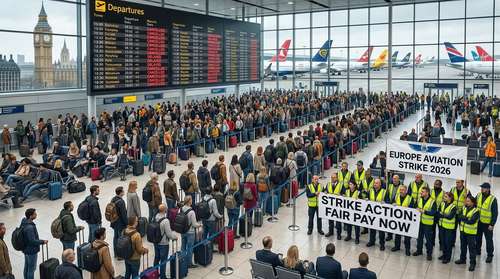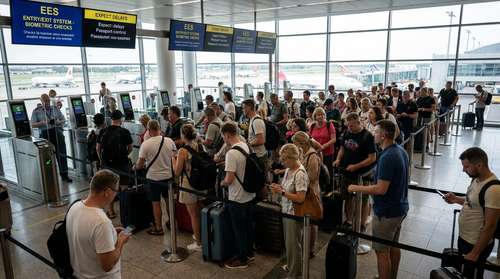
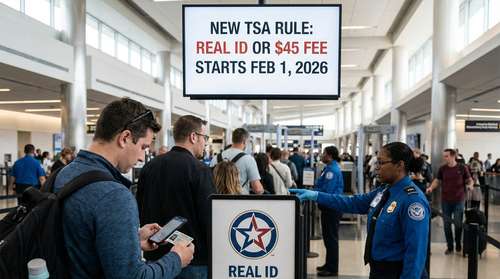
As of February 1, 2026, air travel in the United States has fundamentally changed. The Transportation Security Administration (TSA) has officially ended its leniency period, transitioning to a strict enforcement phase that is already catching thousands of flyers off guard. Travelers arriving at security checkpoints without a REAL ID-compliant driver's license or other acceptable identification are now facing a mandatory $45 noncompliance fee to utilize the new "TSA ConfirmID" verification system. This penalty, which grants only a temporary 10-day pass, has sparked confusion and longer lines at major airports nationwide as the reality of the TSA REAL ID enforcement deadline sets in.
The New $45 Rule: What You Need to Know
For years, the deadline for REAL ID enforcement was delayed, leading many Americans to believe it might never happen. However, the rollout of the REAL ID $45 noncompliance fee marks a decisive shift in strategy. If you attempt to pass through a TSA checkpoint with a standard, non-compliant driver's license, you will no longer be simply waved through with a warning or manual check.
Instead, you must now pay $45 to use TSA ConfirmID, a digitized identity verification service. This fee is non-refundable and, critically, payment does not guarantee that you will be cleared to fly. If the system cannot verify your identity through biometric scans and database checks, you will be denied boarding.
The 10-Day "ConfirmID" Pass
One of the most critical details of the new rule is the validity period. The $45 fee covers a temporary 10-day travel pass. This window begins on the day you pay the fee. If your trip extends beyond 10 days—for example, a two-week vacation—you will be required to pay the $45 fee again for your return flight. Frequent business travelers without a REAL ID could find themselves paying this fine multiple times a month, effectively making a standard license a costly liability.
Why Is TSA Enforcing This Now?
The transition to the fee-based model represents the final phase of the REAL ID Act's implementation. While the absolute "no-fly" deadline has been a moving target, February 2026 marks the end of taxpayer-funded manual identity verification. Previously, TSA officers would manually call state DMVs or use other methods to verify a traveler without proper ID—a process that slowed down lines for everyone.
By implementing the TSA security checkpoint rules 2026, the agency is shifting the cost burden directly onto non-compliant travelers. The logic is simple: if you haven't upgraded your ID, you must pay for the extra resources required to screen you. Early reports from airports like LAX, Atlanta Hartsfield-Jackson, and Chicago O'Hare indicate that travelers refusing to pay or unable to complete the ConfirmID process are being turned away in significant numbers.
How to Avoid the Fee: Domestic Travel Identification Requirements
The simplest way to avoid the chaos and the $45 fine is to ensure you possess an acceptable form of identification. While the REAL ID-compliant driver's license (marked with a gold or black star in the upper right corner) is the standard, it is not your only option. You can bypass the fee entirely by presenting any of the following:
- U.S. Passport or Passport Card: Valid for all domestic travel.
- DHS Trusted Traveler Cards: Global Entry, NEXUS, SENTRI, or FAST cards.
- U.S. Military ID: Active duty or retired military ID cards.
- Permanent Resident Card: Green Card holders are compliant.
- Federally Recognized Tribal Photo ID: Accepted at all checkpoints.
If you are still flying with a standard driver's license in 2026, you are voluntarily subjecting yourself to the new fee and potential delays. We strongly recommend checking your wallet immediately. If your license says "Federal Limits Apply" or lacks the star symbol, you are non-compliant.
Step-by-Step: Using TSA ConfirmID If You Must
If you find yourself at the airport without a compliant ID, here is how the new process works:
- Referral: A TSA officer will flag your non-compliant ID and direct you to a separate "ConfirmID" lane or kiosk.
- Payment: You must pay the $45 fee via credit card or digital payment (cash is rarely accepted). You can also pre-pay online at Pay.gov, though this does not skip the physical verification line.
- Biometric Scan: You will undergo facial recognition scanning and fingerprinting to match against federal databases.
- Verification: The process takes an average of 15-30 minutes. If successful, you proceed to physical screening. If unsuccessful, you are escorted out of the secure area.
Travelers opting for this method should arrive at the airport at least 3 hours before their flight. The added verification time is causing missed flights for those who cut it close.
Frequently Asked Questions
Can I get a refund if TSA denies me boarding?
No. The $45 fee covers the attempt to verify your identity. It is a service fee, not a boarding pass. If your identity cannot be confirmed, the money is forfeited.
Do children need a REAL ID?
No. Children under 18 traveling with an adult companion do not need to present identification. However, if a teenager is traveling alone, they may be subject to specific airline or TSA identification rules, though the REAL ID mandate primarily targets adults 18+.
Is this a permanent rule?
Yes. The TSA fine for no REAL ID is now standard policy. As we move deeper into 2026, it is possible that the option to pay verification fees may eventually be removed entirely, reverting to a strict "no ID, no fly" policy. For now, the fee is the only bridge allowing non-compliant travelers to board.